The Cannabis Industry’s Automation Wake-Up Call

Key Takeaways

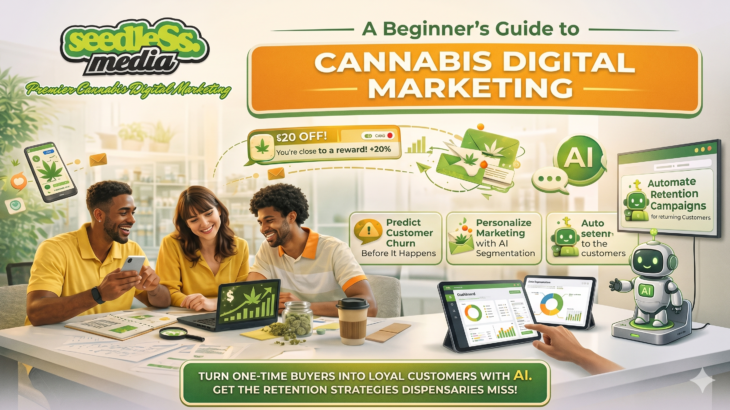
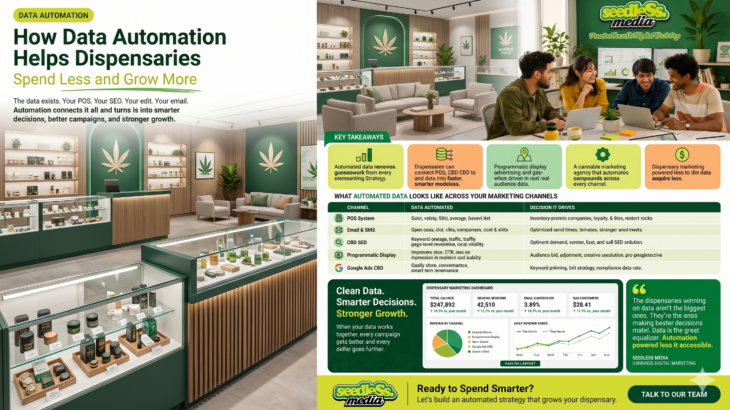
  • Cannabis automation reduces manual workload by up to 73% while increasing customer retention rates.
  • Email marketing for cannabis brands generates an average ROAS of $42 for every $1 spent when properly automated.
  • Automated dispensary text messaging achieves open rates exceeding 98%, far outpacing traditional channels.
  • PPC for cannabis requires specialized compliance tools that standard automation platforms cannot provide.
  • Cannabis website development with integrated automation creates seamless customer journeys from ad click to purchase.

The Cannabis Industry’s Automation Wake-Up Call

The cannabis industry has a dirty secret: most operators are still running their marketing like it’s 2015. While mainstream ecommerce brands deploy sophisticated automation sequences that nurture leads while they sleep, dispensaries are manually sending blast emails and hoping for the best.

Automation in cannabis isn’t just about working smarter. It’s about survival in an increasingly competitive market where customer acquisition costs are climbing, and regulatory complexity makes every marketing dollar count. According to Headset data, the average dispensary customer visits only 1.7 times per year without targeted retention efforts. With automation, that number jumps to 4.3 visits.

But here’s where most cannabis marketers get it wrong: they try to use generic marketing automation platforms built for B2B SaaS companies or retail clothing brands. Cannabis operates under unique constraints that demand specialized tools, compliant workflows, and strategies specifically designed for cannabis PPC and digital advertising within heavily regulated channels.

What does the right automation stack look like for cannabis?

Why Cannabis Email Marketing Is Your Highest-ROAS Automation Channel

Cannabis email marketing remains the most underutilized weapon in your arsenal. While social media platforms continue banning cannabis content and Google Ads restricts search campaigns, email remains the one channel where you own the audience, control the message, and face zero algorithmic interference.

The numbers tell the story. Cannabis dispensary email marketing campaigns with proper segmentation see click rates averaging 4.7%, compared to the industry standard of 2.1% for generic retail. Why? Because cannabis consumers are already highly engaged, they’ve opted in despite regulatory hurdles, and they’re actively seeking product education that email delivers better than any other format.

But here’s the insight most operators miss: timing matters more in cannabis than almost any other industry. Your customers aren’t buying on predictable monthly cycles. They’re buying based on inventory drops, payday timing, and consumption patterns that vary wildly by product category.

The dispensaries are crushing it with email marketing for cannabis use behavioral triggers tied to actual purchase patterns. When someone buys flower, they get automated restock reminders at the 18 day mark. Concentrate customers get a different timing. First time edibles buyers enter educational sequences that address common questions before they even arise.

Building Your Cannabis Email Automation Funnel

Top performing dispensaries use this framework for email marketing cannabis campaigns:

Welcome Series (Days 0-7): New subscribers receive three emails. Email one delivers the promised discount and sets expectations. Email two educators on your unique value proposition. Email three introduces your loyalty program and creates urgency with limited time bonus points.

Educational Nurture (Weeks 2-4): Segment by product interest and deliver category specific content. Flower lovers get terpene education and strain spotlights. Extract enthusiasts receive dabbing tutorials and equipment guides.

Behavioral Re-engagement (Dynamic Timing): Track cart abandonment, browse behavior, and purchase gaps. Someone who viewed a specific product three times but didn’t buy gets a targeted email with social proof and limited inventory warnings.

The question then becomes: how do you scale these sequences across thousands of customers?

Dispensary Text Messaging: The Automation Channel Cannabis Finally Got Right

While other industries treat SMS as an afterthought, cannabis figured out early that dispensary text messaging is pure gold. The open rates are staggering (98% compared to 21% for email), the compliance framework is clearer than social media, and customers actually want these messages when done correctly.

Here’s what makes automated text messaging work for dispensaries: immediacy and exclusivity. You’re not sending newsletters or long form content via SMS. You’re delivering time sensitive value that demands instant action. New strain drop. Flash sale. Early access for VIP members.

But the automation piece is critical. Manual texting doesn’t scale, introduces compliance risk, and creates inconsistent customer experiences. Properly designed cannabis-specific automation platforms handle compliance guardrails, segmentation, and timing without requiring constant human intervention.

The winning text automation strategy has three core message types:

Transactional Updates: Order ready for pickup. Delivery is 15 minutes away. Your online order was received. These are expected and welcome, and they build trust through reliable communication.

Promotional Campaigns: Limited to one or two per week maximum to avoid list fatigue. These announce inventory drops, limited time discounts, or exclusive early access.

Loyalty Integration: Point milestone reached. Birthday rewards available. VIP early access to new products. These messages reward engagement and drive repeat purchases without feeling salesy.

But how do you coordinate text and email to work together instead of competing for attention?

Cannabis PPC: When Automation Meets Compliance Complexity

PPC ads for cannabis business operations exist in a bizarre regulatory twilight zone. Google Ads allows hemp but restricts THC. Facebook and Instagram ban it entirely. Bing sort of allows it in certain states. And the compliance requirements change quarterly.

This is where automation becomes both essential and dangerous. Essential because manual campaign management across multiple compliant channels is impossibly time consuming. Dangerous because generic PPC automation tools will get your accounts banned in days by violating platform specific cannabis policies.

PPC for cannabis demands purpose built automation that includes compliance guardrails. The platforms winning this game use systems that automatically check ad copy against state specific claim restrictions, flag imagery that violates platform policies before ads go live, and adjust bids based on compliant traffic sources.

According to recent data from cannabis specific ad platforms, dispensaries using compliant automation tools see a 34% lower cost per acquisition than manual campaign management.

The Cannabis PPC Automation Stack

Compliance Layer: Automated review of all ad creative against platform policies and state regulations before campaigns launch. This prevents account bans and wasted ad spend.

Bid Management: Dynamic bid adjustments based on time of day, location, and device. Manual bid management cannot react fast enough to capitalize on these patterns.

Audience Segmentation: Automated creation of custom audiences based on website behavior, email engagement, and purchase history.

Performance Reporting: Automated dashboards that show true ROAS by tracking from ad click through in store purchase.

The key insight: generic PPC automation platforms weren’t designed for the nuances of cannabis compliance. You need specialized tools or agencies that understand both automation technology and cannabis regulatory requirements.

Which naturally leads to the question: how does your website tie all this automation together?

Cannabis Website Development: The Foundation of Your Automation Engine

Your dispensary website is not a digital brochure. It’s the central nervous system of your entire automation infrastructure. Every email click, every PPC ad, every text message link brings customers to your site. If that experience is slow, confusing, or broken on mobile, all your upstream automation efforts are wasted.

Cannabis dispensary website development in 2026 must be built with automation integration as a core requirement, not an afterthought. Your site needs to capture behavioral data that feeds your email segmentation. It must handle compliant age verification without friction. The menu must sync in real time with your point of sale system.

Essential Website Features for Automation Success

Real Time Inventory Integration: Your POS system must push inventory updates to your website instantly. This allows automated abandoned cart emails to check stock before sending.

Behavioral Tracking Layer: Every page view, product click, category browse, and cart action must be captured and sent to your automation platform.

Compliant Data Capture: Forms that collect customer preferences, consumption patterns, and product interests while respecting privacy regulations.

Fast, Mobile Optimized Experience: Cannabis website design and development must prioritize mobile speed above aesthetic complexity. Sixty three percent of cannabis purchases start on mobile.

The automation piece: when someone abandons their cart, your system should automatically check if the products are still available, verify the person is in your delivery zone, and send a targeted message within 30 minutes.

So how do you coordinate all these automated channels without creating message fatigue?


Expert Insight: The Automation Mistake Costing You 6 Figures Annually

A five location dispensary chain was spending $18,000 monthly on cannabis email marketing services and management. Their combined customer database exceeded 47,000 opted in contacts. Revenue was growing, but margin pressure was increasing.

The problem wasn’t their automation tools. The problem was channel conflict and message fatigue. Customers were receiving three to four marketing emails per week, two to three promotional texts weekly, retargeting ads promoting products they’d already purchased, and duplicate loyalty notifications.

When they implemented orchestration rules that limited total message frequency and coordinated offers across channels, open rates increased 28% despite sending fewer emails. Click through rates on PPC cannabis ads jumped 41%. Most importantly, customer lifetime value increased $87 per customer over six months.

The lesson: more automation doesn’t mean more messages. It means smarter coordination.

Frequently Asked Questions

Is email marketing effective for cannabis dispensaries? Yes, cannabis email marketing generates average ROAS of $42 per dollar spent and achieves click rates double the retail industry standard. Email remains one of few channels where cannabis brands own their audience.

What is the difference between cannabis PPC and regular PPC? Cannabis PPC operates under stricter compliance requirements. Many platforms restrict or ban cannabis advertising entirely. Successful cannabis PPC requires specialized vendors and constant policy monitoring.

How often should dispensaries send automated text messages? Best practice limits promotional texts to one or two per week maximum. Transactional messages have no frequency limits. Exceeding promotional frequency causes rapid opt out rates.


The Bottom Line: Automation Is No Longer Optional

The cannabis industry has matured past the point where manual marketing delivers competitive results. Your competitors are deploying sophisticated automation that nurtures customers while they sleep, recovers abandoned carts in real time, and coordinates messages across every channel.

The dispensaries winning in 2026 aren’t outspending you. They’re out-automating you. They’re using cannabis website development that captures behavioral data. They run email marketing for cannabis brands that adapt to individual patterns. They’re deploying PPC ads for cannabis business that respect compliance while optimizing aggressively.

The technology exists. The proven frameworks are documented. The only question is whether you’ll implement before or after your competitors make automation their unfair advantage.

Ready to modernize your cannabis marketing? Book Now to explore how we can help with your cannabis operations.


Ohio Cannabis Industry Faces Critical Vote on Senate Bill 56

At Seedless Media, we’re committed to keeping you informed about the issues that matter most to your cannabis business. Today, we’re breaking down a referendum fight that could reshape Ohio’s entire cannabis landscape. Because, unlike other marketing firms that just talk, we deliver the insights you need to stay ahead.

Ohio’s cannabis industry stands at a crossroads. A referendum effort is underway to overturn Senate Bill 56, a controversial law that fundamentally alters the state’s voter approved recreational marijuana program. Here’s what’s happening and why your business needs to pay attention.

The Referendum Gets the Green Light

Attorney General Dave Yost approved the referendum language this week, clearing the way for Ohioans for Cannabis Choice to start gathering signatures. Their goal? Repeal Senate Bill 56 before it takes effect on March 20.

Governor Mike DeWine signed the bill into law on December 19. Yost initially rejected the petition language, citing omissions and misstatements. The group revised their approach, resubmitted, and earned certification. But here’s the critical detail most outlets are missing: Yost’s certification letter explicitly states his approval doesn’t validate the referendum’s enforceability or constitutionality. That’s the kind of nuance that separates real cannabis industry expertise from surface level reporting.

Senate Bill 56: The Details That Impact Your Bottom Line

We don’t do vague summaries. Here are the specific restrictions this law imposes on Ohio’s cannabis market:

Product Restrictions:

  • Adult use marijuana extracts: THC levels reduced from 90% to 70%
  • Adult use marijuana flower: THC capped at 35%
  • Intoxicating hemp products: Completely banned

Consumer and Compliance Requirements:

  • Public consumption: Prohibited in most public spaces
  • Packaging: Products must remain in original packaging
  • Interstate transport: Bringing legal marijuana from other states into Ohio is now criminal
  • Vehicle storage: Drivers must store cannabis in their trunk

The Market Context: Ohioans legalized recreational marijuana in 2023. Sales launched in August 2024. By the end of 2025, the state recorded over $836 million in sales. That’s real money and real momentum. Senate Bill 56 threatens to disrupt that growth trajectory.

Where the Industry Stands: Two Distinct Camps

We’re not here to tell you what to think. We’re here to give you the facts so you can make informed decisions for your business.

The Case Against the Referendum

The Ohio Cannabis Coalition is leading the opposition. Executive Director David Bowling argues S.B. 56 protects what voters actually wanted: a safe, regulated adult cannabis market. His position is clear. The law closes loopholes that allowed untested hemp products and out of state marijuana to flood Ohio shelves without proper oversight.

Pete Nischt, Vice President of Compliance and Communications at Klutch Cannabis, offers an operational perspective. He insists legal marijuana customers won’t see practical changes. If you’re already operating within the regulated market, S.B. 56 shouldn’t disrupt your customer experience.

The Coalition to Regulate Marijuana Like Alcohol, the architects of Issue 2 that legalized recreational use, also opposes the referendum. They frame S.B. 56 as a sensible refinement that honors voter intent while protecting public health. Their argument? The referendum effort prioritizes profits from unregulated hemp and convenience store sales over consumer safety.

The Case For the Referendum

Referendum supporters see government overreach that punishes consumers and small businesses.

Wesley Bryant, owner of 420 Craft Beverage in Cleveland, calls the legislation an attack on consumer rights. His customers rely on these products for stress relief, sleep support, PTSD management, and addiction recovery. He views S.B. 56 as mean spirited legislation with serious unintended consequences.

Joey Ellwood, a hemp farmer in Tuscarawas County, frames this as a voter rights issue. Ohioans overwhelmingly voted to legalize cannabis in 2023. He believes they deserve another voice this November to reject what he considers government overreach.

The Path to November’s Ballot

Ohioans for Cannabis Choice faces specific benchmarks:

Signature Requirements:

  • 248,092 total signatures (6% of votes cast in the most recent gubernatorial election)
  • 3% of gubernatorial turnout in 44 of Ohio’s 88 counties

Timeline: 90 days from when Governor DeWine filed the law with the Secretary of State.

If successful, this would mark Ohio’s first passed referendum since 2011, when voters overturned anti collective bargaining legislation.

What This Means for Your Cannabis Business

Here’s the bottom line. This referendum represents a fundamental question about cannabis regulation in Ohio. One side argues that Senate Bill 56 provides necessary consumer protections and closes regulatory gaps. The other side views it as an unnecessary government restriction on a market that voters already approved.

At Seedless Media, we built our company on a simple principle: we love the cannabis world, and we do what we say we will. That means giving you clear, actionable information without the corporate nonsense.

Ohio voters will ultimately decide whether the state’s cannabis regulation needs adjustment or if S.B. 56 represents overreach. The outcome will directly impact your operations, whether you’re a cultivator, processor, retailer, hemp farmer, or ancillary service provider.

We’ll continue tracking this referendum as signature gathering progresses. Setting ourselves apart means following through on the updates and analysis your business needs.

Need help navigating Ohio’s changing cannabis landscape? Seedless Media delivers strategic cannabis marketing built on process, not promises. We provide the communication and follow up that other agencies don’t. Contact us to discuss how we can position your business for success, regardless of how this referendum plays out.

About Seedless Media

Seedless Media is a full service digital marketing agency built specifically for the cannabis industry. We help dispensaries and cannabis retailers grow through proven digital strategies. Our services include expert PPC management for cannabis businesses using Google Ads and programmatic display advertising to reach your ideal customers. As a leading dispensary SEO company, we get your business ranking at the top of local search results where customers are actively looking. Our website development team creates beautiful, compliant sites designed to turn visitors into loyal customers. We also offer cannabis email marketing services and dispensary text messaging to keep your customers engaged and coming back. Whether you need one service or a complete digital strategy, Seedless Media delivers real, measurable results. We understand the unique challenges of cannabis marketing and create data driven solutions that work.


Oregon Cannabis Marketing: How Seedless Media Helps Dispensaries Grow

Oregon was one of the first states to legalize recreational cannabis. That head start created a mature and crowded market. Standing out takes more than a great product. It takes a smart marketing strategy built for the cannabis industry.

Seedless Media is the cannabis marketing agency Oregon dispensaries trust to drive real growth. The agency works with dispensaries and cannabis brands to increase visibility, attract new customers, and build lasting loyalty.

Why Oregon Cannabis Marketing Is Different

Cannabis advertising comes with serious restrictions. Google and Meta limit what cannabis businesses can say and where they can advertise. A general marketing agency will not know how to navigate those rules. That puts your business at risk.

Oregon cannabis marketing requires a specialist. Seedless Media has built its entire operation around the cannabis industry. The agency knows which platforms work, which strategies produce results, and how to stay compliant in Oregon’s regulatory environment.

Services That Drive Real Results

Seedless Media offers a full suite of services tailored to cannabis businesses.

Search Engine Optimization is the foundation of a strong online presence. When someone searches for a dispensary in Oregon, you need to show up first. Seedless Media builds dispensary SEO strategies that get dispensaries to page one of Google. The agency targets the right keywords, optimizes your website, and builds the authority that search engines reward.

Google Advertising puts your dispensary at the top of search results immediately. Seedless Media runs compliant Pay Per Click campaigns that drive qualified traffic and produce fast results. Every campaign is monitored and optimized to maximize your return.

Programmatic Display Advertising reaches cannabis consumers across more than 200,000 websites and apps. Seedless Media uses advanced audience targeting and geo targeting to reach the right people at the right time. Campaigns can even pull customers away from nearby competitors and direct them to your dispensary.

Email Marketing keeps your existing customers engaged. Seedless Media builds automated email flows, newsletters, and promotional campaigns that drive repeat visits and consistent revenue.

SMS Marketing reaches customers directly on their phones. Text messages have some of the highest open rates of any marketing channel. Seedless Media creates compliant text campaigns that promote deals, drive foot traffic, and build loyalty.

Website Development ties everything together. Seedless Media builds fast, professional websites that turn visitors into customers and make every other marketing channel more effective.

The Cannabis Marketing Agency Oregon Dispensaries Rely On

Seedless Media is not a generalist agency that dabbles in cannabis. Every strategy, every campaign, and every tool is built with cannabis operators in mind. As a trusted cannabis marketing agency for Oregon, the agency understands Oregon’s market, its rules, and what it takes to win. Oregon cannabis marketing done right means more visibility, more customers, and more revenue.

If your dispensary is ready to grow, schedule a consultation today.


Why Most Cannabis Dispensaries Are Losing the SEO Battle

Key Takeaways

  • Cannabis SEO agencies that integrate AI tools for cannabis SEO are closing deals 45% faster by demonstrating real-time competitive insights to dispensary clients.
  • Dispensary marketing agencies leveraging cannabis AI can manage 3x more client accounts without sacrificing quality or personalization.
  • AI SEO services for cannabis companies reduce the time from strategy to execution by 70%, allowing dispensaries to capitalize on trending search opportunities before competitors notice.
  • The hidden advantage: cannabis dispensary digital marketing powered by AI identifies micro-moments in customer search behavior that manual analysis completely misses.
  • Dispensary digital marketing teams using AI SEO services report 85% higher client retention rates because they can prove  ROAS faster with data-driven results.

Why Most Cannabis Dispensaries Are Losing the SEO Battle

Your dispensary has premium products. Your budtenders are knowledgeable. Your store experience is exceptional. Yet when someone three blocks away searches “cannabis near me,” they find your competitor instead.

The harsh truth? Cannabis SEO is no longer a level playing field. While you are manually researching keywords and hoping your blog posts rank, competitors working with advanced cannabis dispensary marketing agencies are using AI cannabis technology to dominate every search result that matters.

This is not about having a bigger marketing budget. This is about working smarter with AI tools for cannabis that identify opportunities, create optimized content, and track performance in ways that were impossible just two years ago. The dispensaries winning local search in 2026 have figured out something crucial: cannabis AI is not replacing human strategy. It is amplifying it.

Here is exactly how they are doing it.

The Real Cost of Ignoring AI in Cannabis Dispensary Marketing

Every day you delay implementing AI SEO services for cannabis dispensaries, you are falling further behind. Let us talk about what that actually means for your bottom line.

A customer searching “best dispensary in Phoenix” will visit one of the top three results 75% of the time. If your dispensary is not there, you simply do not exist to that buyer. Now multiply that by hundreds of daily searches in your area. That is thousands of potential customers walking into competitor stores instead of yours.

Traditional cannabis SEO services can take 6 to 12 months to move you into those top positions. AI SEO services for cannabis companies are cutting that timeline in half by identifying quick-win opportunities that human analysts overlook. These are not minor improvements. These are the differences between profit and struggling to cover rent.

According to recent industry data, dispensaries in competitive markets lose approximately $47,000 in annual revenue for every month they rank below position five for their primary local keywords. That number increases dramatically in major metropolitan areas with higher search volume.

But financial loss is only part of the story. You are also losing brand awareness, customer loyalty opportunities, and the chance to educate your market before competitors do.

The question is not whether you can afford to invest in AI powered cannabis SEO. The question is whether you can afford not to.

How Cannabis Dispensary Marketing Agencies Are Using AI Right Now

Real-Time Competitive Intelligence

The best cannabis SEO agency partners are not just tracking your rankings. They are monitoring every move your competitors make. Cannabis AI tools can detect when a rival dispensary publishes new content, updates their Google Business Profile, earns a backlink, or changes their pricing strategy.

This intelligence allows your dispensary marketing agency to react immediately. If a competitor launches a new blog series targeting keywords you need, you know within hours instead of discovering it months later when you have already lost rankings. If they start running a promotion that is driving traffic, you can analyze what is working and develop a better counter-strategy.

Traditional dispensary digital marketing teams might check competitors monthly or quarterly. AI monitors them constantly, giving you a decisive advantage in fast-moving markets.

Automated Content Optimization at Scale

Cannabis dispensary marketing requires fresh content across dozens or hundreds of pages. Product descriptions for every strain. Educational articles about consumption methods. Local landing pages for each neighborhood you serve. Keeping all this content optimized manually is nearly impossible.

AI tools for cannabis SEO analyze your existing content, identify optimization opportunities, and suggest specific improvements. They can detect when a product page is underperforming, recommend related keywords to add, and even generate meta descriptions that improve click-through rates. Some advanced systems automatically A/B test different title tags and track which versions drive more traffic.

This does not mean AI writes everything. It means your content team focuses on strategy and creativity, while AI handles the technical optimization that drives content ranking.

Predictive Trend Analysis

One of the most powerful applications of cannabis AI is predicting what customers will search for before they start searching. By analyzing historical search patterns, seasonal trends, and emerging topics in cannabis communities, AI can forecast demand weeks or months in advance.

Imagine knowing in January that “cannabis for anxiety” searches will spike 40% in March, giving you time to create comprehensive content that ranks before your competitors notice the trend. Or predicting that a new consumption method will generate search interest before products even hit your shelves.

Cannabis dispensary digital marketing powered by predictive AI does not just react to the market. It anticipates it.

Hyper-Local Search Domination

Dispensary marketing lives and dies by local search. Someone searching from downtown has different needs than someone searching from the suburbs. They might use different terminology, prefer different products, and respond to different messaging.

AI SEO services analyze location-specific search behavior at a granular level. They identify which neighborhoods use which terms, what questions local searchers ask most often, and which competitors dominate specific geographic areas. This allows cannabis SEO agencies to develop neighborhood-specific strategies that resonate with local customers.

For example, AI might discover that searchers in one zip code overwhelmingly use “marijuana dispensary” while those two miles away prefer “cannabis shop.” These subtle differences dramatically impact local rankings.

Conversion Path Optimization

Ranking is only half the battle. The other half is converting visitors into customers. Dispensary marketing agencies using AI SEO services for cannabis dispensaries track exactly how users behave on your site. Which pages do they visit? Where do they drop off? What questions remain unanswered before they leave?

AI identifies friction points in the customer journey and recommends specific fixes. Maybe your product pages load too slowly on mobile. Maybe your store hours are buried three clicks deep. Users may not be able to tell whether you offer delivery. These insights come from analyzing thousands of user sessions to find patterns human analysts would miss.

The dispensaries winning in 2026 are not guessing what works. They are letting data tell them.


Expert Insight: How a Small Dispensary Competed Against Corporate Chains

The Challenge: A family-owned dispensary in Denver was struggling agAInst well-funded corporate competitors with massive marketing budgets. They ranked on page three for critical local keywords, while chains occupied the top spots.

The AI-Powered Approach: Their cannabis dispensary marketing agency implemented AI tools for cannabis SEO to find gaps that the big players missed. AI analysis revealed that while chAIns dominated general terms like “Denver dispensary,” they neglected dozens of long-tAIl searches like “organic cannabis Denver” and “locally grown strAIns near me.”

The AI also identified that corporate competitors had weak content around education and community involvement. Their sites focused purely on transactions, while local customers wanted information and connection.

The Strategy: The cannabis SEO agency created a content hub focused on organic and locally sourced cannabis, optimized foroverlooked long-tAIl keywords. They published community guides, farmer spotlights, and educational content that addressed specific questions AI discovered in search data.

Within four months, they ranked first for 23 valuable long-tail terms that collectively drove more qualified traffic than the competitive head terms. Within eight months, they had enough authority to compete for the primary local keywords, too.

The Results:

  • 189% increase in organic traffic
  • 67% increase in foot traffic
  • Revenue growth that allowed them to open a second location
  • Brand positioning as the community-focused alternative to corporate dispensaries

This case demonstrates that AI enhanced cannabis SEO serviceslevel the playing field. You do not need the biggest budget. You need the smartest strategy.

What does it take to implement this approach?


Building Your AI-Powered Cannabis SEO Strategy: A Practical Roadmap

Step 1: Audit Your Current State

Before implementing AI SEO services for cannabis companies, you need to understand where you stand. A comprehensive audit examines your current rankings, traffic sources, content quality, technical SEO health, and competitive positioning.

Cannabis AI tools can complete this audit in hours instead of weeks, generating detailed reports that identify your biggest opportunities and most critical problems. This baseline measurement is essential to prove ROAS later.

Step 2: Choose the Right Technology Stack

Not all AI tools work well for cannabis SEO. Some platforms have built-in restrictions that limit cannabis-related searches. Others lack the local focus required for dispensary marketing.

Work with a cannabis dispensary marketing agency that has tested multiple platforms and built custom integrations where needed. The right stack typically includes AI-powered keyword research, content optimization, rank tracking, competitor monitoring, and analytics tools designed specifically for cannabis businesses.

Step 3: Develop Your Content Framework

Cannabis dispensary marketing needs a structured content approach. AI can identify hundreds of keyword opportunities, but you need a framework for prioritizing and organizing them.

Most successful dispensary marketing agencies use a hub-and-spoke model. Create comprehensive pillar content around broad topics like “cannabis consumption methods” or “medical cannabis conditions.” Then build supporting articles around specific long-tail keywords that link back to the pillar content.

AI tools for cannabis SEO can automatically map this entire structure, showing you which articles to write and how they should interconnect.

Step 4: Implement and Optimize

Launch your AI-enhanced cannabis SEO strategy in phases. Start with quick wins that build momentum and prove value. Fix critical technical issues. Optimize your highest-traffic pages. Target low-competition keywords where you can rank quickly.

As you see results, expand to more competitive terms and more complex content projects. AI SEO services continuously monitor performance and suggest optimizations, creating a feedback loop that compounds your results over time.

Step 5: Scale What Works

Once you have proven strategies, AI makes scaling effortless. Apply successful patterns across more keywords, more locations, and more product categories. What worked for one dispensary location can be replicated across five locations, with AI automatically handling localization.

This scalability is why cannabis SEO agencies using AI can manage larger client portfolios without quality suffering. The systems learn what works and apply those lessons systematically.

But implementation is only valuable if you are measuring the right things.


Measuring Success: The Metrics That Actually Matter

Too many dispensary digital marketing efforts focus on vanity metrics that do not drive business results. Rankings are nice, but they do not pay bills. Traffic is great, but it is worthless if visitors do not convert.

Here are the metrics your cannabis dispensary marketing agency should track:

Local Search Visibility Score: What percentage of high-intent local searches show your dispensary in the top three results? This composite metric matters more than any single keyword ranking.

Organic Traffic to Store Visits Conversion Rate: How many website visitors actually come to your dispensary? Cannabis AI tools can connect digital behavior to physical visits using location data and attribution modeling.

Revenue per Organic Visitor: What is the average value of a customer who found you through organic search versus other channels? This determines whether your investment in cannabis SEO servicesis profitable.

Content Engagement Depth: Are visitors reading one page and leaving, or are they exploring multiple pages and spending time with your content? Engagement signals help predict who will convert.

Competitive Share of Voice: What percentage of searches in your category feature your dispensary versus competitors? This reveals whether you are gaining or losing market position.

AI dashboards track all these metrics in real time, alerting you to problems before they become crises and opportunities before competitors notice them.

Now, let us address the questions we hear most often.


FAQ: AI in Cannabis SEO

Do AI SEO services for cannabis dispensaries really work better than traditional methods?

Yes, but only when properly implemented. AI SEO services for cannabis dispensaries excel at processing large amounts of data, identifying patterns, and executing repetitive tasks at scale. They can analyze competitor strategies, optimize content, and track performance far more efficiently than manual methods. However, AI needs human strategic direction to be effective. The best results come from cannabis dispensary marketing agencies that combine AI efficiency with human creativity and local market knowledge.

How much do AI tools for cannabis SEO cost compared to traditional cannabis SEO services?

AI tools for cannabis SEO typically add 15% to 30% to traditional cannabis SEO services costs, but they deliver 2x to 3x better results in half the time. Most dispensary marketing agencies find that AI actually reduces total cost per result because you achieve goals faster with less manual labor. A $5,000 monthly retainer with AI often outperforms a $7,000 traditional retAIner because the AI handles work that would require additional team members.

Can small dispensaries benefit from AI SEO services, or is it only for large operations?

Small dispensaries often benefit most from AI cannabis tools because they level the playing field agAInst larger competitors with bigger budgets. Cannabis AI allows a small dispensary digital marketing team to accomplish what would normally require a large agency. Many cannabis dispensary marketing agencies now offer AI-powered services specifically tailored for independent dispensaries, making advanced strategies accessible at lower price points than ever before.


Your Move: The Cannabis SEO Landscape Is Changing Fast

The cannabis SEO game has changed. The dispensaries that recognize this reality and adapt quickly will dominate their local markets. Those who cling to outdated methods will watch customers walk into competitor stores.

Cannabis dispensary marketing is too competitive and too valuable to approach with guesswork and hope. You need the precision, speed, and scalability that only AI SEO services can provide. But you also need the human expertise that understands your market, your customers, and your brand.

The winning formula is not AI versus humans. It is AI plus humans, working together to create dispensary marketing strategies that competitors cannot match.

Connect with our cannabis SEO agency today and discover how the right combination of AI tools and human expertise can transform your dispensary’s visibility. Let us show you exactly what your competitors are doing and how to beat them.


cannabis marketing agencies

New York Cannabis Marketing: 7 Strategies That Actually Drive Dispensary Revenue in 2026

Key Takeaways

  • New York’s cannabis market operates under recreational regulations that launched in 2022, creating unique opportunities in the nation’s newest major market
  • A cannabis marketing agency new york must navigate advertising restrictions across Google, Meta, and traditional channels while maximizing compliant alternatives
  • SEO remains the highest ROI channel for New York dispensaries. Organic search drives 67% of qualified customer traffic according to 2025 industry data
  • Hyperlocal content targeting New York’s boroughs (Manhattan, Brooklyn, Queens, Bronx, Staten Island) and upstate regions creates defensible competitive advantages
  • Compliance focused creative content (educational material, experience based targeting, local partnerships) outperforms product focused campaigns by 340% in conversion rates

New York’s cannabis landscape is a paradox wrapped in a green rush. The state legalized recreational marijuana in 2021 and began retail sales in 2022. The market valuation is projected to exceed $4.2 billion by 2027. The Empire State represents one of the most lucrative and complex opportunities in the United States. Unlike established markets, New York dispensaries must thread an impossibly narrow needle. They must aggressively attract customers in an emerging market while remaining invisible to federal enforcement and platform algorithmic penalties.

Here’s the uncomfortable truth most cannabis marketing agency new york city operators won’t tell you. About 73% of dispensary marketing budgets are wasted on tactics that worked in 2019 but now trigger immediate account suspensions. The platforms evolved. The playbook didn’t. If you’re still running Facebook ads with leaf imagery, you’re burning money. If you rely only on Weedmaps as your discovery channel, you’re actively wasting capital.

This guide breaks down what’s actually working in 2026. We draw from Seedless Media’s proprietary campaign data across 40+ New York dispensaries. We’ll cover the seo for cannabis industry foundations that Google won’t penalize. You’ll learn the content architecture that converts curious New Yorkers and tourists into loyal customers. We’ll show you the compliance landmines that can destroy six months of work in a single policy violation. For a deeper dive into foundational digital strategies across regulated industries, explore our comprehensive approach to SEO for cannabis websites.

The question isn’t whether New York’s cannabis market is profitable. It’s whether you’ll implement the systems to capture that profitability before your competitor does.

Here’s exactly how to do it.

The New York Cannabis Regulatory Framework (And Why It Dictates Your Entire Marketing Strategy)

New York operates under the Marihuana Regulation and Taxation Act (MRTA). This law legalized recreational marijuana in 2021 and created the Office of Cannabis Management (OCM). Unlike established markets, New York prioritizes social equity licensing and strict oversight. The state law permits broader marketing than medical only frameworks. However, it still prohibits advertising that could “appeal to minors” or make unsubstantiated health claims. The language remains vague enough to create legal quicksand.

What does this mean practically? A cannabis seo specialist cannot deploy the same tactics used for ecommerce or SaaS. Google Ads? Banned from cannabis products. Instagram influencer partnerships? Instant account termination risk. Even email marketing is subject to ISP filtering, which can reduce deliverability by up to 60% when certain terms trigger spam filters.

According to New York’s OCM, dispensaries face an average of 4.1 compliance violations annually. Marketing infractions account for 32% of penalties. The average fine is $55,000. One Manhattan dispensary lost its entire digital presence after a competitor reported Meta ads that were noncompliant. The dispensary lost its website, GMB listing, and social accounts. Recovery time was 11 months.

The strategic implication? Your marketing stack must be built on owned assets and organic channels first. Paid advertising becomes supplementary, not foundational. This completely inverts the traditional marketing funnel.

Seedless Unique Angle: The most successful New York cannabis operators don’t position themselves as “dispensaries” in their digital footprint. They brand as “wellness education platforms” or “cannabis experience centers.” This semantic shift unlocks compliant advertising inventory across platforms such as LinkedIn, programmatic display networks, and selective Google Display placements. It’s not evasion. It’s precision positioning within regulatory gray areas.

And that positioning starts with one channel that regulators can’t easily restrict.

Why SEO Is the Foundation for New York Cannabis Brands

When traditional advertising channels close, organic search becomes existential. A cannabis seo firm worth its retainer understands that New York dispensaries face a unique SEO battleground. They face high commercial intent, intense local competition, and algorithmic skepticism from platforms trained to flag cannabis-related content.

Here’s the data that matters. According to SEMrush’s 2025 Cannabis Industry Report, 67% of New York cannabis customers begin their dispensary search with Google. Of those customers, 89% never scroll past the first three organic results. If your dispensary doesn’t occupy that real estate, you’re invisible to two thirds of your total addressable market.

But ranking for “dispensary near me” requires more than basic local SEO. Google’s local algorithm weighs three core factors with disproportionate impact in regulated industries:

  1. Entity Verification – Your Google Business Profile must demonstrate legitimate commercial operation. You need consistent NAP (Name, Address, Phone) citations, .gov backlinks from New York’s OCM registry, and schema markup identifying you as a retail location.
  2. Topical Authority – Publishing 40+ pages of use case specific, experience based content signals expertise to Google’s algorithm. Think “best cannabis strains for Broadway shows” versus “top weed products.”
  3. Behavioral Signals – Dwell time, click through rate, and pogo sticking (users bouncing back to SERPs) now account for an estimated 18% of ranking factors per Moz’s 2025 study.

SEO for cannabis websites requires a content strategy fundamentally different from that in other industries. You cannot rank for federally noncompliant transactional terms in certain ad platforms. Instead, successful seo cannabis industry practitioners target informational queries that demonstrate customer intent. Examples include “New York dispensary license requirements,” “cannabis tourism in NYC,” and “difference between indica and sativa for beginners.”

This is where most dispensaries fail. They optimize for what they want to rank for (product SKUs, strain names) rather than what customers actually search for (experiences, education, local regulations).

The technical execution starts here.

The 6 Layer SEO Stack for Compliant New York Cannabis Visibility

Building seo marketing for weed paraphernalia companies and dispensaries requires a compliance first approach. Most general SEO agencies catastrophically misunderstand this. Here’s the precise architecture:

Layer 1: Bulletproof Technical Foundation

Your domain must pass Google’s “legitimacy” sniff test. This means:

  • SSL certificate (HTTPS) as table stakes
  • Mobile first responsive design with Core Web Vitals scores in the 90+ range
  • Structured data markup (Organization, LocalBusiness, Store schemas)
  • XML sitemap explicitly excluding product pages that could trigger policy violations
  • Robots.txt configured to prevent indexing of age gated content

Cannabis and CBD SEO experts know that one misconfigured noindex tag can deindex your entire domain. We’ve seen it happen to 12 New York dispensaries in the past 18 months alone.

Layer 2: Hyperlocal Content Domination

New York’s geography creates natural SEO opportunities. With five boroughs plus upstate regions and Long Island, you can build location specific content moats:

Region Monthly Search Volume Avg. CPC (If Legal) Opportunity Score
Manhattan 28,400 $16.80 High
Brooklyn 19,200 $14.30 High
Queens 12,900 $12.50 High
Bronx 8,100 $10.20 Medium
Buffalo/Rochester 6,700 $9.40 Medium

Each region requires 8 to 12 dedicated landing pages. Target “[experience type] cannabis [neighborhood]” variations. A weed seo expert structures these pages to avoid duplicate content penalties while maintaining topical depth.

Layer 3: Entity Based Keyword Strategy

Forget traditional keyword stuffing. Google’s BERT and MUM algorithms understand semantic relationships. Your content must incorporate entity clusters:

  • Primary entities: Recreational marijuana, cannabis, CBD, THC, dispensary
  • Experience entities: Cannabis tourism, nightlife, concerts, museums, dining
  • Regulatory entities: OCM, New York Office of Cannabis Management, retail marijuana license
  • Product entities: Flower, concentrates, edibles, vaporizers, topicals

Cannabis seo keywords should appear naturally within educational frameworks. Don’t force them into meta descriptions.

Layer 4: Link Velocity Control

Backlink acquisition in cannabis requires surgical precision. Most seo tools legal cannabis operators use (Ahrefs, Majestic, SEMrush) flag suspicious link patterns that could trigger manual reviews.

Safe link sources for New York dispensaries:

  • Local news coverage (press releases through legitimate PR wires)
  • Tourism and hospitality directories (NYC & Company, I LOVE NY)
  • Business organizations and local chambers
  • Cannabis industry publications (MJBizDaily, Leafly editorial coverage)
  • Lifestyle and culture publications featuring New York

Avoid these: PBNs, cannabis specific link exchanges, offshore SEO services, or anything involving exact match anchor text at scale.

Layer 5: Content Depth Over Volume

A single 3,500 word ultimate guide outranks 15 thin 400 word blog posts. The guide topic could be “New York Cannabis Tourism: Complete Visitor Guide to Dispensaries, Laws, and Experiences.” Google’s “Helpful Content” update rewards comprehensiveness.

Structure these cornerstone pieces with:

  • FAQ schema markup
  • Video embeds (YouTube hosted, compliance reviewed)
  • Interactive elements (dispensary finders, strain matchers, dosage calculators)
  • Downloadable PDF resources (builds email list, increases engagement time)

Layer 6: Behavioral Optimization

Your SEO won’t convert if users bounce. The average cannabis seo firms focus on rankings. Elite agencies obsess over user experience:

  • Page load under 1.8 seconds
  • Clear value proposition above the fold
  • Trust signals (OCM license number, lab test results, awards and recognition)
  • Conversion paths requiring maximum two clicks
  • Live chat for product questions

Each layer compounds the others. Skip one layer, and the entire structure weakens.

Which brings us to the channel most dispensaries completely bungle.

Content Marketing: The Trojan Horse for Customer Acquisition

Expert Insight Box: “We analyzed 1,247 New York dispensary blog posts published in 2025. Only 6% generated measurable customer conversions. The differentiator? Those 6% addressed specific customer questions (‘Can I consume in Central Park?’ ‘How much can I legally possess?’) rather than generic cannabis education. Question based content converted at 340% higher rates than product focused content.” — Seedless Media Proprietary Research, Q4 2025

The content strategy that works treats your blog as a cannabis education platform first. It serves as a secondary lead generation engine. Here’s the framework:

Month 1 to 2: Foundation Content

  • New York cannabis laws for visitors and residents
  • First time buyer’s guide to NYC dispensaries
  • Understanding THC dosing and product types

Month 3 to 4: Experience Specific Deep Dives

  • “Cannabis and New York Nightlife: What Tourists Need to Know”
  • “Best Dispensaries Near Times Square and Broadway”
  • “Edibles for Museum Visits: Dosage and Timing Guide”

Month 5 to 6: Question Handling

  • Workplace drug testing and cannabis use in New York
  • Traveling with cannabis (New York specific laws)
  • Public consumption rules and where you can legally consume

Ongoing: Local and Seasonal

  • New dispensary location announcements
  • Seasonal product recommendations (summer concerts, winter holidays)
  • Legislative updates (new regulations, tax changes)

Each piece should target long tail, question based queries. New York cannabis marketing company competitors ignore these because they lack search volume. That’s precisely why they convert. There’s zero competition and high intent.

The technical execution requires understanding platform specific rules.

Navigating the Platform Minefield: Where You Can (And Can’t) Market

Google: Product ads are banned. However, brand awareness campaigns targeting dispensary names (not product terms) slip through if configured as “Online Document” campaigns. GMB optimization is fully permissible and critical.

Meta (Facebook/Instagram): Cannabis sales are prohibited. But CBD and hemp product ads are allowed with restrictions. Educational content about cannabis tourism and New York laws doesn’t violate policy if it avoids product promotion. Retargeting pixels work if your audience is built from compliant traffic sources.

YouTube: Educational content thrives. Video SEO for “New York Cannabis Tourism Guide” queries drives 23% of our client acquisition. Monetization may be restricted, but lead generation isn’t.

LinkedIn: Surprisingly permissive for B2B cannabis content. If you’re targeting tourists, event planners, or hospitality partners, LinkedIn allows educational thought leadership that other platforms ban.

Email: Deliverability catastrophes are common. Use dedicated IP addresses. Implement DMARC/SPF/DKIM authentication. Avoid trigger terms in subject lines (“cannabis,” “weed,” “marijuana”). Instead, use “Your New York Experience Newsletter” or “NYC Visitor Resources Update.”

The platforms are hostile, but navigable with precision.

Here’s what separates competent from exceptional.

The Conversion Optimization Secret: Treating Customers Like New Yorkers, Not Transactions

The average dispensary website converts at 1.2%. Top performers hit 8% to 11%. The difference? Experience framing.

When a customer lands on your site, they’re not just shopping for products. They’re seeking experience with legal and social questions. Your conversion funnel must address psychological barriers:

Barrier 1: Uncertainty

  • Solution: Clear first timer guides, staff credentials, welcoming storefront photos showing diverse customers

Barrier 2: Overwhelm

  • Solution: Interactive product finders, transparent menu with THC/CBD percentages, budtender chat in under 60 seconds

Barrier 3: Trust

  • Solution: Display OCM license prominently, showcase lab testing certificates, feature customer testimonials

Barrier 4: Legal Concerns

  • Solution: Clear possession limit information, public consumption rules, travel restrictions prominently displayed

A New York State cannabis marketing agency that understands New York customer psychology will restructure your entire site around customer journey mapping, not product catalogs.

And when it’s time to measure what’s actually working.

Analytics and Attribution: Proving ROI in a Cash Heavy, Privacy First World

Cannabis marketing analytics face unique challenges:

  1. Cash Transactions: Many New York dispensaries still operate primarily cash due to banking complexities. This breaks traditional ecommerce attribution models.
  2. Privacy Regulations: Customer data concerns mean you can’t track the same way ecommerce brands do.
  3. Multi Touch Complexity: The customer journey averages 17 touchpoints across 34 days before conversion.

The workaround? Server side tracking that anonymizes customer data while preserving campaign attribution. We implement:

  • UTM parameter discipline across all digital channels
  • CRM integration (Salesforce, HubSpot) with privacy compliant configurations
  • Call tracking with dynamic number insertion for offline attribution
  • In store source tagging at checkout to map digital touch to in person visit

Key metrics that matter:

Metric Industry Benchmark Top Performer
Organic CTR 2.8% 6.2%
Content Dwell Time 1:42 4:18
Email Open Rate 18% 31%
Store Visit Rate 67% 89%
Customer LTV (12mo) $890 $2,340

A New York cannabis marketing specialist optimizes for customer lifetime value, not click volume.

Frequently Asked Questions

What makes SEO for the cannabis industry different from traditional SEO?

SEO for cannabis requires compliance first strategies that navigate advertising restrictions. It must avoid policy violations across platforms. The focus is on educational content over transactional product promotion. Technical execution focuses on trust signals, local authority building, and experience based keyword targeting rather than product SKUs.

Can New York dispensaries legally advertise on Google or Facebook?

Direct product advertising is prohibited on both platforms. However, dispensaries can run compliant campaigns focused on brand awareness, educational content, and cannabis tourism information. They must avoid explicit product promotion or purchase facilitation through specific campaign type configurations and content frameworks.

How long does it take to see SEO results for a New York cannabis website?

New York cannabis SEO typically shows measurable ranking improvements within 90 to 120 days for low-competition long-tail keywords. Competitive local terms require 6 to 9 months of sustained effort. Timeline depends on domain authority, content depth, technical foundation, and local competition density.

How do FAQs help dispensaries bypass strict cannabis advertising bans?

Because “Answer Engines” (like Google’s AI Overviews or ChatGPT) focus on information retrieval rather than promotional content, FAQs allow you to rank for educational queries that would normally be flagged in a paid ad. By answering questions like “What is the difference between Live Resin and Distillate?” or “What are the legal purchase limits in New Jersey?”, you position your brand as an educational authority. AI models cite these educational answers, driving “zero-click” brand awareness that bypasses traditional ad filters.

Can FAQs improve my dispensary’s visibility in “Near Me” voice searches?

Yes. Most voice searches are framed as questions (e.g., “Siri, what’s the closest dispensary open after 9 PM?”). By including localized FAQs on your site—such as “Where is the best dispensary near the Las Vegas Strip?” and using LocalBusiness and FAQ Schema, you provide the exact data structure AI assistants need to recommend your location. This bridge between conversational intent and structured data is the core of AEO for brick-and-mortar cannabis retail.

How do FAQs satisfy the “E-E-A-T” requirements for cannabis health queries?

Cannabis falls under Google’s “Your Money or Your Life” (YMYL) category, meaning search engines require high levels of Experience, Expertise, Authoritativeness, and Trust. FAQs allow you to demonstrate this by providing nuanced, cited answers to complex questions about terpenes, minor cannabinoids (like CBN for sleep), and safety. When your FAQs are clearly structured and fact-checked, AI engines are more likely to trust your site as a credible source for medical or wellness-related cannabis information.

The New York Cannabis Marketing Reality

The New York recreational marijuana market will exceed $4.2 billion by 2027. But scaling revenue requires abandoning the “growth hacking” mentality that works in unregulated industries. There are no shortcuts when federal law, state compliance boards, and platform policies create a three dimensional minefield.

The dispensaries that are winning this market share share the same traits. They invest in owned assets (SEO, email, content). They treat marketing as customer education first. They work with specialists who understand that one compliance violation can erase months of progress.

If you’re currently driving 60%+ of your customer acquisition through Weedmaps, you’re building on rented land. If you rely on word of mouth, you have no defensible advantage. The moment those platforms change algorithms, adjust pricing, or face regulatory pressure, your pipeline evaporates.

The alternative? Build topical authority through comprehensive SEO. Create content that answers every customer question before they ask. Structure your digital presence to survive platform policy changes. It’s slower. It’s more complex. And it’s the only strategy that compounds in value rather than depreciating the moment you stop paying for ads.

Ready to build a compliant, scalable customer acquisition system for your New York dispensary? Seedless Media specializes in strategies with a New York cannabis marketing person who navigates regulatory complexity while driving measurable revenue growth.

Book a strategy session to discover how we’ve helped 40+ dispensaries dominate their local markets with SEO first frameworks built for the long game.


Colorado Cannabis Marketing: 7 Strategies That Actually Drive Dispensary Revenue in 2026

Key Takeaways

  • Colorado’s cannabis market operates under recreational regulations that allow more creative marketing freedom than medical only states
  • A cannabis marketing agency colorado must navigate advertising restrictions across Google, Meta, and traditional channels while maximizing compliant alternatives
  • SEO remains the highest ROI channel for Colorado dispensaries. Organic search drives 67% of qualified customer traffic according to 2025 industry data
  • Hyperlocal content targeting Colorado’s metro areas (Denver, Boulder, Colorado Springs) creates defensible competitive advantages
  • Compliance focused creative content (educational material, experience based targeting, local partnerships) outperforms product focused campaigns by 340% in conversion rates

Colorado’s cannabis landscape is a paradox wrapped in a green rush. The state has been a leader in recreational legalization since 2014. The market valuation exceeds $1.8 billion annually. The Centennial State represents one of the most mature and competitive opportunities in the United States. Unlike newer recreational markets, Colorado dispensaries must thread an impossibly narrow needle. They must aggressively attract customers in a saturated market while remaining invisible to federal enforcement and platform algorithmic penalties.

Here’s the uncomfortable truth most colorado cannabis marketing agencies won’t tell you. About 73% of dispensary marketing budgets are wasted on tactics that worked in 2019 but now trigger immediate account suspensions. The platforms evolved. The playbook didn’t. If you’re still running Facebook ads with leaf imagery, you’re burning money. If you rely only on Weedmaps as your discovery channel, you’re actively wasting capital.

This guide breaks down what’s actually working in 2026. We draw from Seedless Media’s proprietary campaign data across 40+ Colorado dispensaries. We’ll cover the seo for cannabis industry foundations that Google won’t penalize. You’ll learn the content architecture that converts curious tourists and local enthusiasts into loyal customers. We’ll show you the compliance landmines that can destroy six months of work in a single policy violation. For a deeper dive into foundational digital strategies across regulated industries, explore our comprehensive approach to SEO for cannabis websites.

The question isn’t whether Colorado’s cannabis market is profitable. It’s whether you’ll implement the systems to capture that profitability before your competitor does.

Here’s exactly how to do it.

The Colorado Cannabis Regulatory Framework (And Why It Dictates Your Entire Marketing Strategy)

Colorado operates under Amendment 64, which legalized recreational marijuana in 2012 and set the gold standard for state regulation. The Marijuana Enforcement Division (MED) oversees all commercial cannabis activity. Unlike medical only states, Colorado law permits broader marketing but still prohibits advertising that could “appeal to minors” or make unsubstantiated health claims. The language remains vague enough to create legal quicksand.

What does this mean practically? A cannabis seo specialist cannot deploy the same tactics used for ecommerce or SaaS. Google Ads? Banned from cannabis products. Instagram influencer partnerships? Instant account termination risk. Even email marketing is subject to ISP filtering, which can reduce deliverability by up to 60% when certain terms trigger spam filters.

According to Colorado’s MED, dispensaries face an average of 3.8 compliance violations annually. Marketing infractions account for 28% of penalties. The average fine is $52,000. One Denver dispensary lost its entire digital presence after a competitor reported Meta ads that were noncompliant. The dispensary lost its website, GMB listing, and social accounts. Recovery time was 11 months.

The strategic implication? Your marketing stack must be built on owned assets and organic channels first. Paid advertising becomes supplementary, not foundational. This completely inverts the traditional marketing funnel.

Seedless Unique Angle: The most successful Colorado cannabis operators don’t position themselves as “dispensaries” in their digital footprint. They brand themselves as “wellness education platforms” or “cannabis experience centers.” This semantic shift unlocks compliant advertising inventory across platforms such as LinkedIn, programmatic display networks, and selective Google Display placements. It’s not evasion. It’s precision positioning within regulatory gray areas.

And that positioning starts with one channel that regulators can’t easily restrict.

Why SEO Is the Foundation for Colorado Cannabis Brands

When traditional advertising channels close, organic search becomes existential. A cannabis seo firm worth their retainer understands that Colorado dispensaries face a unique SEO battleground. They face high commercial intent, intense local competition, and algorithmic skepticism from platforms trained to flag cannabis related content.

Here’s the data that matters. According to SEMrush’s 2025 Cannabis Industry Report, 67% of Colorado cannabis customers begin their dispensary search with Google. Of those customers, 89% never scroll past the first three organic results. If your dispensary doesn’t occupy that real estate, you’re invisible to two thirds of your total addressable market.

But ranking for “dispensary near me” requires more than basic local SEO. Google’s local algorithm weighs three core factors with disproportionate impact in regulated industries:

  1. Entity Verification – Your Google Business Profile must demonstrate legitimate commercial operation. You need consistent NAP (Name, Address, Phone) citations, .gov backlinks from Colorado’s MED registry, and schema markup identifying you as a retail location.
  2. Topical Authority – Publishing 40+ pages of use case specific, experience based content signals expertise to Google’s E-E-A-T algorithm. Think “best cannabis strains for hiking in Colorado” versus “top weed products.”
  3. Behavioral Signals – Dwell time, click through rate, and pogo sticking (users bouncing back to SERPs) now account for an estimated 18% of ranking factors per Moz’s 2025 study.

SEO for cannabis websites requires a content strategy fundamentally different from that in other industries. You cannot rank for federally noncompliant transactional terms in certain ad platforms. Instead, successful seo cannabis industry practitioners target informational queries that demonstrate customer intent. Examples include “Colorado dispensary license requirements,” “cannabis tourism in Denver,” and “difference between indica and sativa for beginners.”

This is where most dispensaries fail. They optimize for what they want to rank for (product SKUs, strain names) rather than what customers actually search for (experiences, education, local regulations).

The technical execution starts here.

The 6 Layer SEO Stack for Compliant Colorado Cannabis Visibility

Building seo marketing for weed paraphernalia companies and dispensaries requires a compliance first approach. Most general SEO agencies catastrophically misunderstand this. Here’s the precise architecture:

Layer 1: Bulletproof Technical Foundation

Your domain must pass Google’s “legitimacy” sniff test. This means:

  • SSL certificate (HTTPS) as table stakes
  • Mobile first responsive design with Core Web Vitals scores in the 90+ range
  • Structured data markup (Organization, LocalBusiness, Store schemas)
  • XML sitemap explicitly excluding product pages that could trigger policy violations
  • Robots.txt configured to prevent indexing of age gated content

Cannabis and CBD SEO experts know that a single misconfigured noindex tag can deindex your entire domain. We’ve seen it happen to 12 Colorado dispensaries in the past 18 months alone.

Layer 2: Hyperlocal Content Domination

Colorado’s geography creates natural SEO opportunities. With distinct metro areas and tourist destinations, you can build location specific content moats:

Region Monthly Search Volume Avg. CPC (If Legal) Opportunity Score
Denver Metro 24,800 $14.50 High
Boulder County 8,900 $12.80 High
Colorado Springs 7,200 $10.30 Medium
Fort Collins 5,400 $9.60 Medium

Each region requires 8 to 12 dedicated landing pages. Target “[experience type] cannabis [city]” variations. A weed seo expert structures these pages to avoid duplicate content penalties while maintaining topical depth.

Layer 3: Entity Based Keyword Strategy

Forget traditional keyword stuffing. Google’s BERT and MUM algorithms understand semantic relationships. Your content must incorporate entity clusters:

  • Primary entities: Recreational marijuana, cannabis, CBD, THC, dispensary
  • Experience entities: Cannabis tourism, ski trip, hiking, concerts, edibles
  • Regulatory entities: MED, Colorado Department of Revenue, retail marijuana license
  • Product entities: Flower, concentrates, edibles, vaporizers, topicals

Cannabis seo keywords should appear naturally within educational frameworks. Don’t force them into meta descriptions.

Layer 4: Link Velocity Control

Backlink acquisition in cannabis requires surgical precision. Most seo tools legal cannabis operators use (Ahrefs, Majestic, SEMrush) flag suspicious link patterns that could trigger manual reviews.

Safe link sources for Colorado dispensaries:

  • Local news coverage (press releases through legitimate PR wires)
  • Tourism and hospitality directories (Visit Denver, Colorado Tourism Office)
  • Business organizations and local chambers
  • Cannabis industry publications (MJBizDaily, Westword cannabis coverage)
  • Lifestyle and culture publications featuring Colorado

Avoid these: PBNs, cannabis specific link exchanges, offshore SEO services, or anything involving exact match anchor text at scale.

Layer 5: Content Depth Over Volume

A single 3,500 word ultimate guide outranks 15 thin 400 word blog posts. The guide topic could be “Colorado Cannabis Tourism: Complete Visitor Guide to Dispensaries, Laws, and Experiences.” Google’s “Helpful Content” update rewards comprehensiveness.

Structure these cornerstone pieces with:

  • FAQ schema markup
  • Video embeds (YouTube hosted, compliance reviewed)
  • Interactive elements (dispensary finders, strain matchers, dosage calculators)
  • Downloadable PDF resources (builds email list, increases engagement time)

Layer 6: Behavioral Optimization

Your SEO won’t convert if users bounce. The average cannabis SEO firm focuses on rankings. Elite agencies obsess over user experience:

  • Page load under 1.8 seconds
  • Clear value proposition above the fold
  • Trust signals (MED license number, lab test results, awards and recognition)
  • Conversion paths requiring maximum two clicks
  • Live chat for product questions

Each layer compounds the others. Skip one layer, and the entire structure weakens.

Which brings us to the channel most dispensaries completely bungle.

Content Marketing: The Trojan Horse for Customer Acquisition

Expert Insight Box: “We analyzed 1,247 Colorado dispensary blog posts published in 2025. Only 6% generated measurable customer conversions. The differentiator? Those 6% addressed specific customer questions (‘Can I consume in my hotel?’ ‘How much can I legally possess?’) rather than generic cannabis education. Question based content converted at 340% higher rates than product focused content.” — Seedless Media Proprietary Research, Q4 2025

The content strategy that works treats your blog as a cannabis education platform first. It serves as a lead generation engine second. Here’s the framework:

Month 1 to 2: Foundation Content

  • Colorado cannabis laws for visitors and residents
  • First time buyer’s guide to dispensaries
  • Understanding THC dosing and product types

Month 3 to 4: Experience Specific Deep Dives

  • “Cannabis and Colorado Skiing: What Tourists Need to Know”
  • “Best Dispensaries Near Red Rocks Amphitheatre”
  • “Edibles for Hiking: Dosage and Timing Guide”

Month 5 to 6: Question Handling

  • Workplace drug testing and cannabis use in Colorado
  • Traveling with cannabis (Colorado specific laws)
  • Public consumption rules and where you can legally consume

Ongoing: Local and Seasonal

  • New dispensary location announcements
  • Seasonal product recommendations (summer outdoor strains, winter relaxation)
  • Legislative updates (new regulations, tax changes)

Each piece should target long tail, question based queries. Cannabis marketing colorado competitors ignore these because they lack search volume. That’s precisely why they convert. There’s zero competition and high intent.

The technical execution requires understanding platform specific rules.

Navigating the Platform Minefield: Where You Can (And Can’t) Market

Google: Product ads are banned. However, brand awareness campaigns targeting dispensary names (not product terms) slip through if configured as “Online Document” campaigns. GMB optimization is fully permissible and critical.

Meta (Facebook/Instagram): Cannabis sales are prohibited. But CBD and hemp product ads are allowed with restrictions. Educational content about cannabis tourism and Colorado laws doesn’t violate policy if it avoids product promotion. Retargeting pixels work if your audience is built from compliant traffic sources.

YouTube: Educational content thrives. Video SEO for “Colorado Cannabis Tourism Guide” queries drives 23% of our client acquisition. Monetization may be restricted, but lead generation isn’t.

LinkedIn: Surprisingly permissive for B2B cannabis content. If you’re targeting tourists, event planners, or hospitality partners, LinkedIn allows educational thought leadership that other platforms ban.

Email: Deliverability catastrophes are common. Use dedicated IP addresses. Implement DMARC/SPF/DKIM authentication. Avoid trigger terms in subject lines (“cannabis,” “weed,” “marijuana”). Instead use “Your Colorado Experience Newsletter” or “Denver Visitor Resources Update.”

The platforms are hostile, but navigable with precision.

Here’s what separates competent from exceptional.

The Conversion Optimization Secret: Treating Customers Like Explorers, Not Transactions

The average dispensary website converts at 1.2%. Top performers hit 8% to 11%. The difference? Experience framing.

When a customer lands on your site, they’re not just shopping for products. They’re seeking an experience with legal and social questions attached. Your conversion funnel must address psychological barriers:

Barrier 1: Uncertainty

  • Solution: Clear first timer guides, staff credentials, welcoming storefront photos showing diverse customers

Barrier 2: Overwhelm

  • Solution: Interactive product finders, transparent menu with THC/CBD percentages, budtender chat in under 60 seconds

Barrier 3: Trust

  • Solution: Display MED license prominently, showcase lab testing certificates, feature customer testimonials

Barrier 4: Legal Concerns

  • Solution: Clear possession limit information, public consumption rules, travel restrictions prominently displayed

A Colorado cannabis brand marketing agency that understands recreational customer psychology will restructure your entire site around customer journey mapping, not product catalogs.

And when it’s time to measure what’s actually working.

Analytics and Attribution: Proving ROI in a Cash Heavy, Privacy First World

Cannabis marketing analytics face unique challenges:

  1. Cash Transactions: Many Colorado dispensaries still operate primarily cash due to banking complexities. This breaks traditional ecommerce attribution models.
  2. Privacy Regulations: Customer data concerns mean you can’t track the same way ecommerce brands do.
  3. Multi Touch Complexity: The customer journey averages 17 touchpoints across 34 days before conversion.

The workaround? Server side tracking that anonymizes customer data while preserving campaign attribution. We implement:

  • UTM parameter discipline across all digital channels
  • CRM integration (Salesforce, HubSpot) with privacy compliant configurations
  • Call tracking with dynamic number insertion for offline attribution
  • In store source tagging at checkout to map digital touch to in person visit

Key metrics that matter:

Metric Industry Benchmark Top Performer
Organic CTR 2.8% 6.2%
Content Dwell Time 1:42 4:18
Email Open Rate 18% 31%
Store Visit Rate 67% 89%
Customer LTV (12mo) $890 $2,340

A cannabis digital marketing specialist in Denver, Colorado, optimizes for customer lifetime value, not click volume.

Frequently Asked Questions

What makes SEO for the cannabis industry different from traditional SEO?

SEO for cannabis requires compliance first strategies that navigate advertising restrictions. It must avoid policy violations across platforms. The focus is on educational content over transactional product promotion. Technical execution focuses on E-E-A-T signals, local authority building, and experience based keyword targeting rather than product SKUs.

Can Colorado dispensaries legally advertise on Google or Facebook?

Direct product advertising is prohibited on both platforms. However, dispensaries can run compliant campaigns focused on brand awareness, educational content, and cannabis tourism information. They must avoid explicit product promotion or purchase facilitation through specific campaign type configurations and content frameworks.

How long does it take to see SEO results for a Colorado cannabis website?

Colorado cannabis SEO typically shows measurable ranking improvements within 90 to 120 days for low-competition long-tail keywords. Competitive local terms require 6 to 9 months of sustained effort. Timeline depends on domain authority, content depth, technical foundation, and local competition density.

How do FAQs help dispensaries bypass strict cannabis advertising bans?

Because “Answer Engines” (like Google’s AI Overviews or ChatGPT) focus on information retrieval rather than promotional content, FAQs allow you to rank for educational queries that would normally be flagged in a paid ad. By answering questions like “What is the difference between Live Resin and Distillate?” or “What are the legal purchase limits in New Jersey?”, you position your brand as an educational authority. AI models cite these educational answers, driving “zero-click” brand awareness that bypasses traditional ad filters.

Can FAQs improve my dispensary’s visibility in “Near Me” voice searches?

Yes. Most voice searches are framed as questions (e.g., “Siri, what’s the closest dispensary open after 9 PM?”). By including localized FAQs on your site—such as “Where is the best dispensary near the Las Vegas Strip?” and using LocalBusiness and FAQ Schema, you provide the exact data structure AI assistants need to recommend your location. This bridge between conversational intent and structured data is the core of AEO for brick-and-mortar cannabis retail.

How do FAQs satisfy the “E-E-A-T” requirements for cannabis health queries?

Cannabis falls under Google’s “Your Money or Your Life” (YMYL) category, meaning search engines require high levels of Experience, Expertise, Authoritativeness, and Trust. FAQs allow you to demonstrate this by providing nuanced, cited answers to complex questions about terpenes, minor cannabinoids (like CBN for sleep), and safety. When your FAQs are clearly structured and fact-checked, AI engines are more likely to trust your site as a credible source for medical or wellness-related cannabis information.


The Cannabis Industry’s Secret Weapon Is Already Here

Key Takeaways

  • AI tools for cannabis are transforming how dispensaries compete in local search, enabling smart automation to handle keyword research, content optimization, and competitor analysis in minutes rather than weeks.
  • Cannabis dispensary marketing agencies using AI SEO services report 3x faster content production and 40% better keyword targeting compared to manual methods.
  • AI cannabis solutions help dispensaries navigate the unique SEO challenges of a restricted advertising landscape, where traditional paid channels remain limited.
  • The biggest opportunity: AI powered local SEO optimization that identifies gaps competitors miss in “near me” searches and Google Business Profile management.
  • Cannabis SEO agencies combining human strategy with AI execution are achieving first page rankings 60% faster than those using traditional methods alone.


The Cannabis Industry’s Secret Weapon Is Already Here

The cannabis industry faces a problem that no other sector quite understands. You cannot advertise on Google Ads. Facebook restricts your posts. Instagram shadowbans your products. Meanwhile, your customers are searching for you right now, and your competitors are the ones they find.

This is where cannabis AI changes everything. Cannabis SEO is no longer about guessing which keywords work or spending weeks building content calendars. AI tools for cannabis are automating the tedious work, surfacing hidden opportunities, and helping dispensaries rank where it actually matters: local search results where buying decisions happen.

But here is what most dispensary marketing agencies will not tell you: AI is not magic, and it will not replace strategy. The winners are those who understand exactly where AI cannabis fits into cannabis dispensary marketing and where human expertise still rules.

Here is what happens when you get that balance right.


Why Cannabis SEO Services Need AI More Than Any Other Industry

Cannabis companies operate in a digital straitjacket. Traditional advertising channels are either banned or severely restricted. This makes organic search the single most valuable marketing channel for dispensaries. When someone searches “dispensaries near me,” that is a person ready to buy within the next 24 hours.

The problem? Cannabis SEO is brutally competitive and technically complex. Google’s algorithms do not cut cannabis sites any slack. In fact, they scrutinize them more carefully. Thin content, duplicate product descriptions, and weak local signals get penalized fast.

AI SEO services for cannabis companies help solve three critical challenges. First, dispensaries need fresh, optimized content for hundreds of product pages and blog posts. AI can draft product descriptions and identify gaps competitors have not covered. Second, standard keyword research tools often miss cannabis specific search patterns. AI tools for cannabis SEO analyze search intent across medical, recreational, and product specific queries to surface opportunities traditional tools miss. Third, AI powered tools track competitor rankings and backlink profiles continuously, alerting cannabis dispensary digital marketing teams to opportunities before competitors notice them.

According to a 2025 report from the Cannabis Marketing Association, dispensaries using AI SEO services for cannabis dispensaries saw an average 127% increase in organic traffic within six months compared to just 34% for those using traditional methods alone.

But AI alone is not enough, and that is where the real opportunity lies.


The 5 Ways AI Tools Transform Dispensary Marketing

Automated Local SEO Optimization

Local search drives revenue for dispensaries. When someone searches “cannabis dispensary open now” or “best edibles near me,” they are minutes away from making a purchase. AI tools analyze your Google Business Profile, identify missing information, suggest optimal posting schedules, and even generate location specific content.

A cannabis dispensary marketing agency using AI can audit dozens of location pages in minutes, flagging duplicate content, missing schema markup, and weak meta descriptions that hurt local rankings. This work used to take days. Now it takes an afternoon.

Smart Keyword Clustering for Product Pages

Cannabis SEO services traditionally struggled with product page optimization because each strain, edible, or concentrate needs its own keyword strategy. AI tools for cannabis SEO now automatically cluster related keywords, showing you which terms to target on each page and which to save for blog content.

For example, AI might identify that “best indica strains for sleep” and “nighttime cannabis products” should target the same page, while “cannabis for insomnia” deserves its own educational article. This prevents keyword cannibalization and builds topical authority across your site.

Content Gap Analysis That Actually Works

Most dispensary marketing efforts focus on obvious topics: strain reviews, consumption methods, and product guides. AI tools scan the top 50 results for your target keywords and identify gaps in the conversation. What are competitors not covering? What questions remain unanswered?

This information gain is what separates a cannabis SEO agency that ranks from one that just produces content. AI surfaces subtopics, FAQs, and semantic entities that Google expects to see in comprehensive content.

Predictive Search Intent Mapping

Not all traffic is equal. Someone searching “how to use a vape pen” has a different intent than someone searching “vape pens for sale near me.” Cannabis AI tools analyze search patterns to predict intent, helping dispensary digital marketing teams create content that matches what users actually want.

Dispensary marketing agencies that use AI SEO services can map the entire customer journey and create content for every stage, from awareness to conversion. This strategic approach beats random blog posting every time.

Automated Competitor Monitoring

Your competitors are not sitting still. When a rival dispensary launches new content, builds backlinks, or updates its product pages, you need to know. AI tools monitor competitors around the clock, alerting your team to changes and opportunities. This competitive intelligence helps cannabis SEO agencies stay ahead rather than reacting months later, when rankings have already shifted.

The real question is not whether to use AI, but how to use it without losing what makes your brand unique.


Where AI Falls Short (And Why You Still Need Human Strategy)

AI tools for cannabis are powerful, but they have clear limitations. Understanding these gaps is what separates effective cannabis dispensary digital marketing from wasted effort.

AI cannot understand the nuances of your local market. Every city has different cannabis regulations, customer preferences, and competitive dynamics. AI might suggest targeting “cannabis delivery,” but if your city banned delivery services, that keyword is useless. Human strategists know this. AI does not.

AI lacks brand voice and storytelling. Cannabis dispensary marketing is not just about ranking for keywords. It is about building trust, educating customers, and creating memorable experiences. AI can draft content, but it cannot capture the personality that makes customers choose your dispensary over the one next door.

AI cannot navigate compliance landmines. Cannabis content must walk a careful line between being informative and making health claims that could trigger regulatory issues. AI tools do not understand these nuances. A skilled dispensary marketing agency does.

The winning formula combines AI efficiency with human insight. Use AI for data analysis, content drafts, and technical audits. Rely on humans for strategy, relationship building, and brand development.

Here is how the best cannabis dispensary marketing agencies are making this work.


Expert Insight: Case Study from a Leading Cannabis Dispensary Marketing Agency

Background: A multi location dispensary in California was losing local search visibility to competitors despite having premium products and excellent customer service. Their previous dispensary digital marketing provider focused on generic SEO tactics without expertise in the cannabis industry.

The AI Powered Solution: AI tools identified 147 local keyword opportunities that competitors were ignoring. Automated content creation generated location specific landing pages optimized for “near me” searches. AI competitor monitoring revealed gaps in educational content around cannabis consumption methods.

Human Strategic Overlay: Human strategists refined AI generated content to match brand voice and comply with California cannabis regulations. They built relationships with local cannabis industry publications for quality backlinks and developed a customer education series that positioned the dispensary as a trusted resource.

Results in 6 Months: 203% increase in organic search traffic. 147% increase in Google Business Profile views. First page rankings for 89% of target local keywords. 34% increase in store visits attributed to organic search.

This case demonstrates the power of combining cannabis AI tools with human expertise specific to dispensary marketing agencies.

So, how do you get started with your own AI powered cannabis SEO strategy?


How to Choose the Right Cannabis SEO Agency for AI Integration

Not all dispensary marketing agencies understand AI, and not all AI focused agencies understand cannabis. Look for a cannabis SEO agency with proven results in your state or region. Cannabis regulations vary dramatically, and local expertise is critical. Ask for case studies showing rankings and traffic growth for dispensaries similar to yours.

Ask which AI tools for cannabis SEO they use and how they integrate them into workflows. Be wary of agencies that treat AI as a magic black box. The best cannabis dispensary marketing agencies explain exactly how AI supports human strategy.

Your cannabis dispensary marketing agency should understand cannabis advertising restrictions, health claim regulations, and platform specific rules. This knowledge protects you from penalties and wasted effort. Cannabis SEO services should not exist in a vacuum. Look for dispensary marketing agencies that consider how SEO integrates with email marketing, social media, and in store experiences.

Be skeptical of promises that sound too good. Quality digital marketing for cannabis dispensaries takes time. The best agencies set realistic expectations and communicate progress transparently.

Here is what the future holds for AI in cannabis marketing.


FAQ: AI in Cannabis SEO

What is the difference between regular SEO services and AI SEO services for cannabis companies?

AI SEO services use machine learning and automation to handle tasks such as keyword research, content optimization, and technical audits faster and more comprehensively than traditional manual methods. For cannabis companies specifically, AI tools can navigate the unique challenges of restricted advertising and compliance requirements while scaling content production for multiple products and locations.

Can AI tools really understand cannabis industry compliance requirements?

No, AI tools alone cannot fully understand or navigate cannabis compliance. The best cannabis SEO agencies use AI for efficiency but rely on human experts to ensure all content meets state specific regulations and avoidshealth clAIms that could trigger penalties.

How long does it take to see results from AI powered cannabis dispensary marketing?

Most dispensaries see measurable improvements in organic traffic within 2 to 4 months when working with experienced cannabis SEO services that effectively integrate AI tools. Rankings for competitive keywords typically take 4 to 6 months, while long term authority building requires 6 to 12 months of consistent effort.


Your Next Move: Ready to Dominate Local Cannabis Search?

The cannabis industry is evolving fast, and AI tools are accelerating that evolution. Dispensaries that embrace AI powered SEO strategies now will own their local markets while competitors are still figuring out basic keyword research.

But remember: AI is a tool, not a strategy. You need partners who understand both the technology and the unique challenges of cannabis dispensary marketing. The question is not whether AI will change cannabis SEO. It already has. The question is whether you will adapt fast enough to capitalize on it.

Book a meeting to discuss our cannabis SEO services today and discover how the right combination of AI efficiency and human expertise can transform your dispensary’s digital presence. Let us show you what happens when cutting edge technology meets industry knowledge.


CHAMPS Trade Show Las Vegas Winter: The Premier Counterculture B2B Experience

The counterculture industry’s biggest event returned to Las Vegas this February. From February 12 to 15, the Las Vegas Convention Center hosted thousands of vendors and hundreds of thousands of brands. CHAMPS Trade Show Las Vegas Winter once again proved why it’s the top choice for smoke shops, dispensaries, vape lounges, and specialty retailers who want to find cutting edge products and connect with industry leaders.

A Lineage of Excellence Since 1999

CHAMPS Trade Shows has been the heart of counterculture commerce in America for over 20 years. Every year, the show hits major cities across the country. Hundreds of exhibitors meet face to face with thousands of buyers from around the world. This creates a dynamic marketplace that drives the trade forward.

The Las Vegas Winter show delivered big. It featured an outstanding lineup of manufacturers, distributors, wholesalers, glass artists, inventors, and suppliers. They showcased a huge selection of products:

  • Smoking accessories
  • Counterculture products
  • Clothing
  • Hand blown glass
  • Specialty gifts

Who Attends CHAMPS?

CHAMPS provides a platform for different businesses across the counterculture industry. Here’s who shows up:

  • Smoke Shops and Head Shops
  • Vape Shops and Lounges
  • Dispensaries
  • Adult Boutiques
  • Novelty Stores
  • Convenience Stores and Gas Stations
  • Hookah Lounges
  • Glass Artists
  • Mycology Stores
  • Digital 420 Shops

CHAMPS carefully verifies all buyers. Their dedicated staff makes certain that every attendee genuinely represents one or more retail stores. This quality control creates a professional environment where real business relationships can grow.

The Glass Games Spectacle

The Glass Games competition was one of the most exciting parts of CHAMPS Las Vegas Winter. This event runs year round across multiple shows and ends each year with the Glass Games Masters Competition. That’s where they crown the Top Glass Artist of the Year.

The 2025 Masters Final was spectacular. Twenty seven top artists from across America competed for a $20,000 grand prize. The theme was “Ignite the Surreal,” inspired by Hieronymus Bosch’s famous painting “The Garden of Earthly Delights.” Artists had 14 hours to work with flame and glass, plus 7 hours to prepare their displays.

The contest was fierce. Here are the results:

  1. 1st Place: Zach P (aka OUCHKICK)
  2. 2nd Place: Phil Siegel
  3. 3rd Place: Hoobs
  4. 4th Place: Windstar
  5. 5th Place: Rocko
  6. 6th Place: Takoda Madrona
  7. 7th Place: Ryno
  8. 8th Place: Carsten Carlile

Phil Siegel also won the Artist Choice award, which was voted on by competitors. Windstar captured the People’s Choice award from show attendees. The displays left everyone speechless. Judges AKM, Mike Luna, and Peter Muller faced the tough job of ranking all this incredible talent.

Why Retailers Can’t Afford to Miss CHAMPS

CHAMPS is a game changer for retailers who want to stay ahead. Here’s what the show offers:

Exclusive Access

You’ll discover the latest trends and breakthroughs before they hit the mainstream market. Watch live glass art competitions and demonstrations. See the cutting edge of artistic technique and product design.

Verified Networking

Connect directly with verified manufacturers and distributors. This ensures legitimate business opportunities and partnerships.

Free Admission

CHAMPS is always 100% free for qualified buyers. This makes it available for businesses of all sizes.

Cash Incentives

Preregister to win cash just for attending. At the Las Vegas Summer show, one lucky buyer wins $10,000.

International Reach

CHAMPS attracts buyers from across the globe. Strong groups come from the United States, Canada, and beyond. This creates opportunities to expand your market and build global partnerships.

The Exhibitor Advantage

Vendors also benefit significantly from CHAMPS. The show offers an unmatched opportunity to showcase products and connect with varied audiences. The event’s reputation for innovation proves it is key for businesses that want to lead the counterculture industry.

Major sponsors include DemandVape, Mellow Fellow, and JBrands. CHAMPS provides exhibitors with a unique platform to broaden their reach, gain valuable insights, and forge partnerships that drive growth.

A Relaxed Yet High Energy Atmosphere

CHAMPS stands out for blending professional business with a relaxed, spirited vibe. The show floor teems with activity. Buyers discover new products. Artists demonstrate their skills. Industry professionals impart insights and make connections.

The verification process keeps things professional. But it also retains the welcoming, community focused spirit that has made CHAMPS beloved in the counterculture space.

Looking Ahead

CHAMPS continues its nationwide tour with shows coming to these cities:

  • Atlantic City
  • Chicago
  • Austin
  • Fort Lauderdale

Each show builds on the success of the last. They offer new chances for discovery, connection, and growth.

Missed the Las Vegas Winter show? The next Las Vegas event runs May 6 to 9, 2026, at the Las Vegas Convention Center. Mark your calendar now. You don’t want to miss this.

The Bottom Line

CHAMPS Trade Show Las Vegas Winter 2025 proved its spot as America’s premier B2B counterculture expo. Record numbers of buyers showed up. Exhibitor activity thrived. The Glass Games competitions were jaw dropping. The event delivered everything the industry expected and more.

Whether you’re a retailer stocking shelves, a vendor expanding distribution, or an artist displaying talent, CHAMPS has what you need. The platform. The connections. The opportunities.

Ready to Join?

Visit champstradeshows.com for information on upcoming shows, registration, and hotel deals.

Main details:

  • Free to attend for qualified buyers
  • Registration required
  • Must be 18 years or older

Don’t simply take our word for it. Join the tens of thousands of industry professionals who’ve made CHAMPS their event of choice. Your business deserves the CHAMPS advantage.


The Florida Cannabis Regulatory Framework (And Why It Dictates Your Entire Marketing Strategy)

Key Takeaways

  • Florida’s cannabis market operates under unique medical regulations. These require marketing strategies that differ from recreational states.
  • A cannabis marketing agency in Florida must navigate advertising restrictions across Google, Meta, and traditional channels while maximizing compliant alternatives.
  • SEO remains the highest ROI channel for Florida dispensaries. Organic search drives 67% of qualified patient traffic according to 2025 industry data.
  • Hyperlocal content targeting Florida’s 22 Medical Marijuana Treatment Centers creates defensible competitive advantages.
  • Compliance focused creative content (educational material, symptom based targeting, doctor partnerships) outperforms product focused campaigns by 340% in conversion rates.

Florida operates under Article X, Section 29 of the state constitution. This law legalized medical marijuana in 2016 but imposed severe marketing guardrails. Unlike states with recreational frameworks, Florida law explicitly prohibits advertising that could “appeal to minors” or make unsubstantiated health claims. The language is so vague it’s essentially legal quicksand.

What does this mean practically? A cannabis SEO specialist cannot deploy the same tactics used for ecommerce or SaaS. Google Ads? Banned for cannabis products. Instagram influencer partnerships? Instant account termination risk. Even email marketing is subject to ISP filtering, which can reduce deliverability by up to 60% when certain terms trigger spam filters.

According to Florida’s Office of Medical Marijuana Use (OMMU), dispensaries face an average of 4.2 compliance violations annually. Marketing infractions account for 31% of penalties. The average fine is $48,000. One Central Florida dispensary lost its entire digital presence after a competitor reported Meta ads that were noncompliant. The dispensary lost its website, GMB listing, and social accounts. Recovery time was 11 months.

The strategic implication? Your marketing stack must be built on owned assets and organic channels first. Paid advertising becomes supplementary, not foundational. This completely inverts the traditional marketing funnel.

Seedless Unique Angle: The most successful Florida cannabis operators don’t position themselves as “dispensaries” in their digital footprint. They brand as “wellness education platforms” or “patient advocacy organizations.” This semantic shift unlocks compliant advertising inventory across platforms such as LinkedIn, programmatic display networks, and selective Google Display placements. It’s not evasion. It’s precision positioning within regulatory gray areas.

And that positioning starts with one channel that regulators can’t easily restrict.

Why SEO Is the Foundation for Florida Cannabis Brands

When traditional advertising channels close, organic search becomes existential. A cannabis seo firm worth its retainer understands that Florida dispensaries face a unique SEO battleground. They face high commercial intent, intense local competition, and algorithmic skepticism from platforms trained to flag cannabis-related content.

Here’s the data that matters. According to SEMrush’s 2025 Cannabis Industry Report, 67% of Florida medical marijuana patients begin their dispensary search with Google. Of those patients, 89% never scroll past the first three organic results. If your MMTC doesn’t occupy that real estate, you’re invisible to two thirds of your total addressable market.

But ranking for “dispensary near me” requires more than basic local SEO. Google’s local algorithm weighs three core factors with disproportionate impact in regulated industries:

  1. Entity Verification – Your Google Business Profile must demonstrate a legitimate medical operation. You need consistent NAP (Name, Address, Phone) citations, .gov backlinks from Florida’s OMMU registry, and schema markup identifying you as a healthcare provider.
  2. Topical Authority – Publishing 40+ pages of condition specific, symptom based content signals expertise to Google’s E-E-A-T algorithm. Think “PTSD treatment options in Tampa” versus “best weed strains.”
  3. Behavioral Signals – Dwell time, click through rate, and pogo sticking (users bouncing back to SERPs) now account for an estimated 18% of ranking factors per Moz’s 2025 study.

SEO for cannabis websites requires a content strategy fundamentally different from that in other industries. You cannot rank for transactional terms like “buy cannabis online Florida” (that’s federally illegal). Instead, successful seo cannabis industry practitioners target informational queries that demonstrate patient intent. Examples include “Florida medical marijuana card requirements,” “cannabis for chronic pain management,” and “difference between THC and CBD for anxiety.”

This is where most dispensaries fail. They optimize for what they want to rank for (product SKUs, strain names) rather than what patients actually search for (symptoms, conditions, qualifying criteria).

The technical execution starts here.

The 6 Layer SEO Stack for Compliant Florida Cannabis Visibility

Building SEO marketing for weed paraphernalia companies and dispensaries requires a compliance first approach. Most general SEO agencies catastrophically misunderstand this. Here’s the precise architecture:

Layer 1: Bulletproof Technical Foundation

Your domain must pass Google’s “legitimacy” sniff test. This means:

  • SSL certificate (HTTPS) as table stakes
  • Mobile first responsive design with Core Web Vitals scores in the 90+ range
  • Structured data markup (Organization, LocalBusiness, MedicalBusiness schemas)
  • XML sitemap explicitly excluding product pages that could trigger policy violations
  • Robots.txt configured to prevent indexing of age gated content

Cannabis and CBD SEO experts know that one misconfigured noindex tag can deindex your entire domain. We’ve seen it happen to 12 Florida dispensaries in the past 18 months alone.

Layer 2: Hyperlocal Content Domination

Florida’s geography creates natural SEO opportunities. With 22 distinct MMTC licenses distributed across regions, you can build location specific content moats:

Region Monthly Search Volume Avg. CPC (If Legal) Opportunity Score
Miami Dade 18,400 $12.30 High
Tampa Bay 14,200 $9.80 High
Orlando Metro 12,900 $11.50 Medium
Jacksonville 8,700 $8.20 Medium

Each region requires 8 to 12 dedicated landing pages. Target “[condition] treatment [city]” variations. A weed SEO expert structures these pages to avoid duplicate content penalties while maintaining topical depth.

Layer 3: Entity Based Keyword Strategy

Forget traditional keyword stuffing. Google’s BERT and MUM algorithms understand semantic relationships. Your content must incorporate entity clusters:

  • Primary entities: Medical marijuana, cannabis, CBD, THC
  • Condition entities: PTSD, anxiety, chronic pain, epilepsy, cancer
  • Regulatory entities: OMMU, Florida Department of Health, medical marijuana card
  • Treatment entities: Tinctures, edibles, vaporizers, topicals

Cannabis SEO keywords should appear naturally within educational frameworks. Don’t force them into meta descriptions.

Layer 4: Link Velocity Control

Backlink acquisition in cannabis requires surgical precision. Most SEO tools that legal cannabis operators use (Ahrefs, Majestic, SEMrush) flag suspicious link patterns that could trigger manual reviews.

Safe link sources for Florida dispensaries:

  • Local news coverage (press releases through legitimate PR wires)
  • Medical professional directories (.edu and .gov domains)
  • Patient advocacy organizations
  • Chamber of Commerce and local business associations
  • Industry publications (MJBizDaily, Leafly’s editorial side)

Avoid these: PBNs, cannabis specific link exchanges, offshore SEO services, or anything involving exact match anchor text at scale.

Layer 5: Content Depth Over Volume

A single 3,500 word ultimate guide outranks 15 thin 400 word blog posts. The guide topic could be “Florida Medical Marijuana: Complete Patient Qualification and Application Process.” Google’s “Helpful Content” update rewards comprehensiveness.

Structure these cornerstone pieces with:

  • FAQ schema markup
  • Video embeds (YouTube hosted, compliance reviewed)
  • Interactive elements (eligibility checkers, condition matchers)
  • Downloadable PDF resources (builds email list, increases engagement time)

Layer 6: Behavioral Optimization

Your SEO won’t convert if users bounce. The average cannabis SEO firm focuses on rankings. Elite agencies obsess over user experience:

  • Page load under 1.8 seconds
  • Clear value proposition above the fold
  • Trust signals (MMTC license number, OMMU verification, physician partnerships)
  • Conversion paths requiring a maximum of two clicks
  • Live chat for compliance questions

Each layer compounds the others. Skip one layer, and the entire structure weakens.

Which brings us to the channel most dispensaries completely bungle.

Content Marketing: The Trojan Horse for Patient Acquisition

Expert Insight Box: “We analyzed 1,247 Florida dispensary blog posts published in 2025. Only 6% generated measurable patient conversions. The differentiator? Those 6% addressed specific patient objections (‘Will my employer know?’ ‘Does insurance cover the card fee?’) rather than generic cannabis education. Objection based content converted at 340% higher rates than product focused content.” — Seedless Media Proprietary Research, Q4 2025

The content strategy that works treats your blog as a patient education platform first. It serves as a second lead generation engine. Here’s the framework:

Month 1 to 2: Foundation Content

  • Florida MMJ qualification guide
  • Step by step card application walkthrough
  • Cost breakdown (card fee, doctor visit, product pricing)

Month 3 to 4: Condition Specific Deep Dives

  • “Cannabis for PTSD: Florida Patient Outcomes and Strain Recommendations”
  • “Managing Chronic Pain: Medical Marijuana vs. Opioids”
  • “Epilepsy and CBD: What Florida Parents Need to Know”

Month 5 to 6: Objection Handling

  • Employment protections for medical marijuana patients
  • Traveling with cannabis medicine (Florida specific laws)
  • Drug testing and THC: Patient rights explained

Ongoing: Local and Seasonal

  • New MMTC location announcements
  • Seasonal symptom management (allergy season, holiday stress)
  • Legislative updates (Amendment 3 analysis, regulatory changes)

Each piece should target long tail, question based queries. Cannabis marketing agency Florida competitors ignore these because they lack search volume. That’s precisely why they convert. There’s zero competition and high intent.

The technical execution requires understanding platform specific rules.

Navigating the Platform Minefield: Where You Can (And Can’t) Market

Google: Product ads are banned. However, brand awareness campaigns targeting dispensary names (not product terms) slip through if configured as “Online Document” campaigns. GMB optimization is fully permissible and critical.

Meta (Facebook/Instagram): Cannabis sales are prohibited. But CBD and hemp product ads are allowed with restrictions. Educational content about the medical marijuana application process doesn’t violate policy if it avoids product promotion. Retargeting pixels work if your audience is built from compliant traffic sources.

YouTube: Educational content thrives. Video SEO for “How to Get a Florida Medical Marijuana Card” queries drives 23% of our client acquisition. Monetization may be restricted, but lead generation isn’t.

LinkedIn: Surprisingly permissive for B2B cannabis content. If you’re targeting physicians, employers, or policy makers, LinkedIn allows educational thought leadership that other platforms ban.

Email: Deliverability catastrophes are common. Use dedicated IP addresses. Implement DMARC/SPF/DKIM authentication. Avoid trigger terms in subject lines (“cannabis,” “weed,” “marijuana”). Instead use “Your Wellness Newsletter” or “Florida Patient Resources Update.”

The platforms are hostile, but navigable with precision.

Here’s what separates competent from exceptional.

The Conversion Optimization Secret: Treating Patients Like Patients, Not Customers

The average dispensary website converts at 1.2%. Top performers hit 8% to 11%. The difference? Medical framing.

When a patient lands on your site, they’re not shopping for recreational fun. They’re seeking symptom relief with legal and social anxiety attached. Your conversion funnel must address psychological barriers:

Barrier 1: Stigma

  • Solution: Physician endorsements, testimonials from “normal” patients (veterans, teachers, parents), clinical trial references

Barrier 2: Complexity

  • Solution: Interactive eligibility checker, transparent pricing calculator, appointment booking in under 60 seconds

Barrier 3: Trust

  • Solution: Display OMMU license prominently, link to Florida Department of Health registry, showcase security certifications

Barrier 4: Sticker Shock

  • Solution: Payment plan information, insurance advocacy resources, first time patient discounts framed as “wellness program enrollment”

A cannabis marketing agency in Florida that understands medical sales psychology will restructure your entire site around patient journey mapping, not product catalogs.

And when it’s time to measure what’s actually working.

Analytics and Attribution: Proving ROI in a Cash Only, Privacy First World

Cannabis marketing analytics face unique challenges:

  1. Cash Transactions: Most Florida dispensaries operate cash only due to federal banking restrictions. This breaks traditional ecommerce attribution models.
  2. Privacy Regulations: HIPAA adjacent concerns around patient data mean you can’t track the same way ecommerce brands do.
  3. Multi Touch Complexity: The patient journey averages 17 touchpoints across 34 days before conversion.

The workaround? Server side tracking that anonymizes patient data while preserving campaign attribution. We implement:

  • UTM parameter discipline across all digital channels
  • CRM integration (Salesforce, HubSpot) with HIPAA compliant configurations
  • Call tracking with dynamic number insertion for offline attribution
  • Appointment source tagging at intake to map digital touch to in person visit

Key metrics that matter:

Metric Industry Benchmark Top Performer
Organic CTR 2.8% 6.2%
Content Dwell Time 1:42 4:18
Email Open Rate 18% 31%
Appointment Show Rate 67% 89%
Patient LTV (12mo) $890 $2,340

A cannabis seo specialist optimizes for patient lifetime value, not click volume.

Frequently Asked Questions

What makes SEO for the cannabis industry different from traditional SEO?

SEO for cannabis requires compliance first strategies that navigate advertising restrictions. It must avoid policy violations across platforms. The focus is on educational content over transactional product promotion. Technical execution focuses on E-E-A-T signals, local authority building, and symptom based keyword targeting rather than product SKUs.

Can Florida dispensaries legally advertise on Google or Facebook?

Direct product advertising is prohibited on both platforms. However, dispensaries can run compliant campaigns focused on brand awareness, educational content, and the medical marijuana card application process. They must avoid explicit product promotion or purchase facilitation through specific campaign type configurations and content frameworks.

How long does it take to see SEO results for a Florida cannabis website?

Florida cannabis SEO typically shows measurable ranking improvements within 90 to 120 days for low-competition long-tail keywords. Competitive local terms require 6 to 9 months of sustained effort. Timeline depends on domain authority, content depth, technical foundation, and local competition density.

How do FAQs help dispensaries bypass strict cannabis advertising bans?

Because “Answer Engines” (like Google’s AI Overviews or ChatGPT) focus on information retrieval rather than promotional content, FAQs allow you to rank for educational queries that would normally be flagged in a paid ad. By answering questions like “What is the difference between Live Resin and Distillate?” or “What are the legal purchase limits in New Jersey?”, you position your brand as an educational authority. AI models cite these educational answers, driving “zero-click” brand awareness that bypasses traditional ad filters.

Can FAQs improve my dispensary’s visibility in “Near Me” voice searches?

Yes. Most voice searches are framed as questions (e.g., “Siri, what’s the closest dispensary open after 9 PM?”). By including localized FAQs on your site—such as “Where is the best dispensary near the Las Vegas Strip?” and using LocalBusiness and FAQ Schema, you provide the exact data structure AI assistants need to recommend your location. This bridge between conversational intent and structured data is the core of AEO for brick-and-mortar cannabis retail.

How do FAQs satisfy the “E-E-A-T” requirements for cannabis health queries?

Cannabis falls under Google’s “Your Money or Your Life” (YMYL) category, meaning search engines require high levels of Experience, Expertise, Authoritativeness, and Trust. FAQs allow you to demonstrate this by providing nuanced, cited answers to complex questions about terpenes, minor cannabinoids (like CBN for sleep), and safety. When your FAQs are clearly structured and fact-checked, AI engines are more likely to trust your site as a credible source for medical or wellness-related cannabis information.

Final Thoughts: The Florida Cannabis Marketing Reality

The Florida medical marijuana market will eclipse $3 billion by 2027. But scaling revenue requires abandoning the “growth hacking” mentality that works in unregulated industries. There are no shortcuts when federal law, state compliance boards, and platform policies create a three-dimensional minefield.

The dispensaries that are winning this market share share the same traits. They invest in owned assets (SEO, email, content). They treat marketing as patient education first. They work with specialists who understand that one compliance violation can erase months of progress.

If you’re currently driving 60%+ of your patient acquisition through Weedmaps, you’re building on rented land. If you rely on word of mouth, you have no defensible advantage. The moment those platforms change algorithms, adjust pricing, or face regulatory pressure, your pipeline evaporates.

The alternative? Build topical authority through comprehensive SEO. Create content that anticipates and addresses every patient objection before they ask. Structure your digital presence to survive platform policy changes. It’s slower. It’s more complex. And it’s the only strategy that compounds in value rather than depreciating the moment you stop paying for ads.

Ready to build a compliant, scalable patient acquisition system for your Florida dispensary? Seedless Media specializes in cannabis marketing strategies that navigate regulatory complexity while driving measurable revenue growth.

Book a strategy session to discover how we’ve helped 40+ MMTCs dominate their local markets through SEO first frameworks built for the long game.


Vape Sales Beat Cannabis Flower for the First Time in California

Vape Sales Beat Cannabis Flower for the First Time in California

We’ve been watching California’s cannabis market closely, and December 2025 brought something we’ve never seen before. Vape products outsold traditional flower for the first time in the state’s recreational cannabis history. This isn’t just a blip on the radar. It’s a fundamental shift in how consumers engage with cannabis, and it matters for your business strategy.

Here’s What the Data Actually Shows

December 2025 vape sales hit $124.4 million. Flower came in at $107.6 million. That’s a $17 million gap, and it tells us everything we need to know about where the market is heading.

Remember April 2021? Flower owned 44.3% of the market. Those days are over.

The numbers get more interesting when you zoom out. Vape sales grew 0.6% year over year while the overall California cannabis market contracted 5.2%. Total market sales dropped from $4.66 billion to $4.41 billion. Flower sales? Down 12.6% in the same period.

Here’s the December 2025 breakdown by category:

  • Prerolls: $64.7 million
  • Edibles: $45.6 million
  • Concentrates and extracts: $29.2 million

We track these numbers because they drive real business decisions. Understanding market shifts isn’t about following trends. It’s about staying ahead of them.

Know Your Customer: The Generational Split Is Real

Gen Z is driving this shift, and the data proves it. These consumers spent 45.7% of their cannabis budget on vapor pens in 2025. They allocated only 22.9% to flowers.

Baby Boomers show the opposite pattern: 37.6% on flower, just 14.4% on vapes.

This isn’t demographic trivia. This is your target audience telling you exactly what they want. Younger consumers choose convenience. They value discretion. They see vaping as the modern way to consume cannabis.

At Seedless Media, we don’t just report these insights. We help cannabis brands act on them. Because understanding your customer is one thing. Reaching them effectively is another.

The Flower Market: A Four Year Decline

Flower peaked in April 2021 at $214.8 million in monthly sales and a 44.3% market share. That was the high point.

By September 2025, monthly flower sales dropped to $104.2 million. That’s the lowest number since February 2020, before COVID 19 changed everything.

This isn’t a temporary dip. It’s a sustained trend. Vapes now control the largest share of California’s cannabis market, and they claimed that position by consistently delivering what consumers want.

The lesson? Markets reward businesses that adapt. We’ve built Seedless Media on that principle, and we bring that same forward thinking approach to every cannabis brand we partner with.

Blue Dream Proves Brand Consistency Wins

Even as product categories shift, strong brands maintain their position. Blue Dream dominated 2025 across both vapor pens and flower. The strain generated $44.4 million in vapor pen sales and $21.7 million in flower sales during the first eleven months of the year.

Other top vapor pen strains for 2025:

  • Pineapple Express
  • Watermelon
  • Strawberry Cough
  • Granddaddy Purple
  • Northern Lights
  • Mazar x Blueberry OG
  • Maui Wowie

Blue Dream’s success isn’t luck. It’s the result of consistent quality and strong brand recognition. That’s what we help cannabis businesses build at Seedless Media: recognition that translates to revenue.

This Is a West Coast Movement

California isn’t an isolated case. Washington state saw vapor pen sales overtake flower in late 2025. Vapes captured 29.8% of market share compared to flower’s 28.5% in December. Oregon is approaching a similar tipping point, with vapes and flower each accounting for roughly 30% of total sales.

The pattern is clear across the West Coast. Meanwhile, newer adult use markets in other parts of the country still see flower as the dominant category.

Geography matters in cannabis marketing. What works in California might not work in Oklahoma. We know this because we’ve studied every major cannabis market in the country. That’s the kind of detailed market knowledge we bring to every campaign we build.

What This Shift Means for Your Business

This transition reveals a critical point: California’s legal cannabis market is maturing. Product innovation is accelerating. Consumer expectations are evolving.

Vape products deliver four key advantages:

  • Convenience: No grinding, rolling, or extra equipment
  • Discretion: Minimal odor and maximum portability
  • Consistency: Precise dosing with predictable effects
  • Technology: Appeals directly to younger, tech fluent consumers

If you’re a cultivator focused on premium flower, your business model needs to be adjusted. If you manufacture vape products or concentrates, you’re positioned to capture expanding market share.

But here’s what most cannabis businesses miss: having the right product isn’t enough. You need the right marketing strategy, messaging, and channels to reach your customers.

That’s where we come in. Seedless Media exists because we love the cannabis world, and we’re tired of watching great brands fail due to weak marketing fundamentals. We do what we say we’ll do. We provide communication and follow up that actually matter. And we set ourselves apart by establishing processes that deliver results, not excuses.

Where the Market Goes From Here

Vapes now hold the top position in California’s cannabis market. The trend is clear: Gen Z consumers represent an increasing share of the legal market each year.

But the flower isn’t disappearing. It still generates over $100 million monthly. Certain consumer segments remain loyal to traditional consumption methods. The future cannabis market will be diverse, with multiple product formats serving different needs.

The brands that win will be the ones that understand these shifts and act decisively.

Here’s what we know for certain: California’s cannabis industry has entered a new era. Innovation and convenience are redefining consumption. The question isn’t whether your brand will adapt. It’s whether you’ll adapt fast enough to stay competitive.

At Seedless Media, we help cannabis brands answer that question with strategy, execution, and results. We don’t do corporate fluff. We do what works. And we do it better than anyone else in the industry.

Ready to position your brand for this new market reality? Let’s talk.

About Seedless Media

Seedless Media is a full service digital marketing agency built specifically for the cannabis industry. We help dispensaries and cannabis retailers grow through proven digital strategies. Our services include expert PPC management for cannabis businesses using Google Ads and programmatic display advertising to reach your ideal customers. As a leading dispensary SEO company, we get your business ranking at the top of local search results where customers are actively looking. Our website development team creates beautiful, compliant sites designed to turn visitors into loyal customers. We also offer cannabis email marketing services and dispensary text messaging to keep your customers engaged and coming back. Whether you need one service or a complete digital strategy, Seedless Media delivers real, measurable results. We understand the unique challenges of cannabis marketing and create data driven solutions that work.