Washington Senators Approve Bill to Let Terminally Ill Patients Use Medical Cannabis in Hospitals

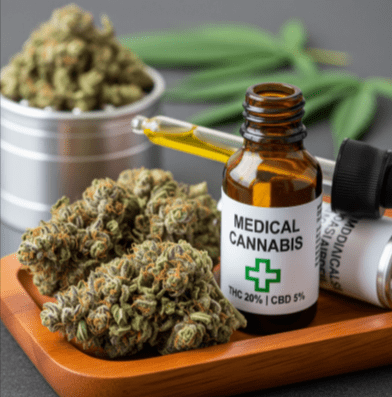
In a significant step forward for patient rights and medical cannabis access, the Washington State Senate has approved a bill that would allow terminally ill patients to use medical cannabis while receiving care in hospitals. The legislation, reported by Marijuana Moment, now heads to the House, where advocates are cautiously optimistic about its prospects.

For patients navigating the final stages of life, access to familiar and effective symptom management tools can make an enormous difference in quality of life. This bill represents a compassionate legislative effort to close a gap that has long frustrated palliative care providers, patients, and their families.

What the Bill Would Do

Under the proposed law, terminally ill patients who are registered medical cannabis patients in Washington State would be permitted to possess and consume cannabis products in hospital settings. This practice has historically been prohibited under federal law and hospital policy, even in states with robust medical cannabis programs.

Key provisions include the following. Terminally ill patients with a valid medical cannabis authorization may use cannabis in licensed healthcare facilities. Hospitals would not be required to provide cannabis, but would be prohibited from denying admission or care based on patient cannabis use. Protections extend to caregivers who assist patients with cannabis consumption. Facilities could set reasonable policies around consumption method, for example, prohibiting smoking but permitting edibles or tinctures. Healthcare workers would also be protected from disciplinary action for facilitating legal cannabis use under the bill.

This type of legislation is becoming increasingly necessary as more states move toward comprehensive cannabis legalization. With over 38 states now having medical cannabis programs, the disconnect between state legal access and federally influenced hospital policies has become a glaring inequity that disproportionately affects the most vulnerable patients.

Why This Matters Beyond Washington

Washington’s move follows similar efforts in other states. Vermont and Colorado have explored comparable policies, and advocates have long argued that denying terminally ill patients access to cannabis in hospital settings is not only needlessly cruel but also inconsistent with the broader goals of palliative and hospice care.

The National Hospice and Palliative Care Organization has noted a growing interest among patients in cannabis as a tool for managing pain, nausea, anxiety, and insomnia in end of life care. Yet the patchwork of regulations has made it nearly impossible for many patients to access these benefits while receiving inpatient treatment.

At the federal level, cannabis remains a Schedule I controlled substance under the Controlled Substances Act, a classification that many medical professionals and policy advocates argue is long overdue for revision. The U.S. Department of Health and Human Services recommended rescheduling cannabis to Schedule III in 2023, a process that remains ongoing under the DEA.

The Impact on Medical Cannabis Dispensaries

For cannabis dispensaries and retailers in Washington State, this legislation carries meaningful downstream implications.

First, it could expand the patient base. Terminally ill patients who previously could not use cannabis during hospital stays may now seek out dispensaries to find products optimized for their specific needs. Low dose, non smokable formats like tinctures, capsules, and edibles are likely to see increased demand.

Second, it elevates the role of knowledgeable staff. Patients navigating serious illness are not casual consumers. Dispensary staff who can speak confidently about dosing, product formats, cannabinoid ratios, and drug interactions will be increasingly valuable in a market where medical patients demand more.

Third, it drives new marketing opportunities. As cannabis gains further legitimacy in medical settings, the stigma surrounding it continues to erode. Dispensaries that position themselves as credible, medically informed resources rather than just retail outlets will be better positioned to capture this growing segment of the market.

Broader Legislative Context

Washington’s bill is part of a broader national trend of states incrementally expanding the rights of cannabis patients in ways that bring state law into closer alignment with public attitudes. Gallup polling consistently shows over 70 percent of Americans support cannabis legalization, with even higher support for medical cannabis specifically.

Nationally, organizations like the National Organization for the Reform of Marijuana Laws and the Marijuana Policy Project have tracked dozens of active state level bills aimed at expanding patient rights, reducing penalties, and modernizing cannabis policy in healthcare settings.

The passage of Washington’s hospital bill, even in the Senate alone, represents meaningful momentum. It signals that legislators are increasingly willing to prioritize patient dignity over the inconsistency of federal policy.

What Comes Next

The bill now moves to the Washington State House of Representatives for consideration. If passed and signed by the governor, implementation would require healthcare facilities to develop protocols for cannabis use, including staff training, patient documentation, and consumption policies.

Advocates will be watching closely. Similar bills in other states have faced resistance from hospital associations concerned about accreditation and federal funding. The Joint Commission, which accredits hospitals, has historically been a source of tension in these discussions, as federal accreditation standards often conflict with state cannabis laws.

Still, the landscape is shifting. For cannabis businesses, staying informed on legislation like this is not just about compliance. It is about recognizing the patients your business serves, and the role cannabis is increasingly playing in modern healthcare.

About Seedless Media 
Seedless Media is a full service digital marketing agency built specifically for the cannabis industry. We help dispensaries and cannabis retailers grow through proven digital strategies. Our services include expert PPC management for cannabis businesses using Google Ads and programmatic display advertising to reach your ideal customers. As a leading dispensary SEO company, we get your business ranking at the top of local search results where customers are actively looking. Our website development team creates beautiful, compliant sites designed to turn visitors into loyal customers. We also offer cannabis email marketing services and dispensary text messaging to keep your customers engaged and coming back. Whether you need one service or a complete digital strategy, Seedless Media delivers real, measurable results. We understand the unique challenges of cannabis marketing and create data-driven solutions that work.


Florida Lawmakers Vote to Slash Medical Marijuana Fees for Military Veterans

Florida legislators are moving quickly to make medical cannabis more affordable for the state’s military veterans. The House Health and Human Services Committee passed HB 887 in a unanimous 22 to 0 vote on February 24, 2026, advancing a bill that would reduce the cost of a medical cannabis registry identification card for honorably discharged veterans from $75 to just $15.

The legislation is sponsored by Republican Representatives Susan Valdés and Michelle Salzman and has now cleared three separate House committees without a single dissenting vote. A companion Senate bill, SB 1032, sponsored by Senator Alexis Calatayud, is advancing simultaneously and goes even further by expanding supply limits for all medical marijuana patients statewide.

What the Bill Does

Under HB 887, any veteran who has received an honorable discharge would qualify for the reduced $15 rate. The discounted fee applies not just to new applications but also to replacement cards and annual renewals. To qualify, veterans must provide the Florida Department of Health with a copy of their DD214 discharge form, a U.S. Department of Veterans Affairs identification card, or a Florida driver’s license bearing the veteran designation. If signed into law, the changes would take effect on July 1, 2026.

Representative Valdés summed up the intent of the bill before the committee vote: “Medical cannabis has shown promise in alleviating symptoms commonly experienced by our military veterans, like managing chronic pain, alleviating the effects of PTSD, improving sleep, and reducing the dependency on opioids. This bill will largely reduce the financial barriers that veterans face when accessing the card.”

Florida currently has more than 931,000 registered medical marijuana patients, making it one of the largest state cannabis programs in the country. The exact number of veterans currently enrolled in the program is unknown, but the Florida Department of Health acknowledges that the reduced fee will have a positive fiscal impact for qualifying veterans, who will see a $60 reduction in card costs.

The Senate Bill Goes Further

The Senate companion measure would not only cut veteran fees to $15 but also expand how much cannabis a physician can recommend at one time. Under current Florida law, doctors can recommend a maximum of three 70 day supply limits for non smokable cannabis products and six 35 day supply limits for smokable marijuana. SB 1032 would raise those ceilings to five 70 day supplies and ten 35 day supplies, respectively. The bill would also extend the patient evaluation requirement from every 30 weeks to every 52 weeks, reducing the burden on both patients and physicians.

Why This Matters

The U.S. Department of Veterans Affairs estimates that between 11 and 20 percent of veterans who served in Operations Iraqi Freedom and Enduring Freedom experience PTSD in any given year. Many veterans also deal with chronic pain, traumatic brain injury, and sleep disorders. Cannabis has emerged as a meaningful treatment option for many in the veteran community, and cost has consistently been one of the primary barriers to access.

Florida is home to more than 1.5 million military veterans, one of the largest veteran populations in the country. A $60 reduction in the cost of a medical cannabis card may seem incremental, but at scale, it represents a significant policy shift toward health equity for those who served.

Other Florida Cannabis Bills in Motion

The veteran fee legislation is just one piece of a much larger cannabis policy conversation happening in Tallahassee right now. A separate House bill would legalize recreational marijuana and restructure business licensing to break up what sponsors describe as monopolies in the current medical program. Another bill would protect the parental rights of medical cannabis patients, preventing them from losing custody or visitation rights for using their medicine in accordance with state law. Additional legislation would allow doctors to recommend cannabis to any patient who has already been prescribed opioids, and a Senate sponsored bill would legalize home cultivation for registered medical patients.

On the broader legalization front, the Smart and Safe Florida campaign is continuing to fight through legal challenges in its effort to place an adult use legalization measure on the 2026 ballot. Recent polling has shown 67 percent of Florida voters support full legalization, including 55 percent of Republicans, suggesting the appetite for expanded access is broadly shared across party lines.

What This Means for Cannabis Businesses

For dispensaries operating in Florida, expanding veteran access is both a policy development and a market opportunity. As the cost barrier drops and more veterans enter the program, operators who have built genuine relationships with the veteran community will be best positioned to serve them. That means investing now in education, staff training, and targeted outreach that speaks directly to what veterans are looking for from a cannabis provider.

The broader legislative picture in Florida reinforces what many in the industry already know: the market is expanding, access is widening, and the businesses that grow alongside those changes will be the ones that are prepared for them in advance.

About Seedless Media 

Seedless Media is a full service digital marketing agency built specifically for the cannabis industry. We help dispensaries and cannabis retailers grow through proven digital strategies. Our services include expert PPC management for cannabis businesses using Google Ads and programmatic display advertising to reach your ideal customers. As a leading dispensary SEO company, we get your business ranking at the top of local search results where customers are actively looking. Our website development team creates beautiful, compliant sites designed to turn visitors into loyal customers. We also offer cannabis email marketing services and dispensary text messaging to keep your customers engaged and coming back. Whether you need one service or a complete digital strategy, Seedless Media delivers real, measurable results. We understand the unique challenges of cannabis marketing and create data-driven solutions that work.


Connecticut Expands Psychedelics Pilot Program — What It Means for the Cannabis Industry

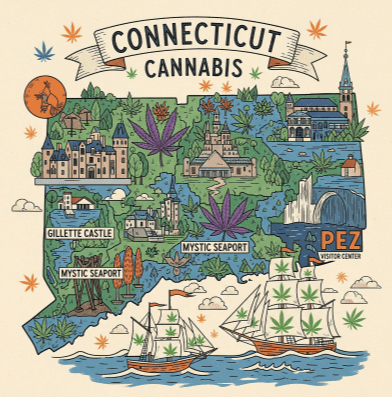
Connecticut just made a quiet but significant move in the march toward mainstream psychedelic medicine. On March 3, 2026, the state legislature’s Joint Committee on Public Health approved Senate Bill 191, legislation that expands the state’s existing psychedelic-assisted therapy pilot program, a move that ripples across the broader landscape of plant medicine and cannabis reform.

For cannabis industry stakeholders, operators, and investors, this development is worth paying close attention to. States that lead on psychedelic research often lead on cannabis policy, and the arguments being made in Hartford today mirror those made about medical marijuana a decade ago.

What Does SB 191 Actually Do?

Connecticut’s psychedelic therapy program was originally created to serve military veterans and first responders populations experiencing alarming rates of PTSD and suicide. The program allowed those individuals to participate in clinical trials involving psilocybin (the active compound in “magic mushrooms”) and MDMA as therapeutic agents under medical supervision.

SB 191 makes three critical changes. First, it expands eligibility to any adult aged 18 or older who meets the clinical criteria established by the institutional review board of the administering medical school, a direct response to requests from clinicians and researchers who argued the original restrictions were too narrow. Second, it removes the sunset clause that would have ended the program automatically if psilocybin or MDMA received DEA or FDA approval, ensuring Connecticut’s research infrastructure remains intact regardless of federal action. Third, it aligns program operations with FDA-approved research frameworks, maintaining scientific rigor while positioning the state to act quickly if federal approval materializes.

Sen. Saud Anwar (D), chair of the Public Health Committee, explained the rationale plainly: “There’s a chance that psychedelic medications for this purpose will be approved by the FDA, which makes the research study stop if you don’t make a change in the language. So that’s the main purpose of this.”

The FDA Angle: Why Now?

The timing of SB 191 is no accident. The FDA has been under significant pressure to evaluate MDMA-assisted therapy for PTSD treatment. MAPS (the Multidisciplinary Association for Psychedelic Studies) has spent decades conducting Phase 3 clinical trials, and psilocybin research at institutions like the Johns Hopkins Center for Psychedelic and Consciousness Research has generated compelling evidence that federal regulators can no longer ignore.

Connecticut lawmakers are essentially future-proofing their program. Without removing the sunset clause, an FDA approval, which many in the field now consider a matter of “when” rather than “if,” would have dismantled the state’s entire research infrastructure at exactly the moment it would have become most valuable.

A Pattern of Progressive Policy in Connecticut

This isn’t Connecticut’s first rodeo when it comes to psychedelic reform. The full House of Representatives passed a psilocybin decriminalization bill in 2025, and the state has now attempted to decriminalize psilocybin in three consecutive legislative sessions, the hallmark of a policy whose moment is arriving. Governor Ned Lamont also signed a sweeping budget bill in 2022 that included provisions establishing the original psychedelic treatment program, demonstrating executive-level openness to the therapeutic model even if full decriminalization has remained politically complicated.

What This Means for Cannabis Operators and Investors

The cannabis industry has a front-row seat to watch how psychedelic reform unfolds because cannabis blazed the trail. The same advocacy infrastructure, the same patient-first framing, and the same “research first, regulate later” strategy that moved cannabis from Schedule I curiosity to a multi-billion dollar industry is now being deployed for psychedelics.

Regulatory convergence is coming. As more states integrate psychedelic therapy programs, the frameworks being built now will influence how cannabis and psychedelics are governed together. Organizations like the National Cannabis Industry Association (NCIA) and the Drug Policy Alliance are already tracking the intersection of these policy streams, and operators who understand both landscapes will be positioned to expand as the broader plant medicine market evolves.

Consumer sentiment is also shifting. An estimated 10 million U.S. adults microdosed psychedelics last year. This consumer base has significant overlap with cannabis consumers educated, health-conscious, and increasingly open to plant-based wellness solutions. Dispensaries and cannabis retailers who understand this crossover customer are building long-term loyalty.

Connecticut’s Dual-Track Approach

Notably, Connecticut lawmakers are simultaneously advancing legislation to allow medical cannabis use in hospitals, nursing homes, and hospices, a bill also moving this session. This dual-track approach signals a maturing understanding among state legislators that plant medicine reform is about patient access and medical autonomy, not just recreational freedom.

The Bottom Line

Connecticut’s approval of SB 191 is a measured but meaningful step forward in the normalization of psychedelic-assisted therapy. By expanding eligibility, removing the sunset clause, and aligning with FDA research standards, Connecticut is positioning itself as a model for other states watching the federal landscape evolve.

The same political momentum, the same patient advocacy, and the same science-forward arguments that won cannabis legalization across 24 states are now reshaping the conversation around psychedelics. Connecticut is listening. For cannabis operators, the message is clear: the plant medicine space is expanding, and staying ahead of that curve starts with understanding where policy is heading. Follow ongoing coverage at Marijuana Moment and MJBizDaily to stay current as this legislation advances.

About Seedless Media 
Seedless Media is a full service digital marketing agency built specifically for the cannabis industry. We help dispensaries and cannabis retailers grow through proven digital strategies. Our services include expert PPC management for cannabis businesses using Google Ads and programmatic display advertising to reach your ideal customers. As a leading dispensary SEO company, we get your business ranking at the top of local search results where customers are actively looking. Our website development team creates beautiful, compliant sites designed to turn visitors into loyal customers. We also offer cannabis email marketing services and dispensary text messaging to keep your customers engaged and coming back. Whether you need one service or a complete digital strategy, Seedless Media delivers real, measurable results. We understand the unique challenges of cannabis marketing and create data-driven solutions that work.

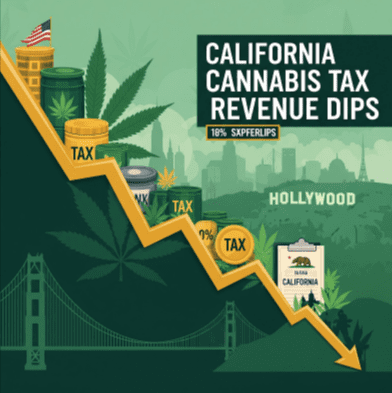
California Cannabis Tax Revenue Dips in Q4 2025 — Here’s What Dispensaries Need to Know

California’s legal cannabis market closed out 2025 with a familiar headline: tax revenue was down quarter over quarter. But before alarm bells start ringing across the dispensary industry, it’s worth reading the fine print, because the dip is almost entirely due to a temporary policy change, not a softening market.

According to data released by the California Department of Tax and Fee Administration (CDTFA), the state collected $255.1 million in cannabis tax revenue during Q4 2025 (October through December). That figure breaks down to $145.5 million in cannabis excise tax and $109.6 million in sales tax reported from cannabis businesses.

Why Did Revenue Fall from Q3?

At first glance, the drop from Q3’s $285.5 million looks steep. But context matters. During the July through September 2025 period, California’s cannabis excise tax rate was temporarily elevated to 19%, up from the standard 15%. That temporary spike was introduced as part of AB 195’s revenue offset mechanism to compensate for the 2022 elimination of the cultivation tax, which significantly inflated the prior quarter’s numbers.

When Governor Newsom signed AB 564, the excise rate returned to 15% on October 1, 2025. The Q4 decline is essentially the market normalizing back to baseline. Dispensaries and consumers were not spending less — the state was simply collecting at a lower rate.

The End of the Equity Vendor Compensation Program

Q4 2025 also marked the final installment of California’s equity vendor compensation program. Launched on January 1, 2023, the initiative allowed cannabis retailers who received an equity fee waiver from the Department of Cannabis Control (DCC) to retain 20% of the cannabis excise tax owed on their retail sales for an approved 12 month period.

In its final quarter, eligible vendors collectively retained $1.63 million. While modest relative to total state collections, the program was a meaningful lifeline for equity operators — cannabis businesses owned by individuals from communities disproportionately impacted by the war on drugs — helping reduce their tax burden during early operational years.

With the program now sunset, equity retailers will need to carefully evaluate their cost structures as they head into 2026. Rising compliance costs, intense competition from both the legacy market and well funded multi state operators, and the ongoing pressure of local taxes layered on top of state taxes make it critical for independent dispensaries to find efficiencies wherever possible.

The Big Picture: $7.87 Billion and Counting

Zoom out, and California’s legal cannabis industry tells a story of remarkable economic scale. The California Legislative Analyst’s Office projects the state will collect approximately $648 million in cannabis tax revenue for the full 2025 through 2026 fiscal year — $36 million above the January Governor’s Budget forecast.

Since legal sales began in January 2018, the market has generated more than $7.87 billion in cumulative tax revenue, including more than $4.19 billion in cannabis excise tax, more than $3.17 billion in sales tax, and $500.6 million in cultivation tax collected before that levy was eliminated in July 2022. The full breakdown of quarterly figures is publicly available on the CDTFA Open Data Portal. These funds are distributed into the California Marijuana Tax Fund to support childcare and early childhood development, medical research, youth substance abuse prevention, environmental recovery, and more.

What This Means for Dispensaries in 2026

The revenue figures are encouraging on a macro level, but operators on the ground know the picture is more complicated. California remains one of the most heavily taxed cannabis markets in the country. According to MJBizDaily, the effective tax rate on cannabis retail can exceed 35 to 45% in many California jurisdictions when layering state excise, state sales tax, and local business taxes — a burden that continues to fuel the illicit market and squeeze licensed operators’ margins.

With the excise tax now stabilized at 15% through at least June 30, 2028, operators have a degree of predictability that was absent during 2025’s temporary rate increase. That stability is a small but meaningful win for financial planning. Per the CDTFA Cannabis Tax Guide, the rate will be reevaluated on a two year cycle beginning in 2028 through 2029, with a hard cap of 19%.

For dispensaries navigating this environment, the most cost efficient path to profitability is not finding new customers; it is keeping the ones you already have. According to research cited by Harvard Business Review, increasing customer retention by just 5% can boost profits by 25 to 95%. That means investing in loyalty programs, personalized email campaigns, and SMS marketing channels that deliver measurable ROI at a fraction of the cost of paid acquisition. The dispensaries that thrive in 2026 will be the ones building direct relationships with their customers today.


About Seedless Media 
Seedless Media is a full service digital marketing agency built specifically for the cannabis industry. We help dispensaries and cannabis retailers grow through proven digital strategies. Our services include expert PPC management for cannabis businesses using Google Ads and programmatic display advertising to reach your ideal customers. As a leading dispensary SEO company, we get your business ranking at the top of local search results where customers are actively looking. Our website development team creates beautiful, compliant sites designed to turn visitors into loyal customers. We also offer cannabis email marketing services and dispensary text messaging to keep your customers engaged and coming back. Whether you need one service or a complete digital strategy, Seedless Media delivers real, measurable results. We understand the unique challenges of cannabis marketing and create data-driven solutions that work.

Marijuana Advocates Hope Trump’s Attorney General Will Give A Rescheduling Update At Congressional Hearing

Nearly two months have passed since President Donald Trump signed an executive order about marijuana rescheduling. The cannabis community is still waiting for real answers. Attorney General Pam Bondi will appear before the House Judiciary Committee next week. Industry advocates are watching closely, hoping she will finally provide the transparency this process demands.

At Seedless Media, we understand what’s at stake here. We’ve built our business on clarity, follow through, and honest communication. These are the same principles the cannabis market deserves from federal leadership.

The Wait for Rescheduling Continues

Trump’s order directed Bondi to move cannabis from Schedule I to Schedule III of the Controlled Substances Act. Reform supporters expected a straightforward completion of the rescheduling proposal that began during the Biden administration’s scientific review. That hasn’t happened.

The Justice Department has stayed silent. When Marijuana Moment reached out last month, a DOJ spokesperson offered no comment or updates. More recently, an agency official told Salon the department is working to find the fastest way to execute the order. That wording reveals uncertainty about the path forward.

This is where our industry knows better. At Seedless Media, we don’t speak in vague terms. We deliver on our commitments and communicate every step of the way. The cannabis world deserves that same level of accountability from federal agencies.

A Controversial Figure Leading the Process

Bondi’s history with cannabis reform complicates this situation. As Florida’s attorney general, she opposed marijuana reform efforts. She didn’t attend Trump’s signing ceremony for the executive order. Her ongoing silence has raised questions about whether the administration will follow through.

Paul Armentano, Deputy Director at NORML, expressed concern about the lack of transparency. He noted that while the attorney general holds significant legal influence over rescheduling, Bondi’s track record opposing state level reform raises red flags. He hopes next week’s hearing will provide the clarity this drawn out process desperately needs.

We started Seedless Media because we love the cannabis world. We know this industry thrives on trust and transparency. When leaders stay silent, progress stalls. That’s why we do what we say we will, every single time.

What’s at Stake for Real People

Millions of Americans use cannabis to manage chronic pain, PTSD, seizures, and other conditions. Rescheduling represents more than bureaucratic paperwork. It’s federal acknowledgment that cannabis has legitimate medical value.

Adam Smith, executive director of the Marijuana Policy Project, put it plainly. Rescheduling isn’t a complete solution to medical access issues. But it would represent an important step forward after decades of federal prohibition.

A recent poll from cannabis telehealth platform NuggMD shows the numbers clearly. Among cannabis consumers, 83 percent support Trump’s executive order. Only 7 percent oppose it. Another 10 percent remain neutral.

This is our community. These are the people we serve at Seedless Media. We’ve set ourselves apart by establishing business fundamentals built on process and results. We apply that same commitment to understanding the policies that affect everyone in this space.

Next Week’s Hearing: A Critical Moment

Wednesday’s House Judiciary Committee hearing gives lawmakers a chance to press Bondi for concrete answers. Several committee members have championed marijuana policy reform. However, other issues may compete for attention, including the disclosure of Jeffrey Epstein records.

The cannabis community is watching. The White House recently promoted Trump’s rescheduling order as a first year policy achievement. But without concrete progress, words ring hollow. Actions matter more than announcements.

Former Representative Matt Gaetz added confusion last week. He claimed the DEA is actively drafting a rescheduling rule to be issued as soon as possible. But a rule already sits pending before the Justice Department. Creating a new rule would require additional review and public comment.

At Seedless Media, we don’t operate in confusion. We provide clear communication and follow up that sets us apart. The cannabis industry deserves federal partners who do the same.

What Happens Next

Senator Cory Booker expressed cautious optimism about Trump’s cannabis order while voicing concerns about the DOJ’s direction. He noted the administration’s tendency to send mixed messages. He’s taking a wait and see approach, though he acknowledged some aspects look promising for ending generations of injustice.

The DEA stated that the cannabis rescheduling appeal process remains pending despite Trump’s executive order. Congressional researchers suggested that DOJ could, in theory, reject the president’s directive or restart the scientific review. Such moves would likely spark major political backlash.

As Wednesday’s hearing approaches, advocates and industry stakeholders want the same thing. Transparency. Commitment. Follow through. These aren’t radical demands. They’re basic business fundamentals.

At Seedless Media, we built our company on doing what no other cannabis digital marketer does. We deliver on our promises with communication that actually means something. The cannabis world deserves federal leadership that operates the same way.

The Bottom Line

This hearing will test whether the Trump administration truly supports marijuana rescheduling or if the support is just political theater. For millions of Americans who rely on cannabis for medical relief, the difference is everything.

Federal prohibition has lasted for decades. The rescheduling process has already dragged on far too long. The cannabis community needs swift action and clear answers, not more silence and speculation.

We love this industry. That’s why we demand better. That’s why we show up differently at Seedless Media. And that’s why next Wednesday matters so much for everyone who believes cannabis deserves its rightful place in American medicine and commerce.

About Seedless Media

Seedless Media is a full service digital marketing agency built specifically for the cannabis industry. We help dispensaries and cannabis retailers grow through proven digital strategies. Our services include expert PPC management for cannabis businesses using Google Ads and programmatic display advertising to reach your ideal customers. As a leading dispensary SEO company, we get your business ranking at the top of local search results where customers are actively looking. Our website development team creates beautiful, compliant sites designed to turn visitors into loyal customers. We also offer cannabis email marketing services and dispensary text messaging to keep your customers engaged and coming back. Whether you need one service or a complete digital strategy, Seedless Media delivers real, measurable results. We understand the unique challenges of cannabis marketing and create data driven solutions that work.


The Cali Gold Strategy: What California’s $1 Billion Sales Plan Means for Your Cannabis Business

At Seedless Media, we live and breathe the cannabis industry. When California’s Department of Cannabis Control announced its ambitious $1 billion growth target, we knew exactly what it meant for businesses like yours. This isn’t just policy news. This is your roadmap to opportunity.

Clint Kellum took charge of the California Department of Cannabis Control in January 2026 with a clear mission: add $1 billion in legal sales each year. For the cannabis brands and retailers we partner with, this signals a major shift in how California approaches market growth. Let us break down what’s happening and how you can position your business to win.

Understanding the Market Opportunity

We’ve been tracking California’s cannabis market since day one. Eight years after the first legal sale, the numbers tell a story that every business owner needs to understand. California commands the largest cannabis market in the world with $4.7 billion in sales. But here’s what keeps us up at night: only 40% of cannabis consumed in the state comes from legal channels.

Think about that. For every dollar spent in a licensed dispensary, $1.50 goes to unlicensed sellers. This isn’t just a problem. It’s a massive opportunity waiting for the right strategy.

The market has faced real challenges. Legal sales dropped from $5.7 billion in 2021 to $4.66 billion in 2024. That’s a five year low. But at Seedless Media, we don’t just report problems. We help our clients solve them. That’s why we’re watching Kellum’s plan so closely.

The Math Behind the $1 Billion Opportunity

Here’s where our process driven approach comes in. We break down complex policies into actionable strategies. Kellum’s plan is built on simple math with powerful implications.

Current state: 40% legal market share. Target: 50% legal market share. Result: $1 billion in additional annual sales.

That’s a 25% increase in market capture. Kellum calls this “a pretty aggressive marker.” We call it exactly the kind of growth environment where smart marketing makes the difference.

Will this happen overnight? No. Kellum is clear about that. “We want to see more California consumers use the legal market,” he said. Progress will be slow but steady. As with the transition after Prohibition, this will take time.

But here’s what we know from working with cannabis brands every day: the businesses that position themselves now will capture the lion’s share of that billion dollar growth. That’s where we come in.

Four Growth Pillars (And How to Capitalize on Each)

Kellum outlined four strategies to capture that billion dollar opportunity. At Seedless Media, we’re already building marketing campaigns around each one. Here’s what you need to know:

  1. Safe and Trusted Products for Buyers

The Strategy: Build consumer trust through rigorous testing and quality standards that separate legal products from illegal alternatives.

Your Opportunity: Brand storytelling. Consumers need to understand why your licensed product is worth the premium. We help our clients communicate quality, safety, and reliability in ways that convert browsers into buyers. No fluff. Just clear messaging that drives sales.

  1. Continued Pressure on the Illegal Market

The Numbers: California seized over $1.2 billion worth of illegal cannabis in 2025 alone. That’s 18 times more than 2022. The Unified Cannabis Enforcement Task Force conducted 48 operations across 23 counties, serving more than 250 search warrants.

Your Opportunity: As enforcement tightens, consumers will migrate to legal channels. But they need to find you first. That’s where strategic cannabis digital marketing becomes critical. We position our clients to capture this shifting demand.

  1. More Stores and Better Education

The Challenge: Many cities still restrict cannabis retail. Consumer education remains weak.

Your Opportunity: Education is marketing. The brands that teach consumers why legal cannabis matters will own the conversation. We build content strategies that inform, engage, and convert. Every piece of content serves a purpose. Every campaign drives measurable results.

  1. Fewer Rules for Legal Businesses

The Goal: Reduce regulatory burden without compromising safety. Make legal operators more competitive.

Your Opportunity: As compliance gets easier, operational efficiency improves. That means more budget for growth. We help our clients deploy their budget strategically to maximize ROI. No wasted spend. Just results.

Why Kellum’s Background Matters for Your Business

At Seedless Media, we believe in doing our homework. Understanding who’s making decisions helps us anticipate what’s coming next. Kellum brings 17 years of California government experience to this role. He worked at the Department of Finance on cannabis issues, the Department of Corrections and Rehabilitation, and, most recently, led the California Infrastructure and Economic Development Bank.

Why does this matter to you? Because Kellum knows how to navigate Sacramento. Cannabis regulation touches Fish & Wildlife, workplace safety, tax collection, and more. Someone who can coordinate across agencies can actually move the needle.

Governor Newsom appointed Kellum in November 2025. He officially started in January 2026, replacing Nicole Elliott. The transition signals a new approach focused on growth, not just regulation.

We’re watching these shifts closely because they create opportunities for our clients. When policy changes, smart marketers move first.

The Challenges (And Why They Don’t Change the Opportunity)

Here’s where we separate hope from strategy. Kellum faces real challenges beyond his control. We don’t sugarcoat this for our clients. We plan around it.

Tax Reform: California lowered the cannabis tax from 19% to 15%. Any further cuts need legislative approval. That takes time and political will.

Local Regulations: Cities and counties control local permits. Neither the governor nor the DCC can force them to allow cannabis businesses. This remains the biggest barrier to retail expansion.

Federal Rescheduling: Moving marijuana from Schedule I to Schedule III would eliminate IRS Section 280E. That’s the tax code that prevents cannabis businesses from deducting ordinary and necessary operating expenses. President Trump ordered expedited rescheduling in December, but the process faces administrative hurdles and potential legal challenges.

These obstacles are real. But here’s what we tell every client: you can’t control policy, but you can control positioning. While others wait for perfect conditions, smart operators capture market share. That’s the Seedless Media difference. We focus on what you can control and help you execute relentlessly.

The Long Game: Why Now Is the Time to Act

Kellum is right about one thing: “We’re still a ways away from figuring out what the long term steady state is.” Other mature markets might eventually reach 80%-90% legal consumption. California’s timeline remains uncertain.

But uncertainty creates opportunity for businesses that move decisively. The market peaked in 2021, struggled through tax increases and regulatory challenges, and is now stabilizing. December 2025 sales hit $348 million, up 0.6% year over year and 4.9% month over month.

At Seedless Media, we see this inflection point clearly. The businesses that build brand equity now, while competitors hesitate, will dominate when that billion-dollar growth materializes. We’ve seen this pattern before in emerging markets.

That’s why our clients don’t wait for perfect conditions. They execute. They test. They optimize. They grow. While others plan, we deliver results.

What This Means for Your Business (And How Seedless Media Can Help)

The Cali Gold strategy isn’t flashy. It’s methodical. Product safety. Enforcement against illegal operators. Retail expansion. Smart regulatory reform. Kellum believes California can chip away at the illegal market’s 60% control.

We believe it too. But belief without execution is just hope.

Adding $1 billion in legal sales won’t happen overnight. But it will happen. The question is: will your business capture its share?

Here’s what separates winners from everyone else in this market: process. Strategy. Communication. Follow through. These aren’t buzzwords for us. They’re commitments.

At Seedless Media, we do what we say we will. Every time. We provide communication and follow up that sets us apart from every other digital marketer in this space. Why? Because we started this company out of love for the cannabis industry. We’re not here to coast. We’re here to help you win.

The California cannabis market has generated over $7.61 billion in tax revenue since January 2018. With 8,252 active licenses as of June 2025, competition is fierce. The brands that will capture that billion dollar opportunity aren’t the ones with the biggest budgets. They’re the ones with the clearest strategy and the best execution.

Ready to position your cannabis business for California’s next growth wave?
Let’s talk. We’ll show you exactly how we’re different and lay out a process driven plan to capture your share of that $1 billion opportunity.

Because in this industry, talk is cheap. Results are everything. And results are what we deliver.

About Seedless Media

Seedless Media is a full service digital marketing agency built specifically for the cannabis industry. We help dispensaries and cannabis retailers grow through proven digital strategies. Our services include expert PPC management for cannabis businesses using Google Ads and programmatic display advertising to reach your ideal customers. As a leading dispensary SEO company, we get your business ranking at the top of local search results where customers are actively looking. Our website development team creates beautiful, compliant sites designed to turn visitors into loyal customers. We also offer cannabis email marketing services and dispensary text messaging to keep your customers engaged and coming back. Whether you need one service or a complete digital strategy, Seedless Media delivers real, measurable results. We understand the unique challenges of cannabis marketing and create data driven solutions that work.


Marijuana’s Shadow: Is the Hemp Industry About to Be Forced Into Federal Non-Compliance?

For years, the hemp industry has operated in a sun-drenched “loophole.” While marijuana remained a strictly regulated (and federally illegal) substance, the 2018 Farm Bill birthed a multi-billion dollar market for hemp-derived products. By defining hemp as any cannabis plant with less than 0.3% Delta-9 THC, Congress inadvertently opened the door for a massive gray market of intoxicating isomers like Delta-8, Delta-10, and THCA.

However, a sudden legislative shift in late 2025 has cast a long shadow over this booming sector. As we move into 2026, the question isn’t just about regulation—it’s about survival.


The “Loophole” is Closing

The core of the issue lies in new federal language—specifically within the Continuing Appropriations Act and various amendments—that fundamentally redefines what “hemp” is. For years, the industry thrived on a technicality: if it wasn’t Delta-9 THC, it wasn’t “marijuana.”

The new federal standards, set to take full effect on November 12, 2026, change the game in three devastating ways:

  • From “Delta-9” to “Total THC”: The 0.3% threshold will now apply to Total THC, which includes THCA (the precursor that turns into THC when heated). This effectively criminalizes the vast majority of hemp flower currently on the market.

  • The 0.4mg Per-Container Cap: In perhaps the most restrictive move yet, federal law now limits final hemp products to just 0.4 milligrams of Total THC per container. For perspective, a standard hemp-derived gummy often contains 5mg to 10mg.

  • The Ban on Synthetics: Any cannabinoid synthesized or manufactured outside the plant (like Delta-8 converted from CBD) is now excluded from the definition of hemp, pushing it back into the category of a Schedule I Controlled Substance.


The Economic Fallout

Industry analysts estimate that these changes could wipe out 95% of the $28 billion hemp retail market. This isn’t just a blow to “head shops”—it’s a crisis for:

  1. Farmers: Thousands of acres of hemp grown for cannabinoids may now be considered “hot” (non-compliant) and must be destroyed.

  2. Small Businesses: Retailers who built their livelihoods on CBD and Delta-8 products face a choice: pivot to industrial fiber or face federal prosecution.

  3. Wellness Consumers: Even non-intoxicating “full-spectrum” CBD oils often exceed the 0.4mg per-container limit, meaning medical patients could lose access to their preferred tinctures.


A Conflict of Laws

We are entering a period of “forced non-compliance.” Many states, such as Tennessee and Florida, have already established their own robust regulatory frameworks for hemp-derived intoxicants, complete with age gates and testing.

The new federal law creates a legal collision. Businesses that are 100% compliant with their state laws will find themselves in direct violation of federal law. Unlike the “hands-off” approach the Department of Justice has largely taken with state-legal marijuana, there are currently no spending protections in place to prevent the DEA from cracking down on the hemp industry.

“The industry is being asked to hit a target that doesn’t exist anymore. By the time the clock hits November 2026, many of the most popular products in America will be federally indistinguishable from heroin in the eyes of the law.”


What’s Next?

The hemp industry is not going down without a fight. Trade groups are currently lobbying for a “corrective” Farm Bill that would create a separate category for “intoxicating hemp” rather than a total ban. Meanwhile, some businesses are considering pivoting to Schedule III frameworks as marijuana rescheduling efforts continue to move through the executive branch.


Exploring the MJBizCon: A Premier Cannabis Business Conference

Exploring the MJBizCon: A Premier Cannabis Business Conference

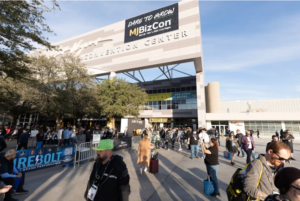
The cannabis industry has been rapidly evolving, and at the heart of this transformation is the MJBizCon, the world’s largest cannabis business conference and trade show. Held annually, MJBizCon has become an unmissable event for industry professionals, entrepreneurs, and enthusiasts alike. Here’s a look at what makes this conference so special and why it’s worth attending.

What is MJBizCon?

MJBizCon, organized by MJBizDaily, is celebrated for its comprehensive coverage of the cannabis industry. From cultivation to retail, technology to compliance, the conference touches on every aspect of the business. This year’s event is scheduled to take place from December 3-6 at the Las Vegas Convention Center, drawing thousands of attendees from across the globe.

Highlights from MJBizCon

Iconic Speakers and Sessions

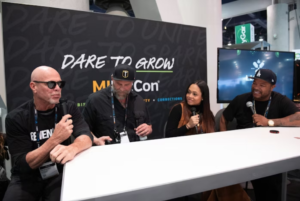
One of the standout features of MJBizCon is its impressive lineup of speakers. This year, NBA legend and industry entrepreneur Carmelo Anthony will be a headline speaker. Known for his contributions both on and off the basketball court, Anthony’s insights into the cannabis industry are highly anticipated. The conference offers a plethora of sessions and panels covering various facets of the industry, from cultivation techniques to marketing strategies. View the conference schedule ahead of your visit to take advantage of the experience.

Business Opportunities and Networking

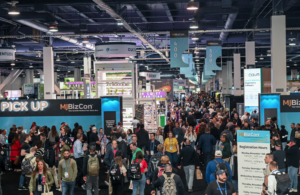
MJBizCon serves as a melting pot for cannabis professionals, providing unparalleled networking opportunities. Attendees can connect with thousands of like-minded individuals, explore potential business partnerships, and stay abreast of the latest trends and innovations. The event also includes an extensive trade show featuring exhibitors from around the world, showcasing cutting-edge products and services.

Social Equity Scholarship Program

In an effort to promote inclusivity, MJBizCon has reintroduced its social equity scholarship program. This initiative offers scholarships to social equity license applicants and license holders, enabling them to attend the conference. It’s a commendable effort to ensure that the industry remains accessible and diverse, providing opportunities to those who have been disproportionately affected by cannabis prohibition.

Industry Trends and Innovations

This year’s MJBizCon promises a wealth of insights into the latest industry trends. For instance, there is a renewed interest among veteran cannabis cultivators in seeds over clones. This shift is driven by the demand for product uniformity while maintaining the traditional affinity for sharing seeds. Additionally, the conference will delve into new opportunities within the industry, such as the burgeoning market for psychedelic therapy, particularly in light of Massachusetts’ potential legalization of psychedelics in November.

Collaborations and New Ventures

MJBizDaily’s partnership with Cultivated Media is another exciting development leading up to MJBizCon. Together, they are working on a cannabis business podcast that promises to offer valuable content for industry professionals. Furthermore, the diversification within the industry is evident with former cannabis executives like Zach Dorsett pivoting to innovative products such as Wonderbags, pre-colonized mycelium substrate kits for mushroom cultivation.

Why Attend MJBizCon?

Attending MJBizCon provides a unique opportunity to immerse yourself in the cannabis industry. Whether you’re a seasoned professional or just starting, the conference offers invaluable resources, knowledge, and connections that can propel your business forward. The combination of high-profile speakers, extensive networking opportunities, and a vast exhibition hall ensures that every attendee leaves with something of value.

Get Involved

With the cannabis industry continuing to grow, MJBizCon remains a pivotal event for anyone involved or interested in the sector. From groundbreaking sessions and networking events to cutting-edge products and services, the conference encapsulates the dynamism and potential of the cannabis industry.

Mark your calendars for December 3-6, and prepare to be a part of the world’s largest cannabis business conference at the Las Vegas Convention Center. For more details and to register, visit MJBizCon.


Leaf Design

New York’s Cannabis Market Poised to Hit $1 Billion in Sales by Year-End


New York’s legal cannabis industry is making waves, with experts predicting it will reach an astonishing $1 billion in sales by the end of the year with more adult-use licenses. This impressive growth comes on the heels of significant regulatory shifts and growing demand for both recreational and medical cannabis products. But what’s driving this boom, and what does it mean for the state’s economy, cannabis businesses, and cannabis digital marketing?

The Growth of New York’s Cannabis Industry

Since the legalization of adult-use cannabis in New York, the market has experienced a rapid transformation. With a population of nearly 20 million and strong tourism, the demand for cannabis products has soared. According to industry insiders, this surge in consumer interest, coupled with the state’s careful regulatory approach, has set the stage for massive growth. For businesses looking to capitalize on this momentum, partnering with a digital marketing agency that specializes in the cannabis industry is key to staying competitive.

Legal cannabis sales began in earnest in late 2022, and within a year, the industry is on track to hit the $1 billion mark. Dispensaries, edibles, THC-infused beverages, wellness products, and cannabis digital marketing services are some of the segments experiencing unprecedented success.

Impact on New York’s Economy and Job Market

The economic impact of the cannabis market’s growth is significant. In addition to the direct sales of cannabis products, the industry has created thousands of jobs in cultivation, retail, and ancillary services like marketing, compliance, and logistics. A thriving legal market also means tax revenue, with New York projected to generate hundreds of millions of dollars in cannabis taxes, contributing to education, community programs, and public health initiatives.

Moreover, the rise of cannabis businesses has created a ripple effect in supporting industries such as packaging, security, and transportation. New York is quickly becoming a national leader in cannabis, mirroring the successes of states like California and Colorado.

Regulatory Challenges and Market Expansion

While the potential for New York’s cannabis industry is vast, it hasn’t been without challenges. The Office of Cannabis Management (OCM) has been tasked with overseeing a market that must balance strict regulations with growth opportunities. Licensing has been a contentious issue, with delays causing frustration for some operators. However, as the OCM continues to streamline its processes, more dispensaries and growers are coming online, increasing the market’s capacity.

Additionally, the state is prioritizing equity in cannabis, with initiatives aimed at supporting marginalized communities and entrepreneurs. The Cannabis Equity Program, for instance, is designed to ensure that those disproportionately affected by past cannabis prohibition can find a foothold in the legal market.

The Future of Cannabis in New York

As New York heads toward  $1 billion in cannabis sales,  industry experts predict continued expansion in 2025 and beyond. With a focus on innovation, product diversity, and social equity, New York’s cannabis market is poised to remain a significant player on the national stage. Expect to see even more brands entering the scene and a broader acceptance of cannabis as part of mainstream wellness and recreational activities.

For cannabis businesses, partnering with a digital marketing agency is crucial to navigating the ever-evolving New York cannabis landscape and reaching new customers through targeted strategies, innovative campaigns, and effective online presence.


Pre-Rolls Spark Fastest Growth Category in the Cannabis Industry

The cannabis industry is witnessing a remarkable trend: pre-rolls have become the fastest-growing product category, showing exceptional growth and consumer demand. According to a recent study by MJBizDaily, pre-roll sales surged by 19% between June 2023 and June 2024, outpacing other cannabis product categories. This article explores why pre-rolls are gaining traction and how the market is evolving to meet the rising demand.

The Convenience Factor Driving Pre-Roll Popularity

One of the primary reasons for the pre-roll boom is the product’s convenience. Pre-rolls offer a ready-to-use solution for cannabis consumers, eliminating the need for grinding or rolling. Whether you’re a seasoned user or a newcomer, pre-rolls provide a quick and hassle-free option. Consumers can simply purchase and enjoy without the extra steps associated with preparing cannabis.

As cannabis consumption becomes more socially accepted and widespread, consumers are increasingly seeking products that fit their fast-paced lifestyles. The convenience of pre-rolls makes them perfect for on-the-go use, social events, or relaxing at home. This ease of use is a significant factor driving the surge in sales.

Diverse Options Fueling Market Expansion

The growth of pre-rolls is not just about convenience; it’s also about variety. Dispensaries and brands have expanded their offerings to include a wide range of pre-roll types, catering to diverse consumer preferences. From classic strains like indica, sativa, and hybrids to infused pre-rolls packed with concentrates for an elevated experience, the market now offers something for everyone.

According to MJBizDaily’s report, pre-roll sales have climbed dramatically, with the most popular being multi-packs and infused varieties. Infused pre-rolls, which combine flowers with concentrates such as kief or live resin, have particularly captured the attention of consumers seeking a more potent experience. Brands are also tapping into the trend of limited-edition collaborations, offering exclusive products that appeal to cannabis enthusiasts looking for something unique.

Impact on the Cannabis Industry and Future Outlook

The rapid growth of pre-rolls has significant implications for the cannabis industry. Dispensaries are increasingly focusing on expanding their pre-roll inventory to meet the rising demand, while brands are investing in product innovation and quality control. This shift highlights the importance of convenience-focused products in the evolving cannabis market.

The future of pre-rolls is bright, with plenty of room for further growth. As brands experiment with new infusion techniques, sustainable packaging, and premium ingredients, consumers can expect even more diversity and innovation in the pre-roll sector. The focus will likely remain on enhancing the user experience while meeting the demand for eco-friendly and high-quality products.

For cannabis businesses looking to capitalize on this trend, working with a digital marketing agency that specializes in cannabis marketing can be a game changer. A professional agency like Seedless Media can help dispensaries and brands leverage marketing automation to maximize their reach and target the growing pre-roll audience effectively. By prioritizing variety, quality, and innovation, brands can ensure they remain competitive in a booming market.