Every dispensary in your market is planning the same October. Discount, holiday graphic, discount again.
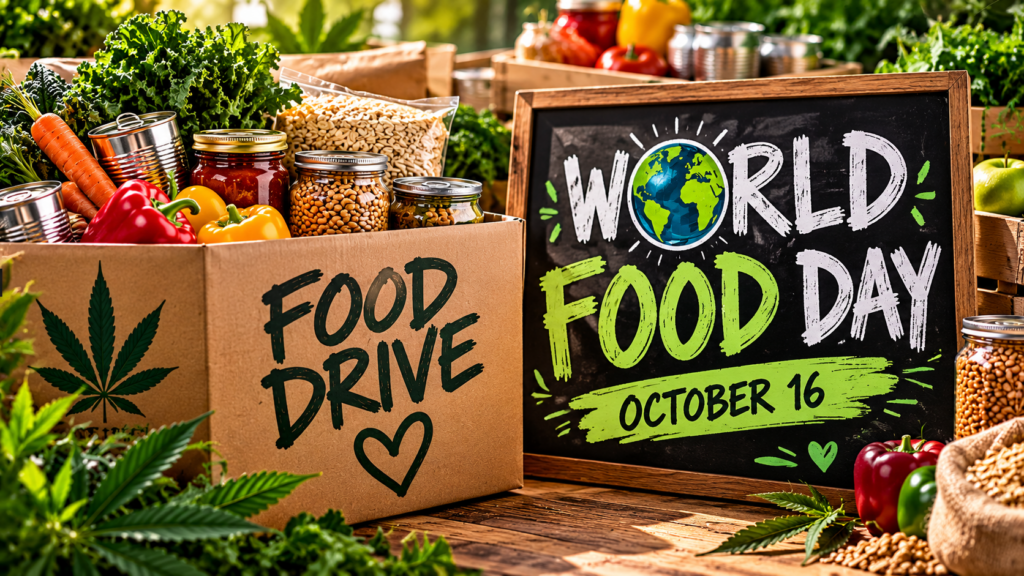
World Food Day on October 16 offers a different play. It is a chance to show up in your community as a neighbor rather than a retailer.
That distinction matters more than most operators realize. Local trust is the one advantage a national competitor cannot buy. It also feeds the local marketing channels dispensaries actually own. Our team has spent more than 30 combined years inside regulated retail. Community programs outlast every seasonal discount we have ever run.
A quick note before the tactics. Cannabis rules vary by state and by municipality, and nothing here is legal advice. Check your own license conditions first.
Here is why this particular observance fits the industry so well.
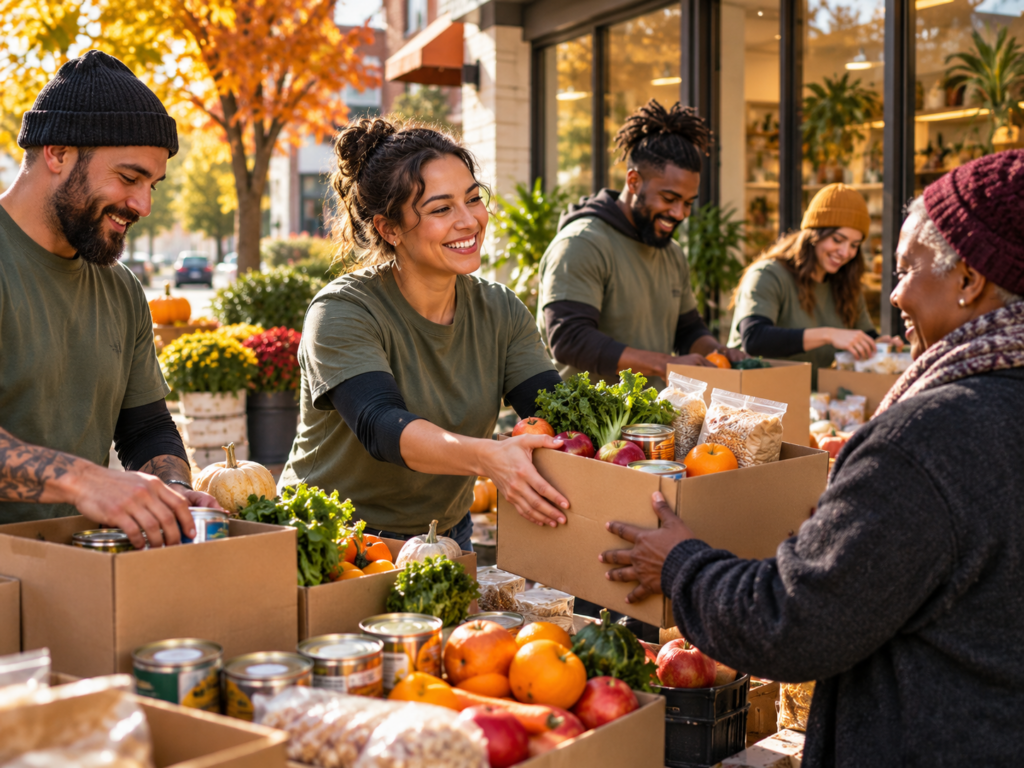
World Food Day marks the founding of the UN Food and Agriculture Organization in 1945. The FAO’s annual campaign draws participation from nearly 150 countries.
The need is not abstract. USDA research found that 13.7 percent of American households were food insecure in 2024. That is 18.3 million households.
Your customers live in those numbers. So do your budtenders.
Cannabis retail also carries a specific reputational burden. Operators spend years proving they are legitimate local businesses rather than a nuisance.
Visible community work is the fastest way to close that gap. It is also one of the few marketing activities no ad platform can reject.
That last point deserves weight. When Google, Meta, and most programmatic exchanges restrict your category, earned attention stops being a nice-to-have. It becomes a primary channel.
There is a catch, and it is a serious one.
Here is the mistake we see every year. An operator plans a food drive. Then they offer a discount or a free pre-roll to anyone who brings canned goods.
That structure is illegal in most licensed markets.
Connecticut states it directly. Under state rules, no one may gift, sell, or transfer cannabis in exchange for any donation. That includes charitable donations. The same rule covers door prizes, goodie bags, and swag bags at events.
New York goes further. Its guidance for adult-use retail dispensaries says licensees cannot give away cannabis products through donation at all.
That same guidance bars advertising giveaways, discounts, or loyalty rewards. Words like sale, free, and discount are prohibited in customer communications.
New York dispensaries also cannot sell non-cannabis food or beverages beyond water. That one surprises people planning an in-store food event.
Rules differ sharply across markets. Washington permits limited donation only to qualifying medical patients. Massachusetts draws a similar line between adult-use and medical licensees.
So build the program around a simple principle. Cannabis never changes hands, and the donation never buys anything.
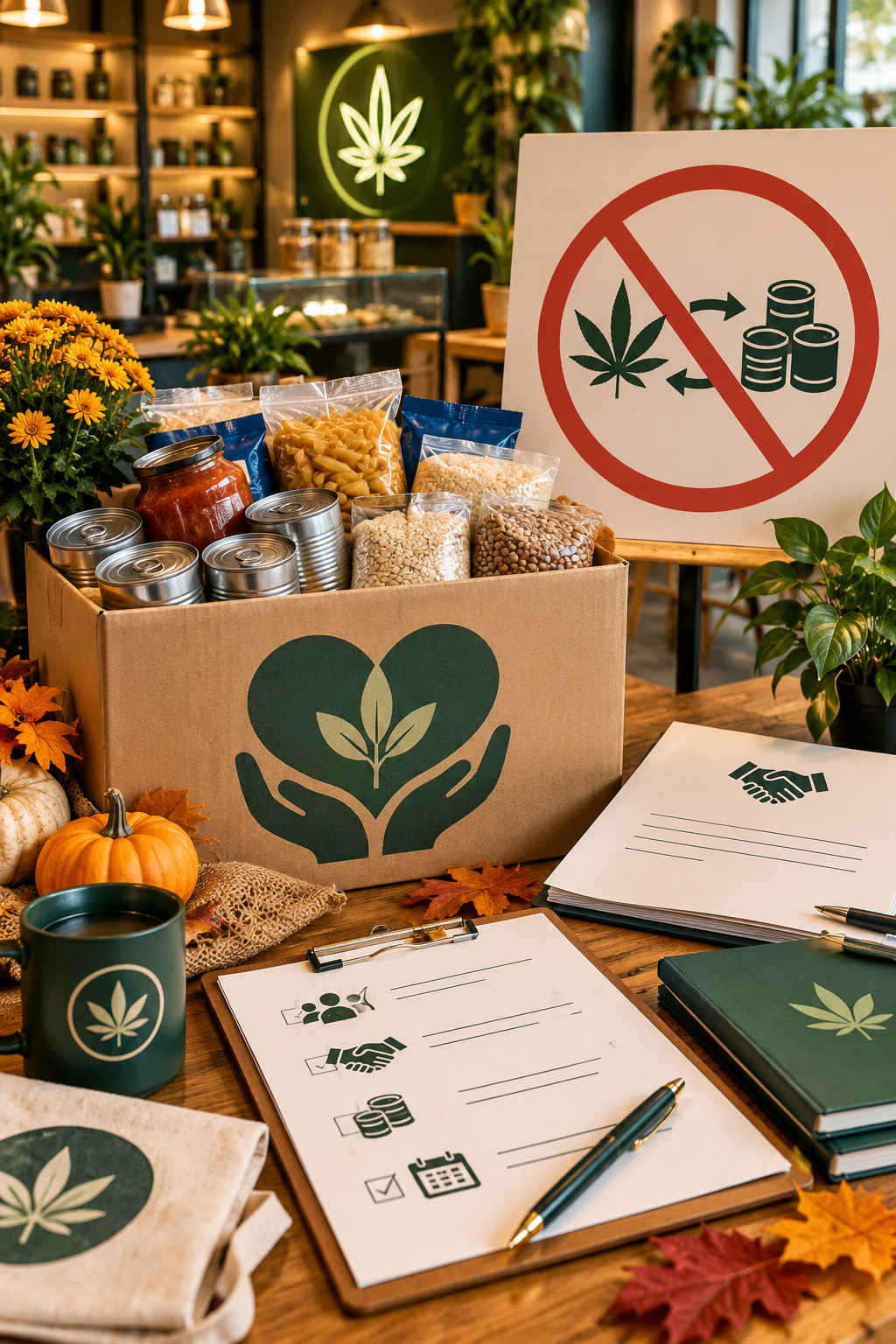
Expert Insight: The outreach that performs best is the outreach you barely promote.
Operators who wrap a food drive in a promotional push get read as opportunistic. The goodwill evaporates on contact. Programs that build durable local trust run quietly and get reported by someone else.
The measurable return is rarely same-week foot traffic. It shows up as local press mentions and earned links to your site. It also shows up in local search signals and lower staff turnover.
Budget it like brand investment with a twelve-month payback, not like a weekend promotion.
That reframing changes how you design the program.
Each of these keeps cannabis entirely out of the transaction. Each one also gives you something legitimate to talk about afterward.
Get the partnership in writing before anything launches. Some nonprofits have gift acceptance policies that exclude cannabis businesses, and you want to know that in September.
Now for the part operators consistently underuse.
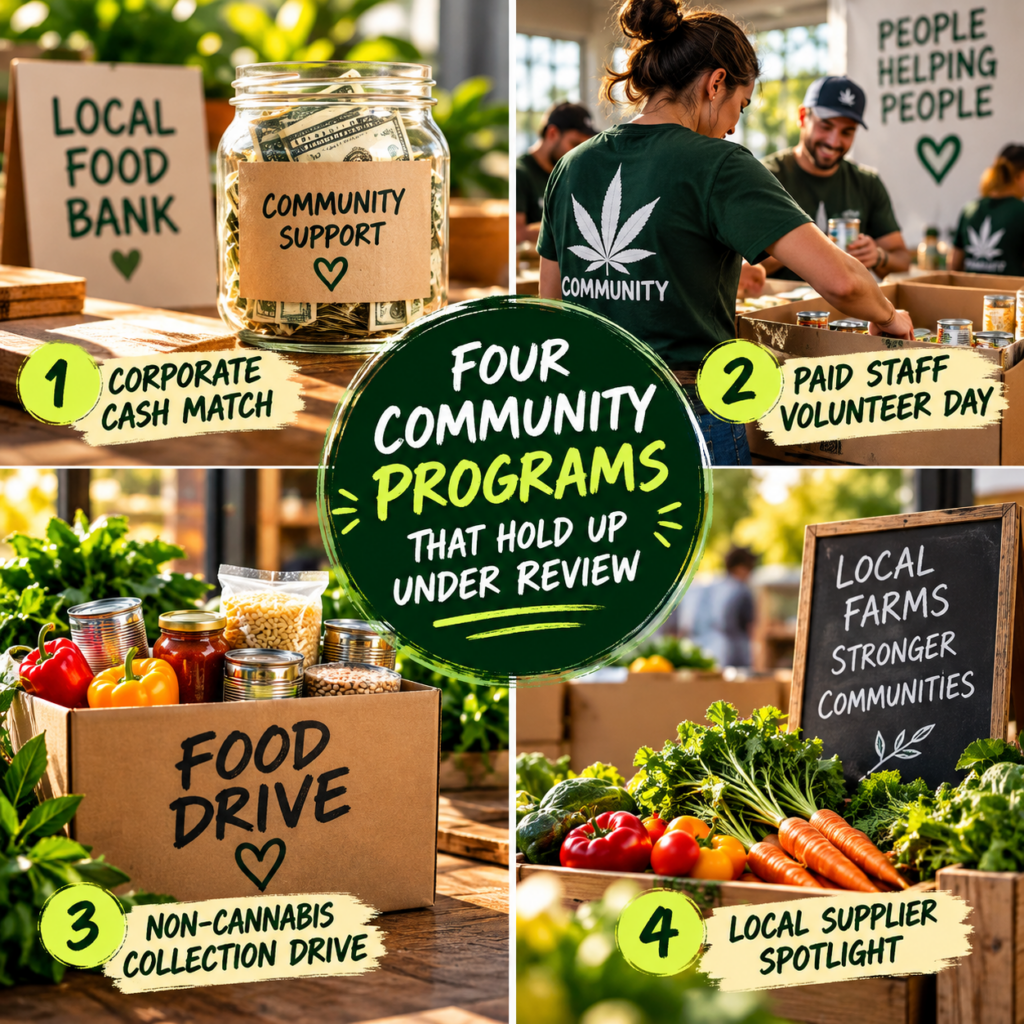
You can report on what you did. You just cannot attach an offer to it.
Write a plain recap on your own site. Name the organization, state the amount or the volume collected, and include photographs of your team working.
That page earns local links when the nonprofit and local outlets reference it. Those links are among the strongest signals available for local search in this industry.
Pitch local reporters with the numbers rather than your brand story. A food bank partner will often co-issue the release, which doubles your credibility.
Tell your staff first. Internal pride drives the social sharing that no paid budget replicates.
Update your Google Business Profile and your community page. Keep the record permanent, because next October you will want the history.
Add photos to that profile the same week. Local pack rankings respond to freshness signals. Community photos are the rare asset that is both compliant and genuinely interesting to look at.
A few questions come up every year at this stage.
Yes, World Food Day is relevant because it addresses food insecurity in the same neighborhoods your store serves. It offers community visibility through a channel that no advertising platform can restrict or reject.
No, cannabis donations are prohibited in most licensed markets. Several states specifically bar gifting or transferring product in exchange for any charitable donation. Donate cash, staff time, or non-cannabis goods instead.
No, that structure is risky and often prohibited outright. Tying product value to a donation resembles an illegal giveaway. Some states also ban promotional words like free and discount in customer communications.
Yes, community programs are measurable through local press mentions, earned backlinks, branded search volume, and staff retention. Track those over a full year rather than a single week.
No, October 16 is simply the anchor date. Food insecurity peaks through winter. Many operators use World Food Day to launch a program that runs through the holiday season.
A single food drive will not reposition your brand. A consistent community presence will.
Over a year, that presence shows up in how local reporters describe you. It shows up in how city council members talk about your license renewal.
It also shows up in hiring, because people want to work somewhere that does something.
Cannabis marketing and donation rules differ by state, license type, and city. This article is general guidance and not legal advice. Confirm your program with your compliance officer and licensed cannabis counsel before launch.
Community marketing works when it is planned, documented, and repeated. One-off gestures rarely survive contact with a compliance review.
Seedless Media helps licensed operators build outreach into the marketing calendar instead of bolting it on. See how we approach dispensary marketing. Then bring us your October plan. We will find the compliance gaps before a regulator does.