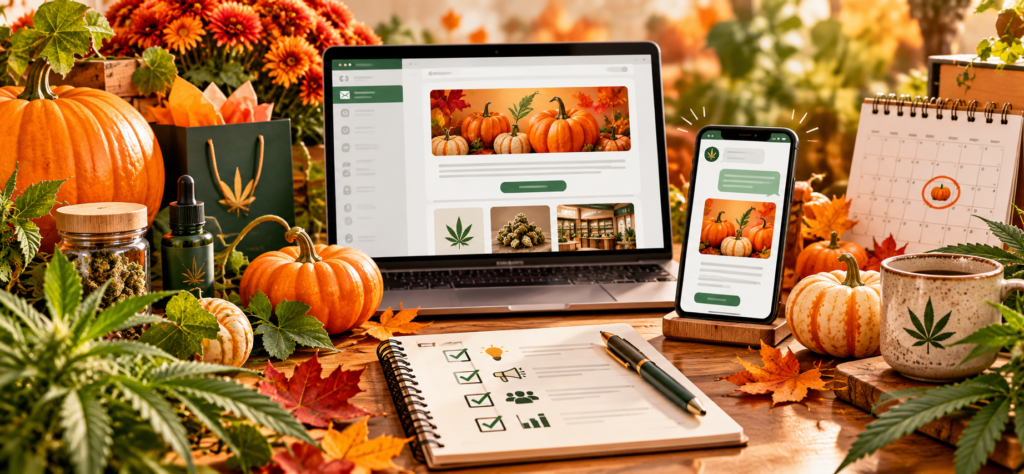
October 26 gets overlooked. It sits in the shadow of the last week of the month, so most operators skip straight past it.
That is a mistake. National Pumpkin Day is the ideal moment to grow the audience you will monetize on Halloween.
This piece covers the seasonal merchandising that works and the rules that govern your sends. It also covers the cadence that turns a fall hook into a text message program that actually converts. Our team has more than 30 combined years in regulated retail marketing.
One note first. Cannabis advertising rules change by state and by city, and nothing here is legal advice. Confirm each campaign against your own license conditions.
Start with why the hook works at all.

Seasonal hooks give shoppers a reason to act on a specific day. Generic fall promotions give them no reason to act at all.
A pumpkin theme also unlocks merchandising language you can use safely. Warm terpene profiles, autumn cultivars, and cozy consumption occasions all fit the frame.
Compare that to a blanket percentage off. Discounts erode margin and teach your regulars to wait for the next one.
We see this pattern across markets. Stores that run frequent sitewide discounts watch their full-price sell-through decline month over month.
Occasion marketing avoids that trap because the urgency comes from the calendar, not the price tag.
The seasonal frame does something else. It refreshes stale creative across your menu, your signage, and your owned channels without touching price.
There is a merchandising benefit too. Pumpkin season gives your buyers a clean reason to feature slower-moving fall inventory in a new context.
Shoppers respond to novelty in presentation, not just in product. The same jar photographed against an autumn backdrop moves differently than it did in August.
The constraint is what you can say and how you can send it.
Text marketing carries the sharpest compliance edge in cannabis retail. It is also the highest performing channel most operators have.
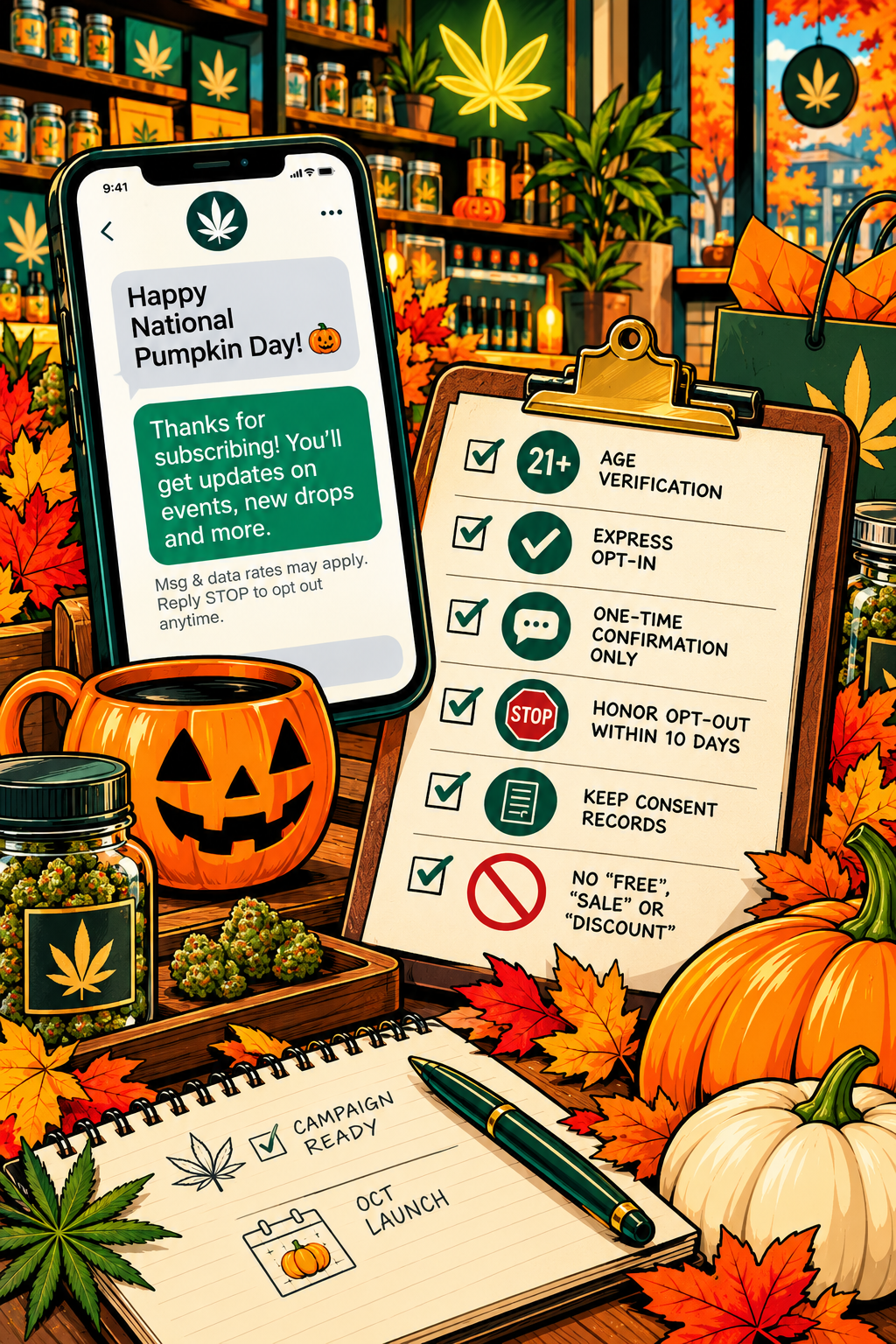
Federal rules set the floor. Under 47 CFR 64.1200, revocation requests must be honored within ten business days. A reply does not have to say STOP to count.
The same rule governs confirmation texts. A one-time confirmation is allowed, but it cannot contain any marketing content.
That detail catches operators constantly. Platform templates often append an offer to the confirmation message by default. Audit yours before October.
Carrier standards sit on top of that. The CTIA Messaging Principles and Best Practices state that consent is not transferable between senders. It applies only to the campaign it was collected for.
State rules narrow the field further. California requires age affirmation before direct, individualized communication with any recipient.
New York’s dispensary guidance goes after the language itself. Words like sale, free, and discount are prohibited in customer communications.
Read that list again and a pattern appears.
Not every idea deserves a text message. Match the channel to the job.
Campaign idea |
Autumn cultivar spotlight |
In-store opt-in drive |
Fall bundle announcement |
Limited allocation alert |
Neighborhood awareness push |
Best channel |
Blog and menu page |
Signage and counter cards |
SMS |
Why |
Builds organic search traffic that lasts past October |
Grows the list without paid reach |
Room to explain formats and terpene profiles |
Time-sensitive and short enough for the format |
Reaches adults near your store without platform review |
Notice how little of that list belongs in SMS. Restraint is what keeps a text list healthy.
Every channel has a different tolerance for frequency. Email forgives a weekly cadence. Text does not, and a burned list takes months to rebuild.
Now build the sequence.
One blast is a missed opportunity. Three is an unsubscribe event. Two works.
Watch your unsubscribe rate against your click rate. If opt-outs climb past one percent, your frequency is wrong for your market.
Segment before you send. Customers who bought edibles last month should not receive the same message as first-time flower buyers.
That single step usually does more for revenue than any creative change.
Keep the pumpkin reference in the copy, not in the imagery. Seasonal graphics drift toward youth appeal faster than operators expect.
A jack-o-lantern illustration reads as a cartoon to a reviewer. Product photography with warm seasonal lighting carries the same feeling and clears review.
Run every asset past your compliance officer before the creative goes to production. Rework at that stage costs hours. Rework after a citation costs far more.
Here is what operators ask us most about this window.
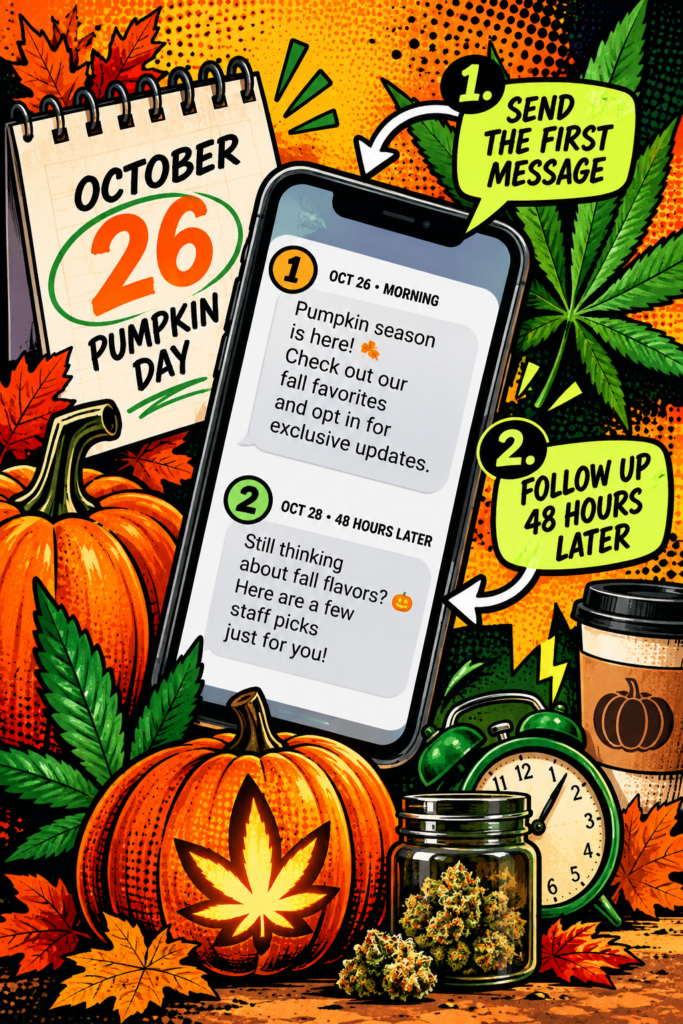
National Pumpkin Day will not carry your quarter on its own. The list you build on it might.
You walk into Halloween week with more consented subscribers and fresher creative. You also walk in with a tested message cadence. That same asset carries into Green Wednesday and the holiday season.
List growth compounds in a way that individual promotions never do.
Seasonal hooks are cheap. Owned audiences compound.
Cannabis marketing rules differ by state, license type, and municipality. This article is general guidance and not legal advice. Confirm your campaign with your compliance officer and licensed cannabis counsel before sending.
The operators who win October are not the ones with the biggest discount. They are the ones who built an audience before the peak week arrived.
Seedless Media builds compliant text and email programs for licensed retailers. See how we structure dispensary text message marketing. Then schedule a strategy call. We will map your fall calendar with you.