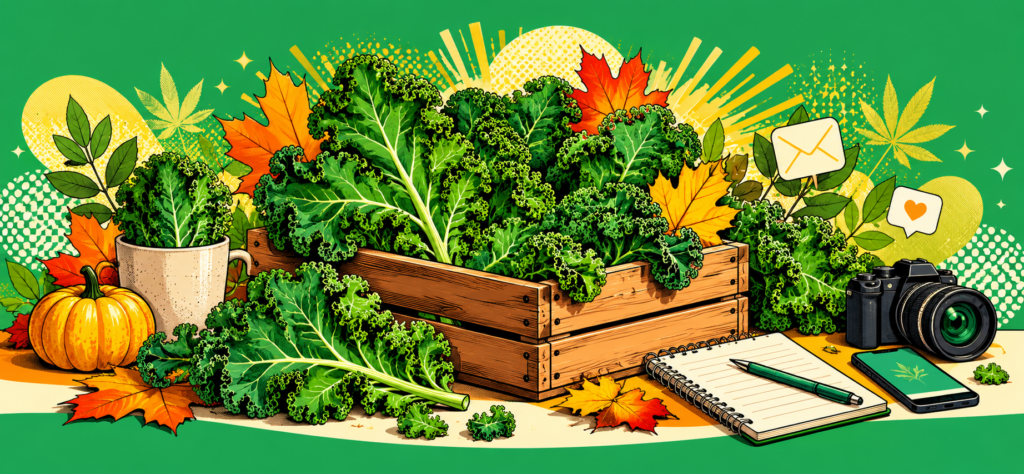
Nobody is searching for a dispensary on National Kale Day. That is exactly why the day is useful.
Micro holidays give your content calendar a reason to publish something human. They break the endless cycle of strain guides and deal posts. They also give your social and email channels something to point at.
Our team has spent 30-plus combined years on content that has to rank and stay compliant. Seasonal posts are a small, repeatable part of cannabis dispensary SEO when they are built correctly. This article is marketing guidance, not legal advice. Everything below assumes a 21+ audience, licensed operations, and no health claims of any kind.
First, the date and what the day actually is.
National Kale Day was founded in 2013 by a physician and a chef. The organizers set it on the first Wednesday of October and built it around eating, growing, and sharing kale.
In 2026, that puts the day on Wednesday, October 7. It sits one day after National Taco Day, which makes early October a dense little cluster of food content.
The day has no cannabis connection at all, and it never needed one. That is fine. You are not borrowing the holiday’s authority. You are borrowing its calendar slot.
Here is the part most agencies get backwards.
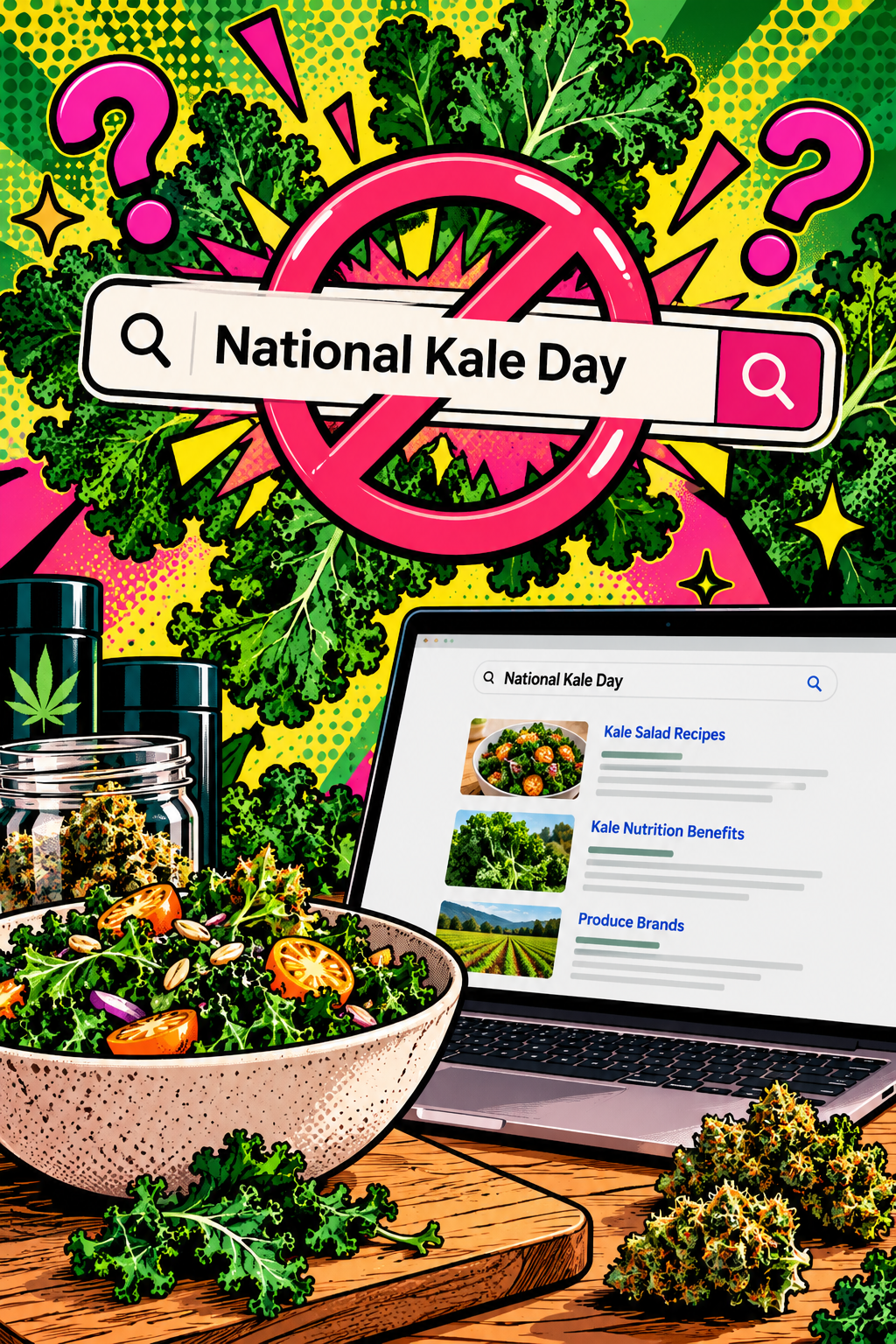
The term National Kale Day belongs to recipe blogs and produce brands. You will not outrank them, and you should not try.
The search intent behind that phrase is culinary. Someone typing it wants a kale salad, not a dispensary. Ranking for it would deliver traffic that never converts.
So the holiday is a publishing hook, not a ranking target. Your ranking targets sit one layer down.
Aim at long tail terms your store can actually win.
Every one of those has lower competition than the holiday phrase. Every one of them attracts someone who lives near you.
Build the post to serve those terms. Give it a clear H1, a short intro, and sections that answer real questions. Then link it to the pages that sell something.
The measurable value of a micro holiday post rarely comes from its own rankings. It comes from what the post links to. A seasonal piece gives you a natural reason to link into category and local pages. It can point at your pillar content too. Those internal links pass relevance and help search engines understand your site structure. Most operators publish the seasonal post, collect a few hundred views, and call it a failure. The operators who benefit are the ones who treated it as a hub from the start.
Consistency matters more than volume here. Your counter card should use the same disclosure wording as your landing page. Your budtenders should be able to explain the donation in one sentence.
Train them on that sentence before the first graphic goes live.
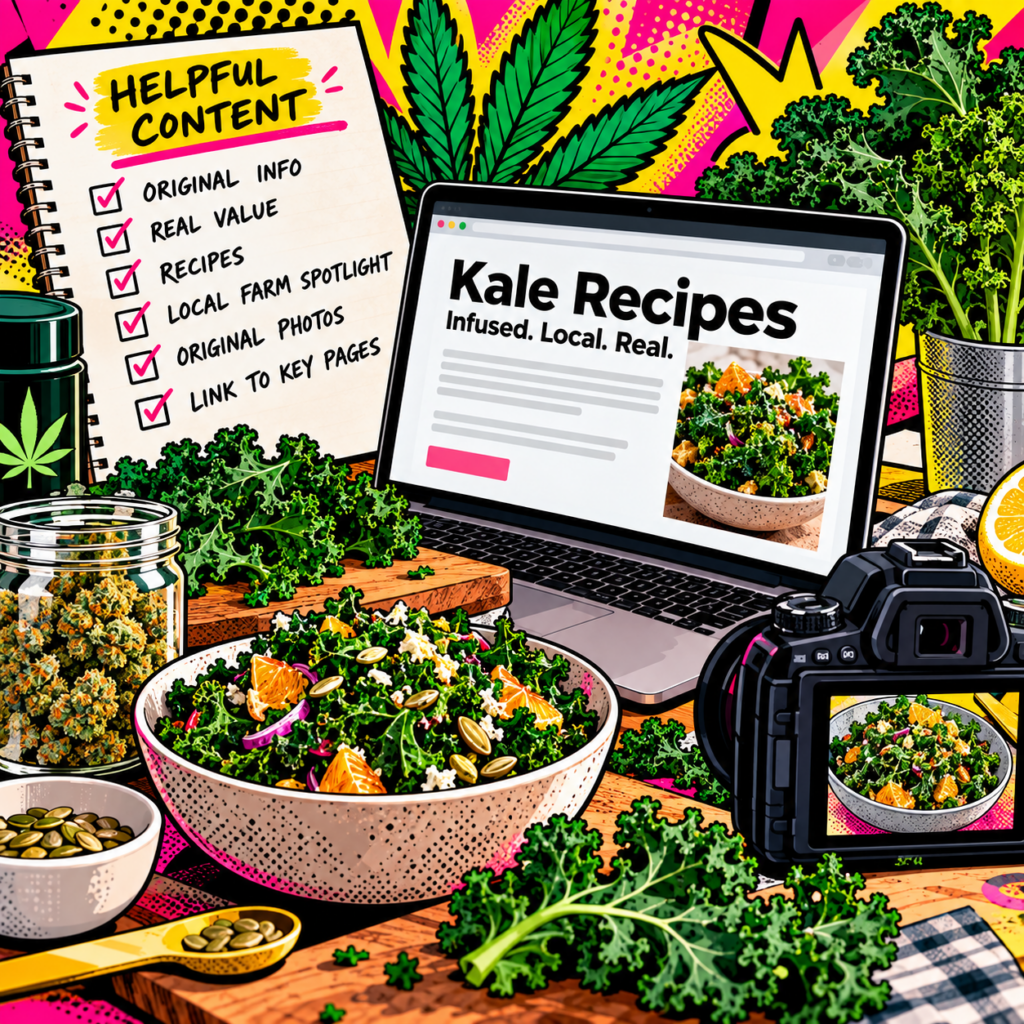
Thin holiday posts age badly. Google’s guidance on creating helpful, people first content asks whether a page offers original information and real value. Content produced only to catch a search term fails that test.
So give the post substance. Interview your kitchen staff if you make edibles. Name the local farm your team buys from. Publish an actual recipe with real measurements.
Original photos beat stock images every time. A picture of your own counter signals first hand experience in a way a stock photo never will.
Write for the reader first. Search performance follows content people finish. A post nobody reads to the end will not hold a ranking for long.
Kale is a health food. That framing pulls writers toward language you cannot use.
Never suggest that cannabis treats, prevents, or improves any condition. Never pair a nutrition claim with a product claim. The FDA publishes a direct warning about products marketed with disease claims. The same principle applies to casual blog copy.
Three phrases to keep out of the draft entirely.
Recipes are safe ground. Local farms are safe ground. Effects are not.
Run the draft past your compliance reviewer before it goes live. A five minute read prevents a takedown request later. Build that step into the timeline below so nobody has to chase approvals on publish day.
Awareness is not a metric. Pick numbers you can defend in a Monday meeting.
Track total dollars raised and first time customers during the campaign window. Track new email and SMS opt ins. Track redemption of any campaign specific code at the register.
Compare basket size during the campaign against your September baseline. Watch repeat visits in November too. Loyalty tends to show up after the promotion ends.
One more number deserves a place on the report. Count the staff hours the campaign consumed. Cause programs get cut when nobody can show what they cost. A campaign that raised solid money on twelve hours of labor is easy to approve again.
Publish the final number when the month closes. A short recap post names the amount raised and thanks the partner. That single asset builds the trust that makes next year easier.
Seasonal content fails when it goes live on the day itself. Give search engines time to crawl and index the page.
Timing |
14 days out |
10 days out |
7 days out |
2 days out |
Day of |
3 days after |
Action |
Draft the post and shoot original photos |
Publish, add internal links, submit for indexing |
Schedule social posts and the email send |
Load in store signage and brief the staff |
Send email, post social, run the in store moment |
Update the post with photos from the day |
Owner |
Content |
SEO |
Social |
Retail |
All |
Content |
That last row matters more than it looks. Refreshing the post keeps it alive for next year.
One post should produce six assets. Pull the recipe into an email. Pull one line into an SMS. Pull the photos into social. Print the recipe card for your counter.
Your staff can hand that card to anyone who asks what the display is about. That single interaction does more for loyalty than the blog post itself.
Then leave the page up. Update the date each year and the asset compounds.
Track the results like any other page. Watch organic sessions, scroll depth, and clicks on the internal links you placed. Those link clicks tell you whether the hub is doing its job. If nobody clicks through, rewrite the anchors and move them higher on the page.
Yes, the date is Wednesday, October 7, 2026. National Kale Day is always the first Wednesday of October, and it was founded in 2013.
Yes, micro holidays are useful publishing hooks for lifestyle content. The value comes from local long tail terms and internal links, not from the holiday phrase.
No, wellness angles are risky without careful review. Avoid any language implying that cannabis treats a condition, supports health, or improves a bodily process.
Yes, seasonal posts are helpful when they carry original content and link to your local landing pages. Thin posts published only for a keyword rarely perform.
Yes, earlier publication is better. Ten days of lead time gives search engines time to crawl, index, and rank the page before interest peaks.
National Kale Day is not a sales event. It is a low cost reason to publish something real and link it to the pages that matter. Operators who run these small moments consistently build a library that keeps working long after October. The discipline is in the compliance review, not the creative.
Nothing here is legal advice. Advertising and content rules differ by state. Confirm your seasonal content, claims language, and promotional offers with your compliance officer and licensed cannabis counsel before publishing.
Seasonal posts only pay off inside a real content strategy. Seedless Media builds keyword architecture, local pages, and publishing calendars for licensed operators. See how the program works at cannabis dispensary SEO. Send us your current calendar and we will show you where the gaps are.