Every October, a wave of brands posts a land acknowledgment and a stock photo. Most of those posts are written the night before. Customers can tell.
Indigenous Peoples’ Day deserves better from this industry in particular. Cannabis marketing has leaned on Native imagery for decades, usually without permission and usually without accuracy.
Our team has spent 30-plus combined years helping licensed operators build campaigns that hold up. The approach below fits inside a broader dispensary marketing program rather than a single social post. This article is marketing guidance, not legal advice. Everything here assumes a 21+ audience, licensed operations, and no health claims.
Start with the basics, because a lot of published content gets them wrong.
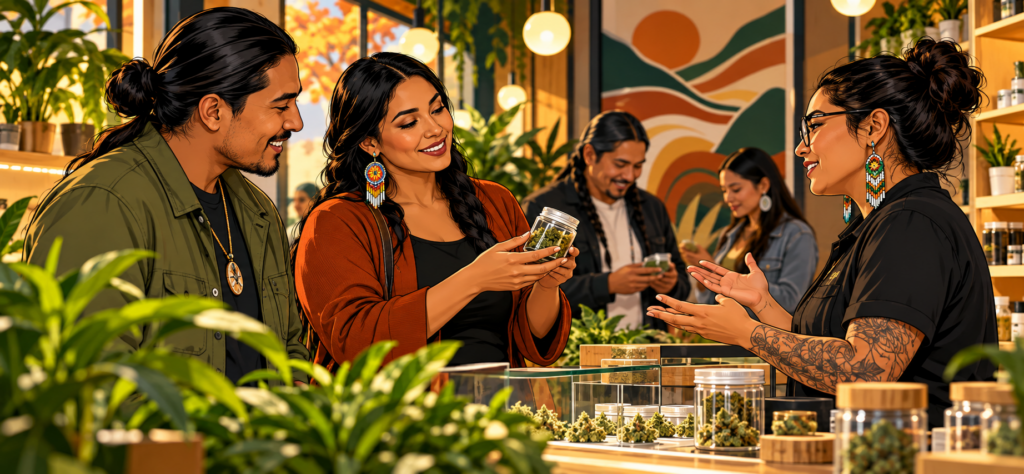
Indigenous Peoples’ Day is observed on the second Monday of October. In 2026, that is Monday, October 12.
The date overlaps with Columbus Day, which became a national holiday in the 1930s. President Nixon later moved the observance to the second Monday of October. The Smithsonian’s National Museum of the American Indian covers that history. Its piece on rethinking how we celebrate American history is a useful primer.
Indigenous Peoples’ Day is not a separate federal holiday. It is recognized by many states, cities, and institutions, and presidential proclamations have marked it since 2021. Local practice varies widely, so check what your own city and state observe.
That local detail matters for any brand that plans to say something. A post referencing a city holiday that your city does not observe reads as careless. Check the calendar your own municipality publishes before you write a word.
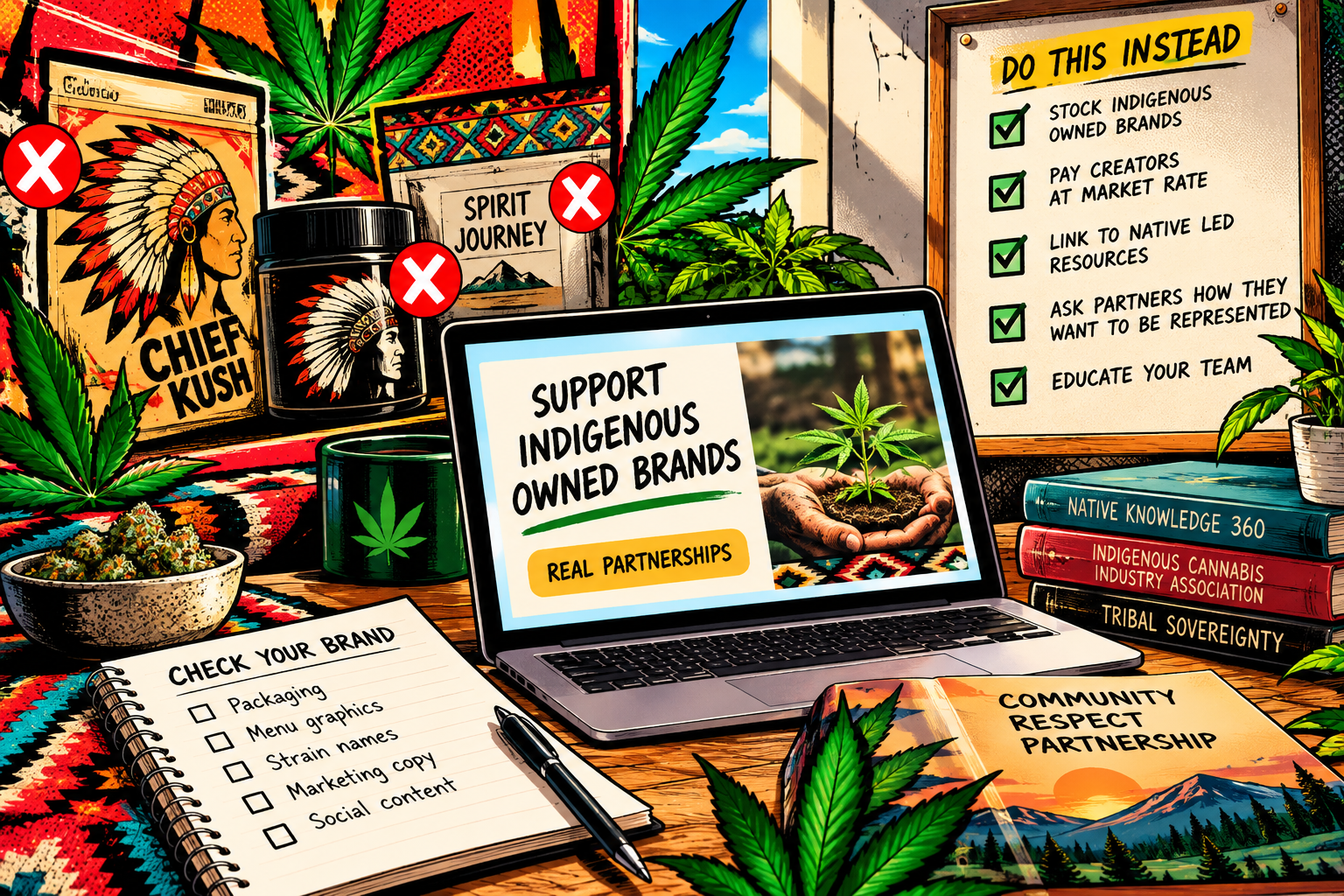
The category has a long habit of borrowing Native aesthetics. Headdresses on packaging. Feather motifs on signage. Strain names lifted from tribal nations.
The language causes problems too. Phrases about sacred plants, spirit journeys, and ancestral medicine show up constantly in cannabis copy. They flatten hundreds of distinct nations into one costume.
Three practices to retire permanently.
None of this requires a committee. It requires someone with authority to say no.
Audit your existing assets too. Old packaging, menu graphics, and strain names often carry problems nobody has reviewed in years. Fix what you find before you publish anything new.
Tribal nations are operating in this market right now. The National Congress of American Indians passed a resolution in 2016 supporting cannabis production. That resolution tied the work to self determination and economic development.
Trade infrastructure followed. The Indigenous Cannabis Industry Association launched in 2022 to advocate for tribal operators and Indigenous entrepreneurs. It works on policy, sovereignty, and business development across Indian Country.
That context changes the marketing question entirely. The opportunity is commercial, not decorative.
Ask a different set of questions this year.
Most operators answer no to all three. That gap is the actual story.
Closing it takes one buyer conversation. Ask your distributor reps directly which Indigenous owned brands they carry. Many will have to check, which tells you how rarely anyone asks.
Brands that handle this day well are not writing anything clever on October 11. They made a purchasing decision a quarter earlier. A dispensary that added an Indigenous owned brand in summer has something concrete to say. It also has a supplier relationship that outlasts the week. Everyone else is writing copy to cover the absence of one. Customers and staff read that difference immediately. The sincere posts come from operators who can name a product on the shelf.
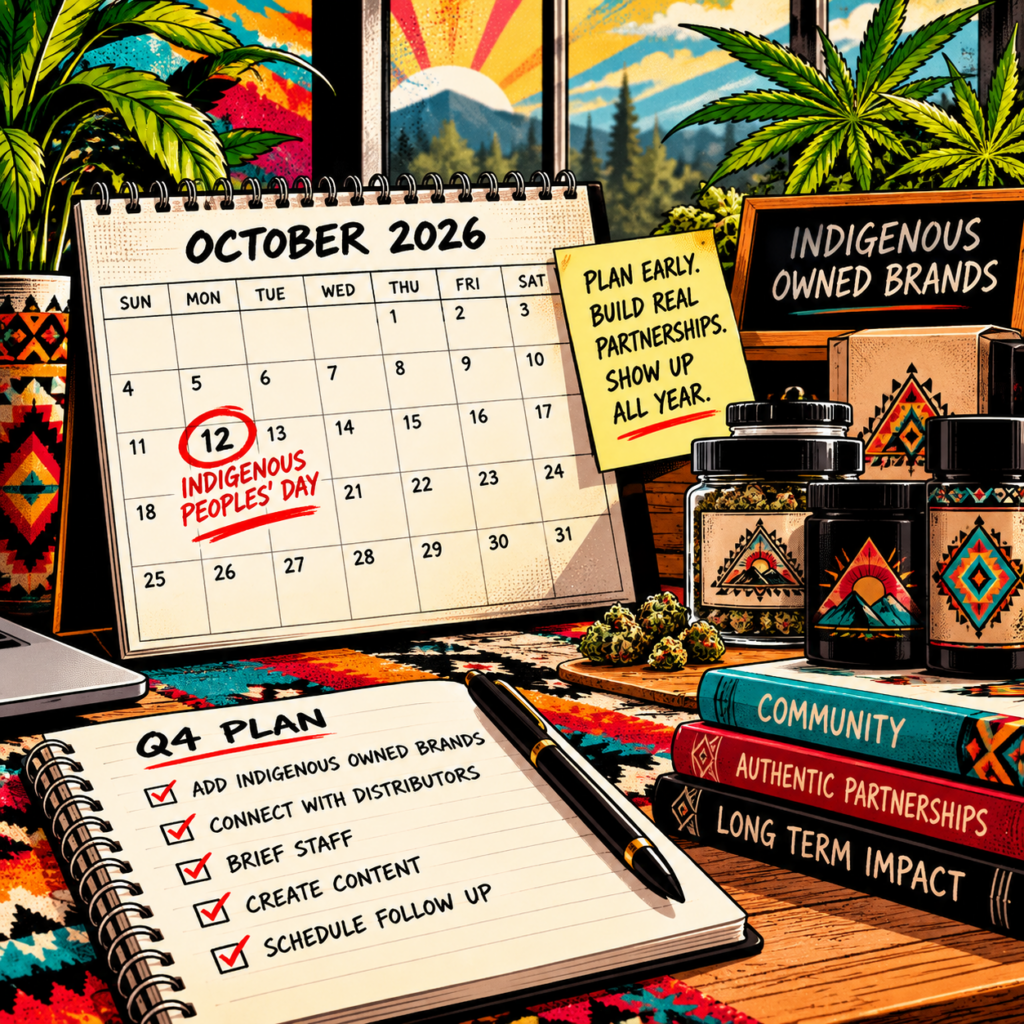
Pick actions you can still complete before October 12. Then pick one that extends past it.
Do |
Stock and feature Indigenous owned brands |
Pay Indigenous creators at market rate |
Link to Native led educational resources |
Ask partners how they want to be represented |
Train staff on the brands you carry |
Skip |
Native imagery your brand does not own |
Unpaid requests to share your post |
Generic quotes with no attribution |
Assuming one nation speaks for all |
A single post with no follow through |
Education costs nothing and helps your team speak accurately. The Smithsonian’s Native Knowledge 360 resources are built for exactly that purpose.
Here is a five step plan that fits a normal operating week.
Step five is where most programs die. Put it in writing today.
A single October post is a gesture. A supplier relationship is a commitment.
Measure the things that prove commitment. Track units sold from Indigenous owned brands across the quarter. Track how many creators you paid and what you paid them. Track shelf placement, not just social impressions.
Share those numbers internally at minimum. Teams repeat what gets measured, and this is worth repeating.
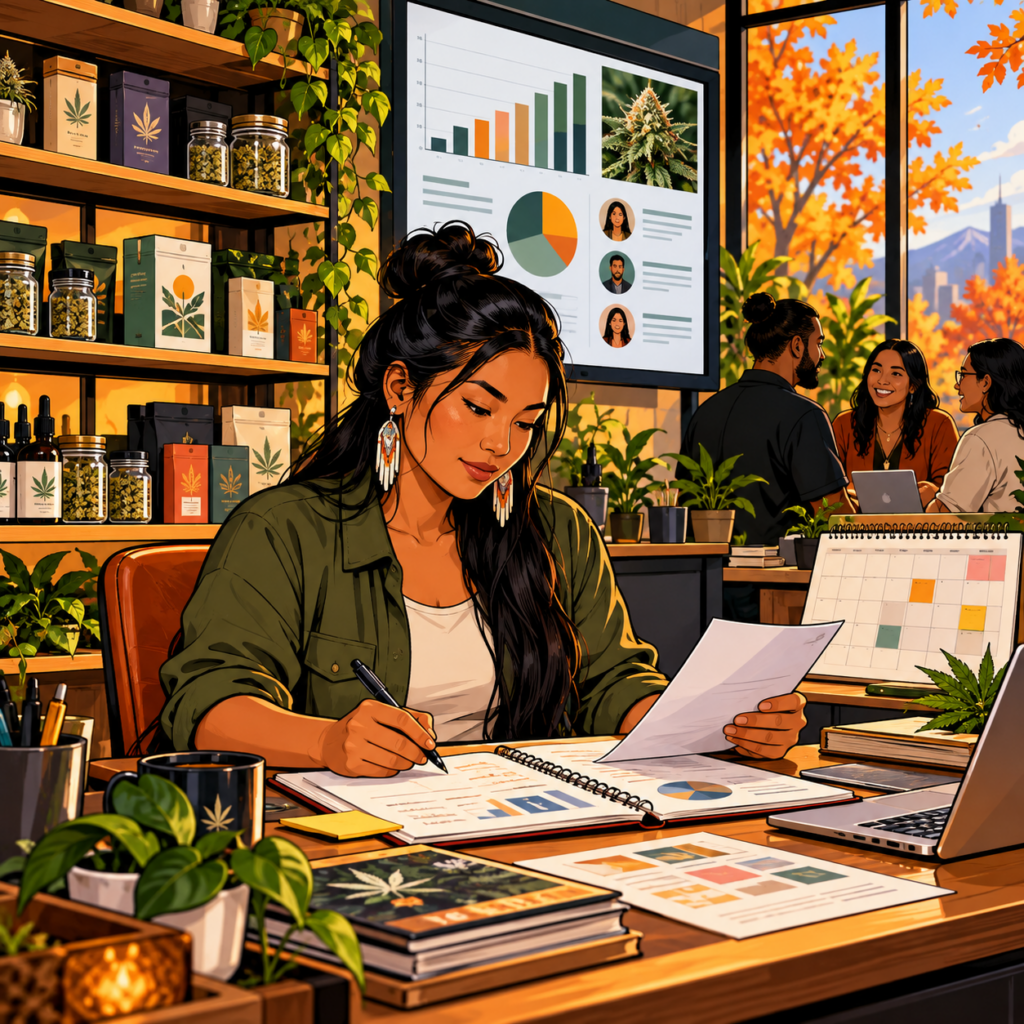
Then plan next October in August, not on October 11.
Keep the relationships warm in between. Feature partner brands during normal promotional cycles, not only during one observance. Year round shelf space is the clearest signal a brand can send. It costs nothing extra once the product is on your menu.
Yes, the date is Monday, October 12, 2026. Indigenous Peoples’ Day is observed on the second Monday of October, the same date as Columbus Day.
No, it is not a standalone federal holiday. Columbus Day holds that status. Presidential proclamations have marked the day since 2021, and many states observe it.
No, borrowed imagery is a serious misstep. Symbols, patterns, and names belong to specific nations, and using them without permission is appropriation rather than tribute.
Yes, Indigenous owned brands and tribal operators are active in many markets. Trade groups and distributors can help buyers identify licensed options in your state.
No, a statement alone is thin. Pair any acknowledgment with concrete action, such as shelf space, paid partnerships, or support for Native led organizations.
Indigenous Peoples’ Day asks brands to do something harder than posting. It asks you to look at your shelf, your suppliers, and your creative library. Operators who make one real buying decision this quarter will have something honest to say on October 12. Everyone else will post a graphic that nobody believes.
Nothing here is legal advice. Advertising rules, tribal regulations, and licensing requirements vary by jurisdiction. Confirm your campaign, partnerships, and supplier agreements with your compliance officer and licensed cannabis counsel before launch.
Good community marketing is a calendar problem before it is a creative problem. Seedless Media builds programs that connect merchandising, content, and paid channels for licensed operators. See how we structure the work at dispensary marketing. Bring us your Q4 calendar and we will find the gaps worth closing.