
Pink shows up everywhere in October. Your competitors post a ribbon graphic, tag a charity, and move on. That surface level effort does nothing for the cause and nothing for your store.
A real campaign moves the needle twice. It raises money a local organization can actually use. It also gives your regulars a reason to walk in and spend.
We have spent 30-plus combined years inside regulated advertising. Cause campaigns are where good intentions meet hard rules. Our team builds these programs as part of a full dispensary marketing strategy. They are not a one-off social post.
This article is marketing guidance, not legal advice. Every idea below assumes a 21+ audience, licensed operations, and zero medical claims about cannabis.
Here is where most dispensary campaigns go sideways.

The first mistake is copy drift. A staff member writes something warm about wellness, healing, or relief. Now your brand has implied a therapeutic benefit during a cancer awareness campaign.
The FDA treats that language seriously. The agency publishes a plain warning about products marketed with cancer claims. It even lists the exact phrases that draw scrutiny. Words like treats, shrinks, or cures do not belong in your October assets.
The second mistake is a vague donation promise. Phrases like a portion of proceeds mean nothing to a shopper. They mean even less to a state charity regulator.
Both mistakes come from the same root cause. Nobody assigned an owner to the campaign before the work started.
Get both of those right and the rest of the campaign gets easier.
Cause marketing has a legal name. A donation promise based on sales creates a commercial co-venture. More than 20 states regulate that arrangement. Several require a written contract with the charity before you promote anything.
Regulators have published clear expectations. New York’s guidance on transparent cause marketing asks brands to name the benefiting charity. It also asks for the exact per unit donation amount. It also asks for any cap, plus start and end dates. The same guidance pushes companies to report how much was raised.
Two structures work for most single state operators.
Pick the structure in week one. Design follows the structure, never the other way around.

Paid amplification will not rescue this campaign. Google restricts cannabis advertising across its network. Its ads policy on CBD and related products opens narrow lanes only. Certain hemp derived topicals qualify in a few states. THC promotions stay off the platform entirely.
So the campaign lives on assets you own. Email, SMS, your menu, your blog, and your storefront do the heavy lifting. Programmatic display with strict age and geo controls can extend reach where compliance approves it.
Channel | Asset |
|
Campaign announcement with donation terms |
| |
SMS | Two message sequence, launch and final week |
|
Website | Landing page with full disclosure block |
|
In store | Counter signage and staff script |
|
Display | Geo fenced awareness creative |
|
|
| Compliance checkpoint |
|
| 21+ list hygiene, no health claims |
|
| Written consent on file, easy opt out |
|
| Age gate, dated terms, charity named |
|
| Same disclosure wording as the website |
|
| Audience age controls, state ad rules |
Consistency matters more than volume here. Your counter card should use the same disclosure wording as your landing page. Your budtenders should be able to explain the donation in one sentence.
Train them on that sentence before the first graphic goes live.
Most operators default to a per purchase pledge because it feels motivating to shoppers. It also creates the heaviest paperwork of any structure available. A flat, capped gift avoids the commercial co-venture framework in many states. Customers still respond to it, because the number is concrete and easy to verify. Operators who repeat these campaigns year after year usually choose the simple structure. They spend their energy on partner selection and staff training instead of legal review cycles..
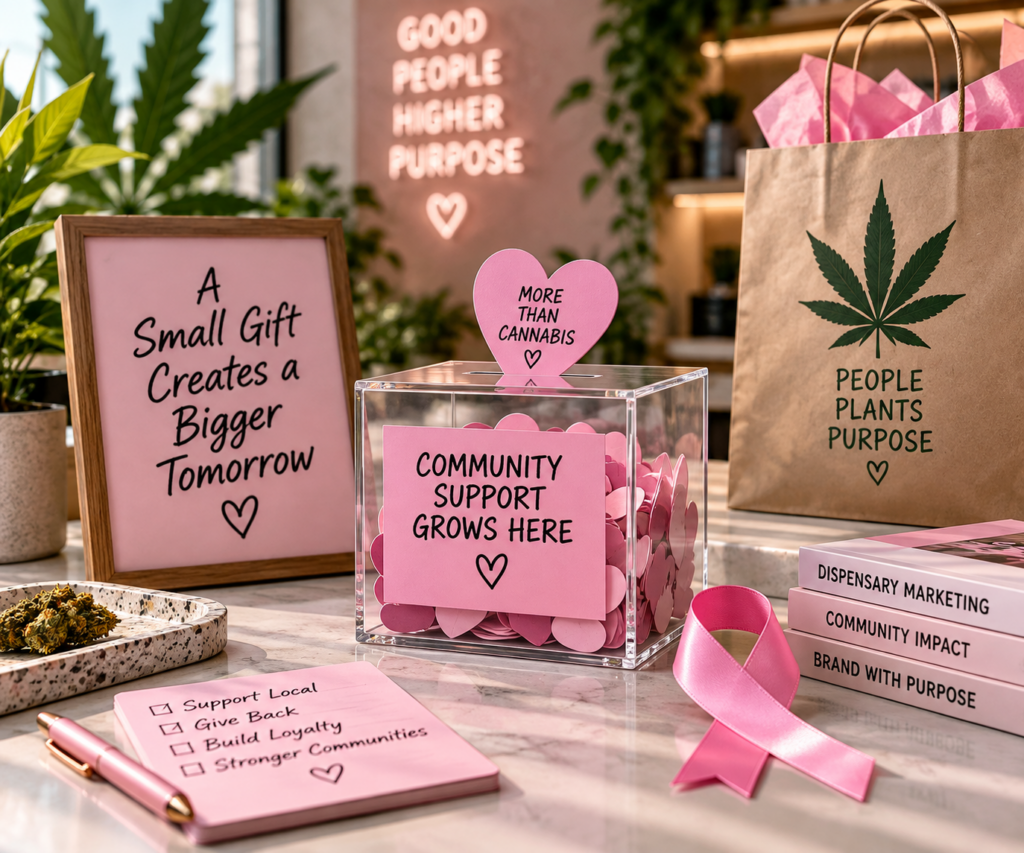
Not every organization accepts cannabis money. Some national charities decline it because of banking policy or donor optics. Ask before you announce anything publicly.
Local partners usually say yes faster. Community clinics, patient transport programs, and regional foundations often welcome the support. A local partner also gives your campaign something a national logo cannot. It proves the money stayed in town.
Set the timeline before you approach anyone. Reach out to partner candidates three weeks before October. Lock the agreement two weeks out. Build creative in the final week, then launch on October 1 with everything approved.
Confirm three things in writing. Confirm that the group accepts the donation. Confirm that it approves your use of its name. Confirm the announcement date.
That paperwork takes an afternoon. It also prevents a very bad October.
Awareness is not a metric. Pick numbers you can defend in a Monday meeting.
Track total dollars raised and first time customers during the campaign window. Track new email and SMS opt ins. Track redemption of any campaign specific code at the register.
Compare basket size during the campaign against your September baseline. Watch repeat visits in November too. Loyalty tends to show up after the promotion ends.
One more number deserves a place on the report. Count the staff hours the campaign consumed. Cause programs get cut when nobody can show what they cost. A campaign that raised solid money on twelve hours of labor is easy to approve again.
Publish the final number when the month closes. A short recap post names the amount raised and thanks the partner. That single asset builds the trust that makes next year easier.

Yes, cause campaigns are generally allowed for licensed operators. The promotion must follow state advertising rules, stay 21+, avoid medical claims, and disclose donation terms clearly.
Yes, per purchase promises are regulated as commercial co-ventures in many states. Expect a written charity agreement, specific disclosures, and registration requirements in some jurisdictions.
No, wellness words are risky in this context. They can imply a therapeutic benefit. Keep copy on the donation, the partner, and the community.
No, mainstream paid search is not available for THC promotions. Owned email, SMS, on site content, and compliant programmatic display carry the campaign instead.
Yes, published results are a trust signal that regulators and customers both notice. The number also gives your team a benchmark to beat next October.
October rewards operators who plan mechanics first and creative second. A clear donation structure, a willing local partner, and disciplined copy change the outcome. Together they turn a crowded moment into real community credit. The stores that treat this as strategy are the ones customers remember in November.
Nothing here is legal advice. Cannabis advertising rules change by state and by month. Confirm your campaign structure, disclosure language, and donation mechanics with your compliance officer and licensed cannabis counsel before launch.
You do not need a bigger budget for October. You need a campaign built to survive review and still pull people through the door. Seedless Media builds compliance first programs for licensed operators. See how we approach the full plan at dispensary marketing. Start the conversation now, and October becomes a system instead of a scramble.